

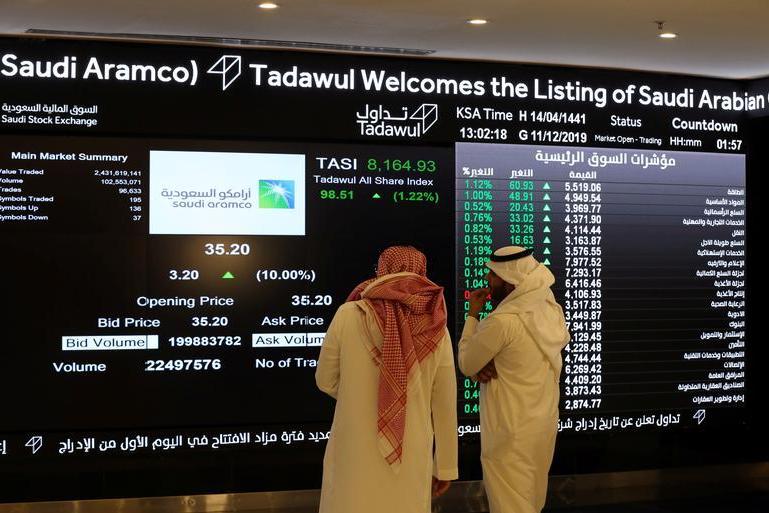
The Saudi-led GCC debt and capital market has kicked off the year with its most bullish start yet, raising more than $30 billion in January, allaying concerns about geopolitical rivalry.
“Ten Saudi issuers have already entered the market in January, the best supply month in Saudi history, averaging almost $1 billion a day. The previous record for January was $19 billion in 2025,” Victor Murad, co-head of CEEMEA debt financing at Citi, told Zawya.
Earlier this month, Saudi Arabia raised $11.5 billion in four-part bonds, prompting other Saudi countries to visit the market early.
On January 21, Saudi Arabia’s $1 trillion sovereign wealth fund, PIF, entered global debt capital markets for the first time this year with a $2 billion 10-year sukuk. Order backlog exceeded $11 billion. Additionally, last Monday, Saudi Aramco issued four tranches of $4 billion in bonds. The offering has over $21 billion in books, demonstrating strong investor appetite. State-backed mining giant Marden also raised $1 billion through a sukuk issue.
“Issuance from Saudi Arabia increased in January, but the diversification of issuers across sectors and the split between sukuk and conventional bonds maximized investor diversification. Issuers also offer different tenors, from 3-year to 30-year, and that has returned this year. Already, 30-year supply from the region is more than for all of 2025 combined,” Murad said.
Bond markets avoid geopolitical tensions
Tensions between Iran and the United States have risen again in recent weeks, with Iran threatening to retaliate if the United States attacks. But the flurry of early trades clearly shows investors are ignoring geopolitical concerns.
“Investors have brushed aside almost all geopolitical concerns. Circulation is up and deals are being done on oversubscribed, well-diversified books with no new-book premium,” Murad said.
According to Fitch, Saudi Arabia’s DCM balance could reach $600 billion in 2026. Saudi Arabia’s annual borrowing plan aims to meet up to 50% of government funding needs from the private market, 25% to 30% from international DCMs, and 20% to 30% from domestic DCMs.
Bond markets may become more active at the beginning of Ramadan, which begins in a few weeks, before subduing as the holy month progresses.
“The market has started seeing trading during Ramadan since 2019, so we expect supply to continue to be available in February and early March before trading tapers off in the lead-up to Eid,” Murad said.
But in January this year, the bond market opened and all forms of borrowers accelerated their fundraising activities.
“We expect all-in yields to remain range-bound in 2025, so deals made in January are likely to end up being priced at similar levels to later in the year. Elevated global risks mean there is little upside if we wait until the end of the year to raise capital. The global pipeline, with record starts in Asia and Latin America, supports our view that issuers will agree to current price levels in 2026,” he said.
Global bond issuance rose sharply in January, driven in part by strong supply from Asia and Latin America. As of January 7, companies and governments in the United States, Europe, and Asia had raised approximately $245 billion in various currencies, setting a new record for the same period.
(Reporting by Severn Scalia; Editing by Daniel Lewis)
(seban.scaria@lseg.com)
