

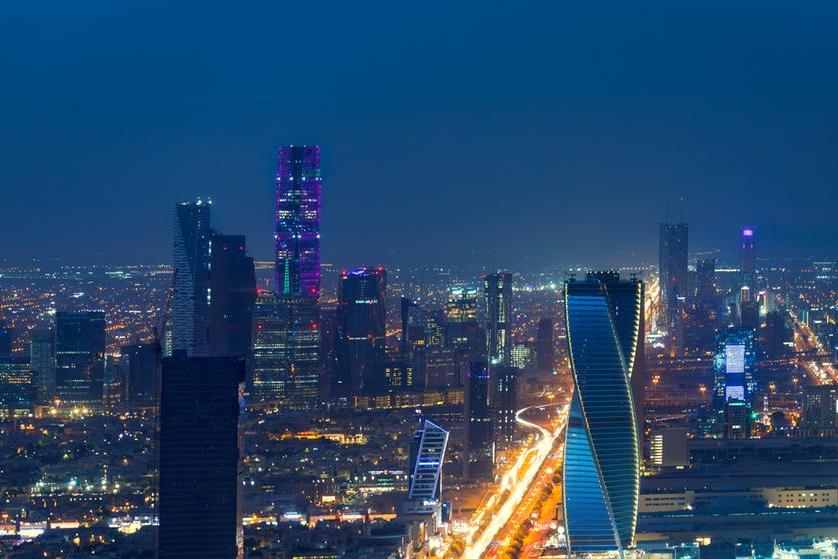
Saudi banks’ exposure to Vision 2030 gigaprojects remains modest, but is likely to increase as some projects become operational, Fitch Ratings said.
Delays in the implementation of gigaprojects or a significant readjustment of their scale may affect the banking sector’s asset quality indicators in the long run. However, the agency said current low exposures mean these projects are unlikely to lead to a significant increase in the system-wide Stage 2 and Stage 3 lending ratio from 2026 to 2027.
Despite the recent announcement of some project realignments, Fitch still expects the combined value of five major gig projects – NEOM, Qiddiya, Red Sea Global, ROSHN and Diriyah – to exceed $1 trillion upon completion. However, only about $115 billion in gigaproject contracts have been signed since 2019.
“We estimate that around half of total funding, including debt and equity, comes from the Public Investment Fund (A+/Stable). Reliance on bank borrowing is low, but increasing.”
modest bank loan
Fitch estimates that bank financing for gigaprojects will remain at 5% to 7% of average sector financing by the end of 2025. Some banks also have exposures from guarantees and irrevocable commitments, and their total exposure to gigaprojects, both on- and off-balance sheet, should be less than 10% of the sector’s combined credit risk.
“We expect banks’ gigaproject lending to increase as projects approach the operational stage and financing is supported by cash flow. This type of lending primarily carries risk weights of around 80% to 130%, so increased lending to these initiatives could put capital under pressure. This, coupled with stricter capital controls, could encourage banks to make greater use of tools such as residential mortgage-backed securities (RMBS) and material risk transfer (SRT) to alleviate pressure on capital, such as adjusting ratios or adjusting dividends.
Supporting corporate credit needs
Fitch expects Vision 2030’s large-scale, non-giga project infrastructure efforts to support corporate credit needs over the long term. Although the value of new project orders fell by almost 50% in 2025, the value of contracts awarded from 2022 onwards is approximately $435 billion (about 32% of Fitch’s GDP in 2026), creating a significant business opportunity for banks.
Corporate borrowing is likely to remain a key driver of credit growth in the medium term. Corporate lending has been growing at an average annual rate of about 16% since 2022, and will account for almost 80% of new lending in 2025. Nevertheless, we expect banking sector lending growth to decline to around 10% in 2026 (2025: 11.5%), given the decline in the number of projects awarded.
The share of bank loans to SMEs rose to 11% at the end of the third quarter of 2025 (end of 2019: 6%). This is still below the 20% target for 2030 under Vision 2030. Fitch expects small business loan growth to accelerate moderately, supported by a decline in the risk-weighted asset (RWA) density of small business loans (risk-weighted at 75% in the final Basel III rules).
Domestic liquidity conditions are tight
The domestic liquidity situation has become tight in recent years, with the sector’s loan-to-deposit ratio rising to 113% as of the end of 2025 (end of 2024: 110%). Despite the announced realignment, we still expect funding demand for broader Vision 2030 projects to lead to sustained strong growth in bank lending. This will facilitate further diversification of Saudi banks’ funding sources and support further growth of Saudi Arabia’s debt capital market, including international issuance.
“We expect mortgage securitization to accelerate from 2026 as interest rates fall and banks look to free up liquidity and ease pressure on capital ratios. RMBS issuance by Saudi Real Estate Refinance Company (A+/Stable) This could free up significant liquidity given the size of the bank’s mortgage book (totaling R726 billion, approximately 22% of sector lending at the end of Q3 ’25). This could also be alongside SRT. We will support banks’ capital adequacy through RWA relief.”
Copyright 2026 Al Hilal Publishing and Marketing Group Provided by SyndiGate Media Inc. (Syndigate.info).
