

MUSCAT — Senior U.S. and Iranian officials are scheduled to meet face-to-face in Khurdiay at a later date amid a crisis that raises concerns of military conflict between the two countries.
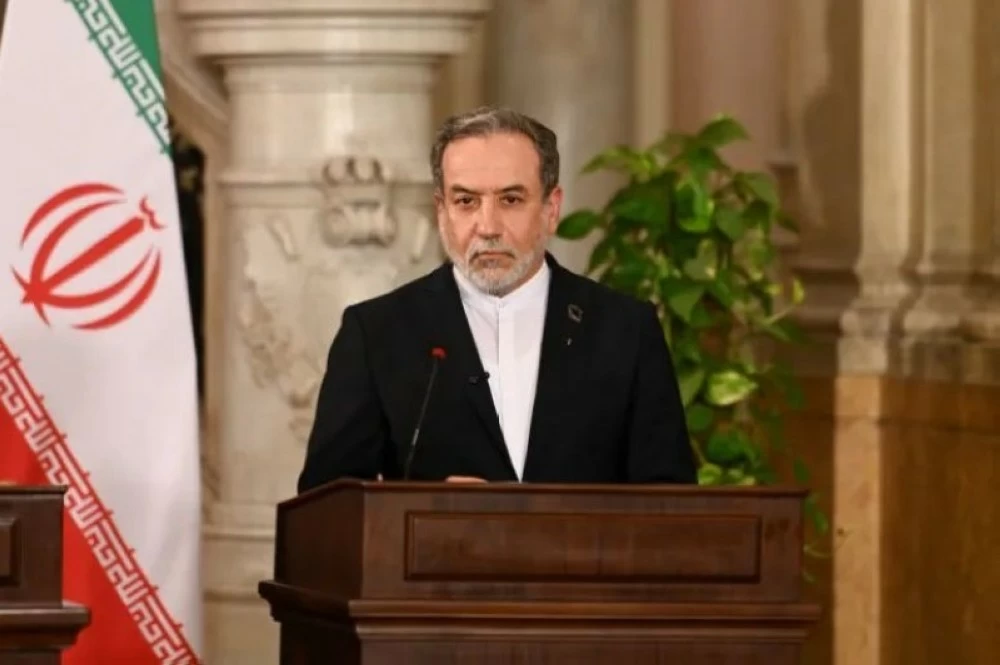
On the Iranian side, Foreign Minister Abbas Araghchi arrived in the Omani capital on Thursday night along with several Iranian diplomats, state news agency IRNA reported.
The semi-official Tasnim news agency shared a short video showing Araghchi and other Iranian officials being welcomed by Omani foreign ministry officials.
On the U.S. side, negotiations will be led by Steve Witkoff, the U.S. special envoy for the Middle East, a New York real estate mogul and longtime friend of President Trump. Accompanying Witkoff on his Middle East trip so far is President Trump’s son-in-law Jared Kushner, who in recent weeks has shared proposals for the Gaza Strip and participated in trilateral talks with Russia and Ukraine in Abu Dhabi at the beginning of the trip.
The two were traveling from Abu Dhabi to Qatar on Thursday night for talks with local officials, Qatari news network Al Jazeera reported.
Araghchi is “a skilled, strategic and reliable negotiator at the highest levels of decision-making and military intelligence,” Ali Shamkhani said. A top adviser to Iranian Supreme Leader Ali Khamenei wrote to X that “soldiers of the country’s armed forces and diplomatic generals will act according to the orders of the leader and protect the interests of the country.”
The scope, nature and participants of the talks remain unclear hours before they are scheduled to begin. The talks in Muscat are scheduled to start at 6 a.m. Japan time.
The discussion comes in the wake of a U.S. military buildup in the Middle East in response to Iran’s violent crackdown on nationwide anti-government protests last month, which human rights groups say left thousands dead.
Uncertainty over the location and scope threatened to derail talks, part of diplomatic efforts by regional mediators to ease tensions.
The positions of the two countries remain vastly different. It is hoped that if the talks are successful, they could lead to a framework for negotiations.
The United States, which has called on Iran to freeze its nuclear program and dismantle its enriched uranium stockpile, has said talks should include Iran’s ballistic missiles, support for regional armed groups and the treatment of its people.
But Iran has said the talks will be limited to its nuclear program, and it is unclear whether those differences have been resolved.
President Donald Trump has threatened in recent weeks to bomb Iran if it doesn’t reach a deal. The United States has sent thousands of troops to the region and what President Trump described as an “armada” that includes aircraft carriers, other warships and fighter jets.
Iran has vowed to respond with force to any attack and has threatened to attack U.S. military facilities in the Middle East and Israel.
This will be the first meeting between U.S. and Iranian officials since the war between Israel and Iran, in which the U.S. bombed three of Iran’s main nuclear facilities in June last year.
Iran announced it had halted its uranium enrichment activities after the attack.
Iran has maintained for decades that its program was for peaceful purposes, but the United States and Israel have accused it of being part of a weapons program.
Iran insists it has the right to enrich uranium within its territory and has rejected requests to transfer its 400 kg (880 lb) of highly enriched uranium to third countries.
Officials are open to concessions, including the creation of a regional consortium to enrich uranium, proposed during talks with the United States that collapsed last year when Israel launched a surprise war.
At the same time, Iran has called demands to limit its ballistic missile program and cut support to proxy groups in the region, an alliance Tehran calls the “Axis of Resistance,” which it says includes Gaza’s Hamas, Iraqi militias, Lebanon’s Hezbollah and Yemen’s Houthis, unacceptable and a violation of its sovereignty.
On Tuesday, Iranian President Masoud Pezeshkian said he had instructed Araghchi to “pursue fair and impartial negotiations” with the United States “as long as appropriate circumstances exist.”
In any case, Iran is likely to demand the lifting of sanctions that have crippled its economy. Opponents of the regime argue that any relief would give the clergy a lifeline.
For the United States, depending on the outcome, the talks could provide immunity from Trump’s military threats.
Regional countries are concerned that a U.S. attack could lead to an escalation of the conflict and long-term chaos in Iran, warning that air power alone cannot overthrow Iran’s leadership.
US Secretary of State Marco Rubio said achieving “something meaningful” would require discussions beyond the nuclear issue.
“I don’t know if we can come to an agreement with these guys, but we’re going to try to work it out. I don’t think there’s any harm in seeing if there’s something we can do,” he said.
The talks, originally scheduled to be held in Istanbul, are an effort led by Egypt, Turkey and Qatar to ease tensions.
But at the last minute, Iran requested that the meeting be moved to Oman, which hosted talks last year, and that participants be limited to Iranian and U.S. officials. — Agency
Related articles