

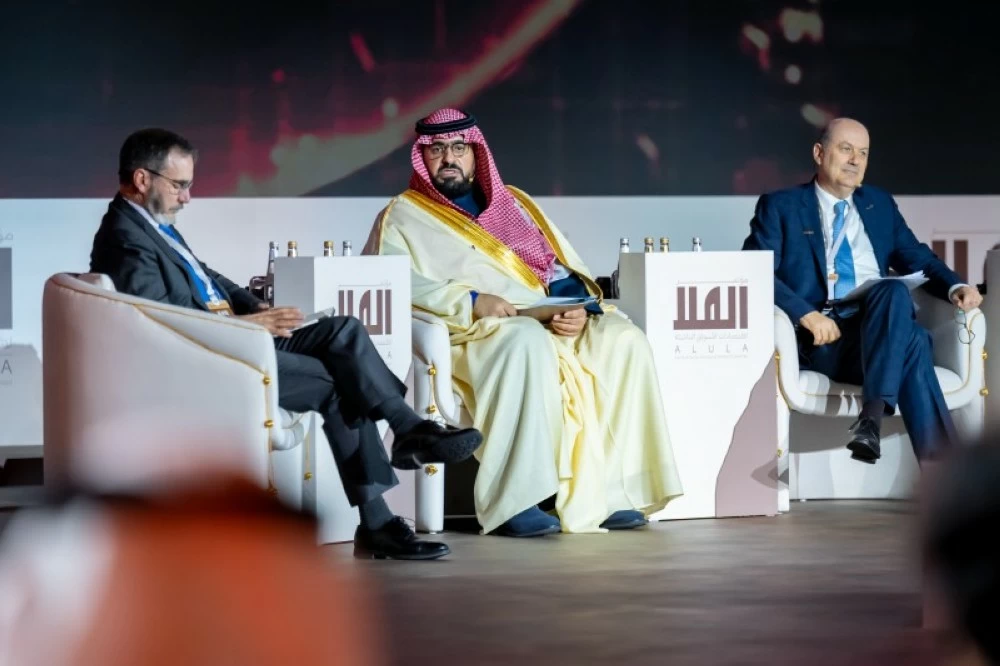
Faisal Al Ibrahim, Minister of Economic Planning, revealed that the Kingdom was able to effectively cope with and benefit from the rapid changes taking place in international trade thanks to its preparedness, strengthened by economic diversification efforts in line with the objectives of the Saudi Vision 2030, which strengthened the Kingdom’s key role on the world trade map and contributed to seizing the opportunities created by these changes.
In his speech at the Al-Ula Emerging Markets Economy Conference, Al-Ibrahim explained that rules-based market systems are facing increasing pressures, making flexibility a key factor in countries’ ability to adapt, noting that economies with strong institutions whose systems are designed to be more flexible are better able to face challenges and turn them into opportunities.
He stressed that global trade is not as dead as rumored, suggesting that trade and investment remain two fundamental pillars for many economies, especially emerging market economies, which will continue to seek continued trade flows as a key driver of growth.
He explained that trade tensions between the United States and China do not lead to a reduction in global trade, but rather to a reallocation of trade, a reality that requires continuous adjustment, and that periods of stress reflect systemic imbalances that need to be treated and do not mean failure.
Noting that redistribution and adaptation are complex and unequal processes between countries, he stressed that emerging market economies are undergoing a phase of genuine strategic choices that allow them to design paths of adaptation to changing trading systems and explore new sources of value, noting that institutions are the determining factor in turning this adaptation from a burden to a competitive advantage.
Mr. Al Ibrahim highlighted the importance of speed and flexibility in decision-making, explaining that while delays impose cumulative costs, countries that are able to accelerate decision-making cycles while maintaining credibility are successful in turning speed into a strategic advantage.
He noted that the world is witnessing the formation of new global trading system characteristics based on piecemeal redistribution and a different type of globalization, one focused on unlocking potential, and concluded by stressing that increased predictability will strengthen the ability to respond through agreed rules.
Faisal Al Ibrahim, Minister of Economic Planning, revealed that the Kingdom has effectively coped with and benefited from rapid changes in international trade, thanks to enhanced preparedness and efforts to diversify the economy within the goals of Saudi Vision 2030. This has strengthened its pivotal role on the world trade map and contributed to seizing the opportunities created by these changes.
In his speech at the AlUla Conference on Emerging Market Economies, Mr. Al Ibrahim explained that the rules-based market system is facing increasing pressure, making flexibility a key element in countries’ ability to adapt. He pointed out that economies designed with more flexible systems and stronger institutions are better able to face challenges and turn them into opportunities.
He asserted that global trade is not as close to an end as rumored, suggesting that trade and investment remain essential pillars for many economies, especially emerging market economies, and that they will continue to seek sustained trade flows as a key driver of growth.
He clarified that the US-China trade conflict will not lead to a decrease in global trade, but rather to a reallocation of trade, and that in reality, continued adjustment is necessary. He explained that a period of pressure does not mean failure, but reflects institutional imbalances that need to be addressed.
Noting that redistribution and adaptation are complex and uneven processes across countries, he stressed that emerging market countries are at a stage of real strategic choice, allowing them to design paths of adaptation to changing trading systems and explore new sources of value. He pointed out that institutions are a crucial factor in transforming this adaptation from a burden to a competitive advantage.
Mr. Al Ibrahim emphasized the importance of speed and flexibility in decision-making, explaining that while delays impose cumulative costs, countries that are able to accelerate decision-making cycles while maintaining credibility are successful in turning speed into a strategic advantage.
He noted that the world is witnessing the formation of a new global trading system characterized by piecemeal redistribution and a different pattern of globalization focused on unlocking potential, concluding by affirming that increased predictability will strengthen the ability to respond through agreed rules.
