


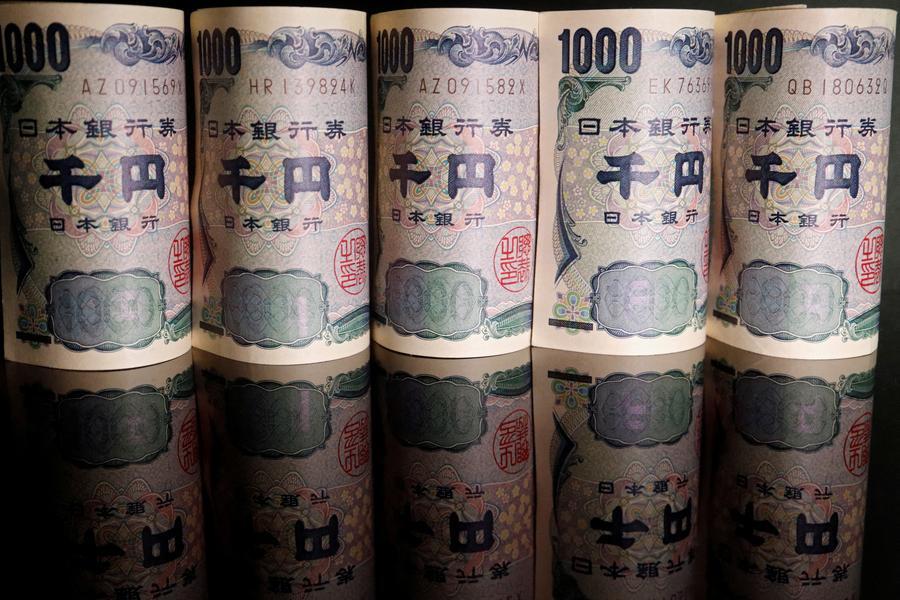
LONDON – The yen rose on Monday after Prime Minister Sanae Takaichi’s election victory, reversing six days of losses on traders’ bets that fiscal stimulus would boost stock markets, while the U.S. dollar weakened against other major currencies. After Takaichi’s victory on Sunday, the yen initially retreated slightly, hitting a two-week low, but rose as the trading day continued. The dollar was recently down 0.4% against the yen at 156.56 yen.
The yen has also recouped losses against other currencies, hitting record lows against the Swiss franc and trading near its lowest since the creation of the euro.
“While the initial weaker yen may not have worked out, the outlook for the yen is still likely to struggle towards a stronger yen,” said Sim Moe Siong, currency strategist at OCBC in Singapore.
“At least in the short term, there are also concerns about intervention risks, which may be holding back the dollar-yen’s upside.” Jun Mimura, Japan’s top currency diplomat, said early Monday that the government was “watching developments in the exchange rate closely with a high sense of crisis” after Takaichi’s coalition won a historic election victory. “There’s no question that this gives Mr. Takaichi the power to take a pro-growth policy stance, and it’s a battle between what’s good and the debt trends that are worrying the market,” said Kit Jaquez, head of foreign exchange strategy at Société Générale. Jacks said that long-term interest rates in Japan’s government bond market have not reacted negatively to Takaichi’s victory so far, and that the yen is temporarily safe as long as this situation continues.
But David Chao, global market strategist for Asia Pacific at Invesco in Singapore, said: “We expect some volatility as markets assess the impact of the Liberal Democratic Party’s landslide victory on currency trends.”
“Under the reinvigorated Liberal Democratic Party’s mandate, fiscal policy is likely to become more expansionary, with measures such as consumption tax cuts on food items becoming more likely to be taken,” Chao said. “This will put further pressure on Japan’s fiscal situation, while also increasing inflationary pressures and potentially bringing forward the Bank of Japan’s rate hike schedule.”
U.S. data releases to come The U.S. dollar index, which gauges the greenback’s strength against a basket of six currencies, fell 0.3% to 97.33 at the start of the week, with several key data releases expected from Washington, including retail sales, inflation and Wednesday’s delayed jobs report. “I don’t think the dollar will fall significantly unless the economy slows significantly,” Société Générale’s Jacques said, adding that this was a likely scenario. Traders are weighing whether the Federal Reserve will ease policy later this year. According to CME Group’s FedWatch tool, the implied probability of a 25 basis point rate cut at the next two-day U.S. central bank meeting (March 18) was last priced in by federal funds futures at 15.9%, down from Friday’s probability of 18.4%. Also on Monday, Bloomberg News reported that Chinese regulators have advised financial institutions to curb transactions in the United States.
The Treasury’s exposure pushed the onshore yuan to a 33-month high. The euro was recently up about 0.4% against the dollar at $1.1867. The pound was recently flat against the dollar, but fell against the euro as markets weighed developments in the political crisis. British Prime Minister Keir Starmer’s chief of staff resigned on Sunday, taking responsibility for advising Starmer to appoint Peter Mandelson as ambassador to the United States despite his known links to the late sex offender Jeffrey Epstein. Bitcoin fell 1.25% to $69,729.66, while Ether fell 2.34% to $2,044.64.
