

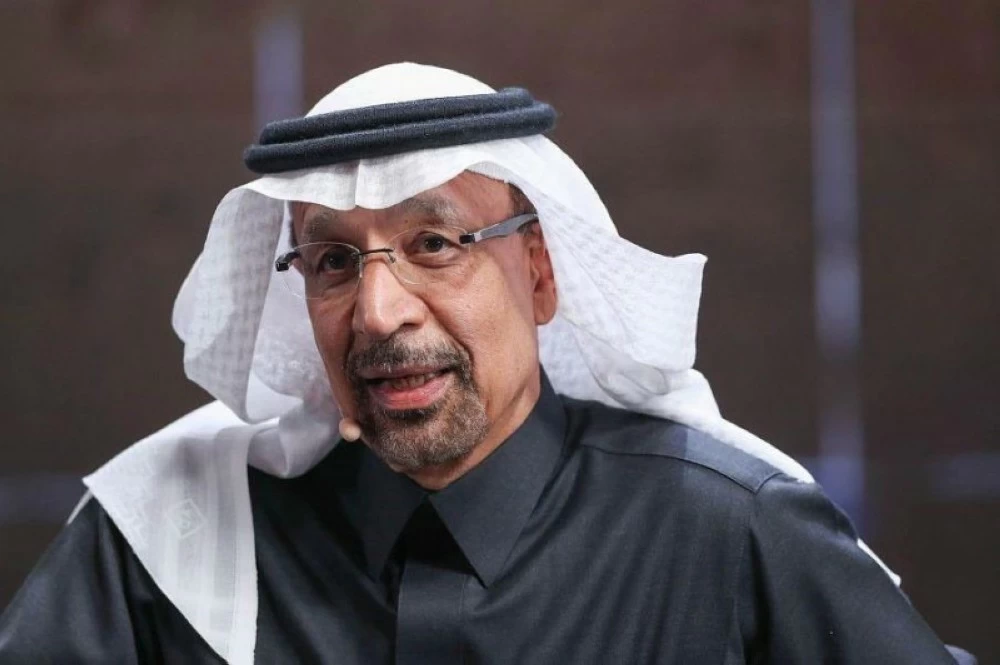
Saudi Arabia’s Minister of Investment Khalid al-Falih said the kingdom’s hosting of the 2034 World Cup and Expo 2030 has contributed to a realignment of investment priorities, necessitating the postponement of some projects until feasibility studies are completed. Speaking at a ministerial session of the Public Investment Fund and Private Sector Forum titled “When governments step up to support business,” he explained that investment contributions amounted to around 30% of the economy, achieving more than half of the 2030 target.
He pointed out that the restructuring of the Public Investment Fund included bold and unconventional decisions, increasing its assets from 600 billion riyals to approximately 4 trillion riyals, a large part of which was directed towards revitalizing the rural sector through major strategic projects such as “NEOM” and “The Line”, contributing to the achievement of unprecedented growth.
Al Falih explained that the goal of the National Investment Strategy, announced in October 2020, is to increase the investment contribution to the economy to 30%, estimated at SR12 trillion by 2030. More than half of this goal has been achieved within three and a half years, with investments amounting to approximately 6.2 trillion riyals and continuing to grow every year, with the share of investment in the non-oil economy exceeding 40%, a historic level. In terms of investment flows, Saudi Arabia ranks among developed countries.
stimulation and connection
He explained that the role of the Public Investment Fund focuses on promoting, linking and creating private sector value chains, with around 95% of investments coming from the private sector, compared to around 10% from the Fund, which coincides with a decline in government direct investment and fosters a lack of competition with the private sector.
He added that the attractiveness of the investment climate is reflected in a 10-fold increase in the number of registered investment companies and an increase in the number of companies with Saudi Arabia as their regional or global headquarters from five to around 700, and predicted that data for 2025 will show that investment flows have increased five times compared to 2019.
He added that in addition to major infrastructure projects such as the expansion of King Salman Airport and King Khalid Airport, the hosting of the World Cup and Expo 2030 has imposed new investment priorities that were not previously planned. He also highlighted the importance of the Fund’s move towards investing in artificial intelligence, given the amount of global investment expected in this area and the support opportunities the Fund will provide across a variety of sectors.
Mr. Al Falih underlined that the Public Investment Fund operates in accordance with the best global governance standards and has a high degree of flexibility in adapting to economic and technological changes, concluding by noting that the investment plan may be continuously updated based on feasibility studies and available capital constraints.
Saudi Investment Minister Khalid al-Falih said Saudi Arabia’s hosting of the 2034 World Cup and Expo 2030 has changed priorities for other projects.
Speaking at a ministerial session of the Public Investment Fund and Private Sector Forum entitled “When governments commit to supporting business,” he added that the Kingdom has achieved half of its goal of investing contributing 30% to the economy by 2030.
He confirmed that the restructuring of the Public Investment Fund includes bold and unconventional decisions, noting that some projects have been postponed until feasibility reviews are completed.
He said that at this stage it is essential for PIF to focus on the field of artificial intelligence. He explained that investments in artificial intelligence in Saudi Arabia will benefit multiple sectors, as hundreds of billions of dollars are expected to be invested in this field around the world.
Mr. Al Falih emphasized that the Public Investment Fund operates in accordance with the best global standards in terms of governance, the balance between the board and management, and the effectiveness and flexibility of the Fund in dealing with changes such as global, regional, local and technological changes and feasibility.
He said that since each investor has a limited amount of available capital, plans will be subject to detailed consideration and changes based on the project’s feasibility as it unfolds.
He said that the fund has experienced unprecedented growth and has started investing 600 billion riyals, bringing the amount to nearly 4 trillion riyals, and that some of these investments are aimed at revitalizing the Saudi sector, including bold and unprecedented projects such as “NEOM” and “The Line”.
He added: “During this period, unplanned priorities such as the World Cup will emerge, and Saudi Arabia will need to build a number of facilities related to logistics services adjacent to the stadium, and before that, it will also have to complete Expo 2030, the completion of the King Salman Airport project, and the expansion of King Khalid Airport.”
