

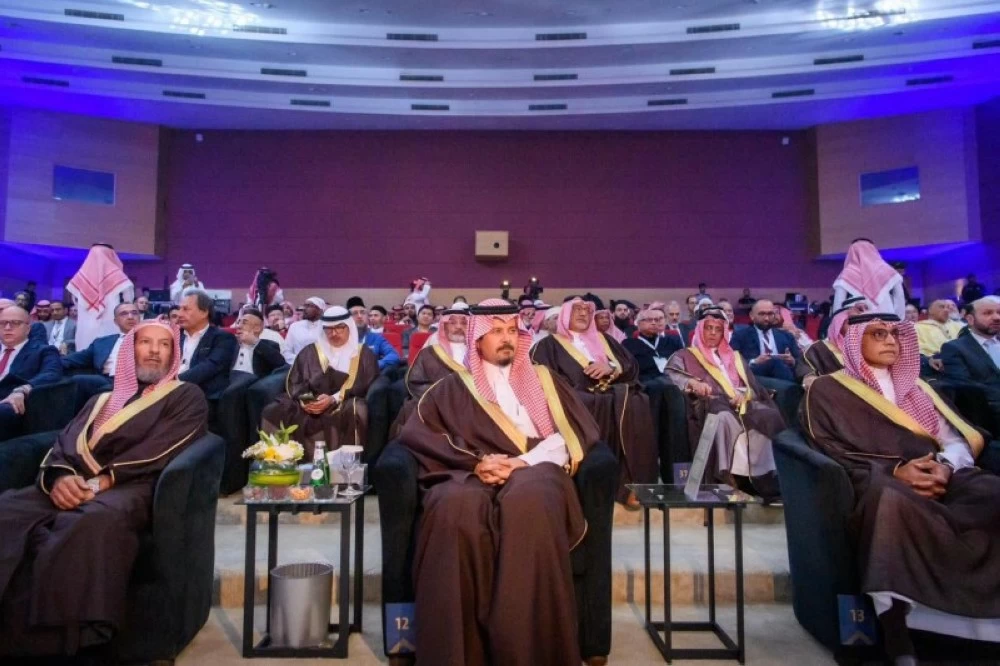
Prince Salman bin Sultan bin Abdulaziz, Governor of the Medina Region, sponsored the opening ceremony of the 46th Al-Barakah Islamic Economic Symposium, organized by the Al-Barakah Islamic Economic Forum under the slogan “Charity and philanthropy sector in the Islamic economy… towards a new future” at Prince Muqrin bin Abdulaziz University.
Abdullah Saleh Kamel, Chairman of the Board of Directors of Al-Barakah Islamic Economic Forum, President of the Islamic Chamber of Commerce and Industry, and Chairman of the Federation of Saudi Chambers of Commerce and Industry, affirmed that the charity sector is the largest sector of the Islamic economic system, and stressed that achieving true balanced development cannot be achieved unless this sector is seen as a genuine economic component and not just a complementary charity activity.
righteousness and benevolence
In his speech, he explained that this year’s choice of the theme “Philanthropy and the Charitable Sector” was aimed at the future of the Islamic economy and the integration of the concepts of giving, spending and charity as economic and developmental values, starting from Medina, which witnessed the first beginnings of the Islamic economy, and spreading throughout history.
He pointed out that the progress of the Al-Baraka Symposium over the past decades has contributed to building the tools of modern Islamic economics, especially Islamic banking, and stressed that the next stage needs to address an integrated path that includes charity and charity economy, revitalizing the role of capital, and adhering to morals and values, which are the basic foundations of Islamic economics.
islamic economics
He explained that these three paths together constitute the foundation on which to build the future of the Islamic economy, by continuing the main tools launched over the past 50 years, such as sukuk and takaful insurance, as well as optimally leveraging modern financial technologies in ways that increase impact and sustainability.
He emphasized the importance of empowering the nonprofit sector, noting that Saudi Arabia’s experience in this field is an inspiring national model that can be transferred to the world, contributing to achieving sustainable development and maximizing social impact.
Afterwards, Sheikh Hisham bin Mahmoud, Mufti of the Republic of Tunisia, gave a speech, stressing that holding the symposium in the city of the Messenger of God embodies the values of righteousness, compassion and solidarity that were the basis of the Muhammadan message, and cited the model of synergy between migrants and supporters, demonstrating the importance of these values. It represents the basis of humanitarian and economic work in Islam.
Saudi Arabia’s role
He praised Saudi Arabia’s pioneering role in supporting avenues of charity and development work and strengthening principles of compassion and solidarity under the guidance of the Custodian of the Two Holy Mosques and its trusted Crown Prince. He evaluated the experience of Tunisia’s Al Baraka Group and Al Baraka Bank as an integrated model that combines banking and jurisprudence visions, based on the principles of solidarity and support for the needy. The Prime Minister praised the contribution of Sheikh Saleh Abdullah Kamel (may God have mercy on him) for his contribution to development projects and continued to follow this approach with his children and family, and at the end of his speech expressed his gratitude to the Sheikhs of the Medina region for their consideration.
The audience then viewed a visual presentation titled “The Economy of Charity and Charity…Giving that Makes an Impact,” which addressed the historical roots of the economy of giving in Islam, from the first donations in Medina to the transformation of the nonprofit sector into an influential economic development tributary in the modern era. The presentation highlighted Saudi experience in empowering the nonprofit sector within Saudi Vision 2030 as a sector managed with an institutional methodology that reflects transforming the nonprofit sector into an effective development force that supports economic and social sustainability.
In the same context, the Regional Mayor of Medina sponsored the signing of three memorandums of understanding. The first is between Al-Barakah Islamic Economic Forum and the Islamic University of Medina with the aim of strengthening their integration and raising the level of programs and activities that serve human development, the second is between Al-Barakah Islamic Economic Forum and INCEIF University to support scientific research and encourage the exchange of knowledge and experience, and the third is a Memorandum of Understanding between the two countries. Al-Barakah Islamic Economic Forum and King Abdulaziz University (represented by the Institute of Islamic Economics) will strengthen research and knowledge integration and develop scientific resources.
Prince Salman bin Sultan bin Abdulaziz, Prince of Medina Region, sponsored the opening ceremony of the 46th session of the Al-Barakah Symposium on Islamic Economy, organized by the Islamic Economic Al-Barakah Forum, under the slogan “Charity and benevolence sector in the Islamic economy… towards a new future” at Prince Muqrin bin Abdulaziz University.
Abdullah Saleh Kamel, Chairman of the Board of Al-Barakah Islamic Economic Forum, Chairman of the Islamic Chamber of Commerce and Industry, and Chairman of the Board of Directors of the Saudi Chamber of Commerce, affirmed that the field of charity and goodwill is the largest field in the Islamic economic system. He stressed that true balanced development cannot be achieved without taking into account this sector, as it is not just a complementary philanthropic activity, but an essential economic element.
charity and goodwill
In his speech, he explained that this year’s choice of the theme “Departments of Charity and Goodness” comes as a vision for the future of Islamic economics, which originates from Medina, which witnessed the early beginnings of Islamic economics, and strengthens the concept of giving, spending and good as economic and developmental values that have spread throughout history.
He pointed out that the progress of the Al-Barakah Symposium over the past decades has contributed to building modern tools of Islamic economics, especially Islamic banking. He asserted that the next step requires working on an integrated pathway that includes an economy of charity and goodness, revitalizing the role of capital, and adhering to ethics and values as the fundamental foundations of Islamic economics.
islamic economics
He pointed out that in parallel with the continuation of the main tools that have emerged over the past 50 years, such as sukuk insurance and takaful insurance, these three channels work together to form the basis for building the future of the Islamic economy by optimally leveraging modern financial technologies to increase impact and sustainability.
He emphasized the importance of empowering the nonprofit sector, noting that the Saudi experience in this area is an inspiring national model that can be emulated globally, contributing to achieving sustainable development and maximizing social impact.
The Grand Mufti of Tunisia, Sheikh Hicham Ben Mahmoud, then gave a speech, affirming that holding the symposium in the city limits of the Messenger of Allah (peace be upon him) embodies the values of charity, goodwill and solidarity that were the basis of the Muhammadan message, citing the model of cooperation between migrants and their supporters, explaining: Values represent the basis of humanitarian and economic work in Islam.
saudi arabia rules
He praised the pioneering role of Saudi Arabia, led by the Custodian of the Two Holy Mosques and his trusted Crown Prince, in supporting charity and development projects and reinforcing the principles of compassion and solidarity, and praised the experience of Tunisia’s Al-Barakah Group and Al-Barakah Bank as a comprehensive model based on the principles of solidarity and assistance to the needy, combining banking and jurisprudence vision. He also highlighted the contribution of Sheikh Saleh Abdullah Kamel (May God have mercy on him) in serving development activities and that his children and family continue this approach, and at the end of his speech expressed his gratitude to the Prince of Medina Region for the patronage.
Participants then viewed a visual presentation titled “The Economy of Charity and Goodwill…Giving that Makes an Impact.” This presentation covered the historical roots of the economy of giving in Islam, starting with the first donations in Medina and leading to the transformation of the nonprofit sector into impactful economic development in the modern era. The presentation highlighted Saudi experience in empowering the nonprofit sector within Saudi Vision 2030 and portrayed the nonprofit sector as a sector managed with an institutional methodology that reflects its transformation into an effective development force that supports economic and social sustainability.
In this regard, the Prince of Medina region sponsored the signing of three memorandums of understanding. The first of these is between the Al-Barakah Forum for Islamic Economy and the Islamic University of Medina, with the aim of strengthening the integration between them and raising the level of programs and activities that serve the development of humanity. The second Memorandum of Understanding was signed between Al Barakah Islamic Economic Forum and INCEIF University to support scientific research and encourage the exchange of knowledge and experience, and the third Memorandum of Understanding was signed between Al Barakah Forum for Islamic Economics and King Abdulaziz University, represented by the Institute of Islamic Economics, to strengthen research and knowledge integration and develop scientific resources.
