

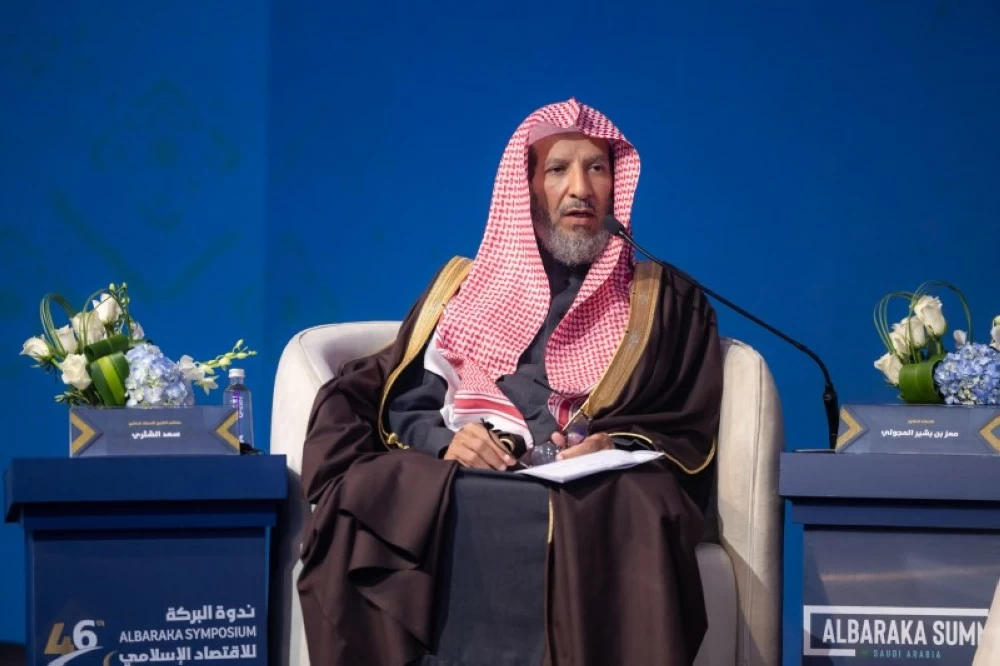
The 46th “Al Barakah Islamic Economics Symposium” opened yesterday (Monday) at the Headquarters of Prince Muqrin bin Abdulaziz University in Medina, with the participation of an elite group of academics, financial thought leaders, decision makers, and representatives of financial and development institutions from 18 countries, with the participation of an elite group of academics, financial thought leaders, decision makers, and representatives of financial and development institutions from 18 countries, with the title “Philanthropy and Philanthropy Sector in the Islamic Economy: Toward a New Future”. In the area.
Yousef Qarawi, Executive Director of Al-Barakah Islamic Economic Forum, emphasized the importance of the theme of the symposium, pointing out that the philanthropic sector’s commitment to the economic aspects is inseparable from the legal, social and developmental aspects, and stressed the fundamental role of Islamic banks in the development of the modern Islamic economy.
Meanwhile, Sheikh Mohammed Taqi Al-Othmani explained that the charity and philanthropic sector represents one of the most complete aspects of the Islamic economy, and emphasized the pivotal role played by the Al-Barakah Seminar in the development of the Islamic financial industry and the deepening of its intellectual and legal issues.
The first scientific session featured a discussion on the original concept of the charity and philanthropy sector and its role in achieving sustainable development, with Sheikh Saad Al Shasri stressing that charity and charity are fundamental principles of Islamic economics, contributing to combating poverty and transforming people in need into productive factors, and the importance of combining legal anchoring with measurement of economic and social impact.
Participant intervention
Participants’ interventions addressed repurposing philanthropy and philanthropy as economic and empowerment functions, increasing governance and institutional efficiency, and accounting for different types of philanthropy, from zakat and philanthropy to qad al-hasan and donations, and their role in supporting economic growth and achieving social solidarity.
The second session also discussed the role of Islamic banks in the development of the philanthropic sector, highlighting the importance of moving from an endowment role to strategic partnerships through innovative investment tools and good governance. The first day’s work concluded with a session dealing with legally regulated philanthropic investments, focusing on the development of endowments, investing in Zakat funds, and measuring development impact to achieve economic and social sustainability.
