

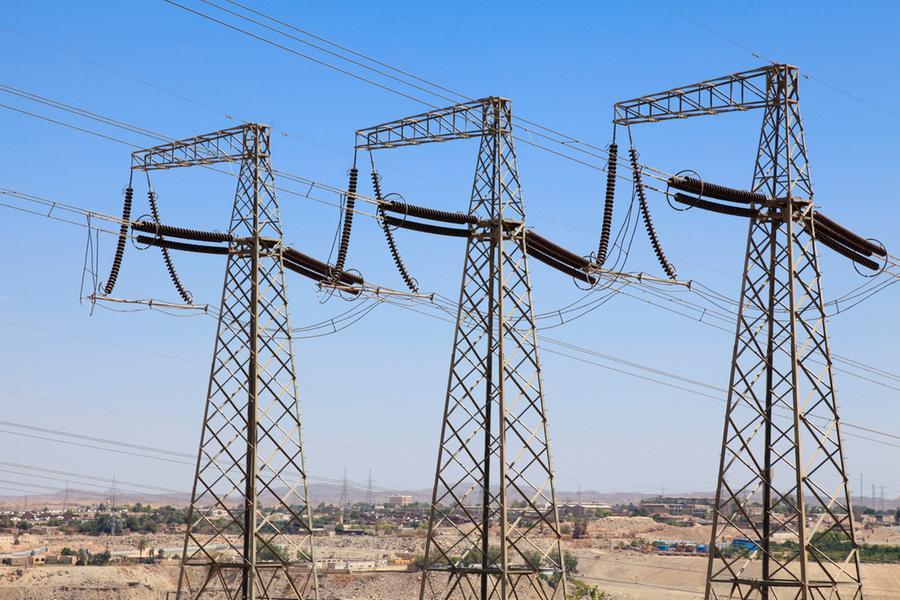
According to the Ministry of Electricity and Renewable Energy, Egypt invested approximately EGP 26.5 billion in the 2024/2025 financial year to modernize and expand the electricity grid, improve grid efficiency and integrate renewable energy into the national grid.
Mahmoud Esmat, Minister of Electricity and Renewable Energy, reaffirmed the government’s commitment to ensuring the availability of high-quality, continuous and stable electricity, while accelerating projects to upgrade and modernize the electricity transmission system to accommodate the increasing capacity of renewable energy sources.
Esmat made the remarks while chairing the regular general meeting of the Egyptian Electricity Transmission Company (EETC), noting that the national power grid is continuously developing through the construction of new transmission lines, strengthening of existing transmission lines, installation of new substations and expansion of operational stations.
He said Egypt’s energy transition strategy, which focuses on expanding renewable energy, increasing reliance on clean resources, and protecting the environment, is being implemented in parallel with a comprehensive plan to increase the efficiency of the electricity grid, reduce fuel consumption, and transform the traditional electricity grid into a smart grid in line with international standards, especially capable of efficiently handling large-scale electricity generation from renewable energy.
“The plan aims to reduce technical losses, ensure sustainable electricity transmission from all generation sources, and promote economic operations through institutional efficiency, quality policies, optimal utilization of assets, and rigorous environmental and safety standards, supported by highly skilled human and technical capabilities,” Esmat added.
EETC Chairman Mona Lisk presented the company’s performance report for the financial year 2024/2025 and confirmed that all planned targets were achieved. He said that investments totaling approximately 26,289 million Egyptian pounds were directed toward the rehabilitation and renewal of special high-voltage and high-voltage substations and transmission lines, the completion of ongoing projects, and the implementation of new expansions.
Rizk pointed out that the total number of ultra-high voltage and high-voltage substations currently stands at 819, with a total capacity of 230,000 MVA, and transmission lines spanning approximately 61,000 kilometers. Renewable energy sources such as wind, solar, hydropower and battery storage account for around 14% of the installed capacity of the national power grid, as Egypt moves towards its 2030 target of 42% renewable energy.
The ministry also seeks to develop Egypt as a regional energy exchange hub. Existing interconnections with Jordan, Libya and Sudan are being strengthened, as well as ongoing interconnection projects with Egypt and Saudi Arabia, as well as ongoing projects with Greece and Italy.
Mr. Rizk emphasized that the power grid is monitored daily under an economical power distribution system and operated in coordination with the oil sector in order to maintain safe operations, reduce fuel consumption and ensure the stability of the entire network, both electricity and gas.
He added that technical performance indicators have improved due to maintenance programs and optimal operation of the power grid. Upgrading protection systems and power compensators such as capacitor banks, reactors, advanced systems (STATCOM and SVC) improves voltage levels and power factor across the grid.
The grid is currently being monitored through the National Control Center of the New Administrative Capital and Regional Center as part of a broader digital transformation plan that introduces advanced software and applications to streamline administrative and technical operations in line with Egypt’s smart grid goals.
© 2026 Daily News Egypt. Provided by SyndiGate Media Inc. (Syndigate.info).
