


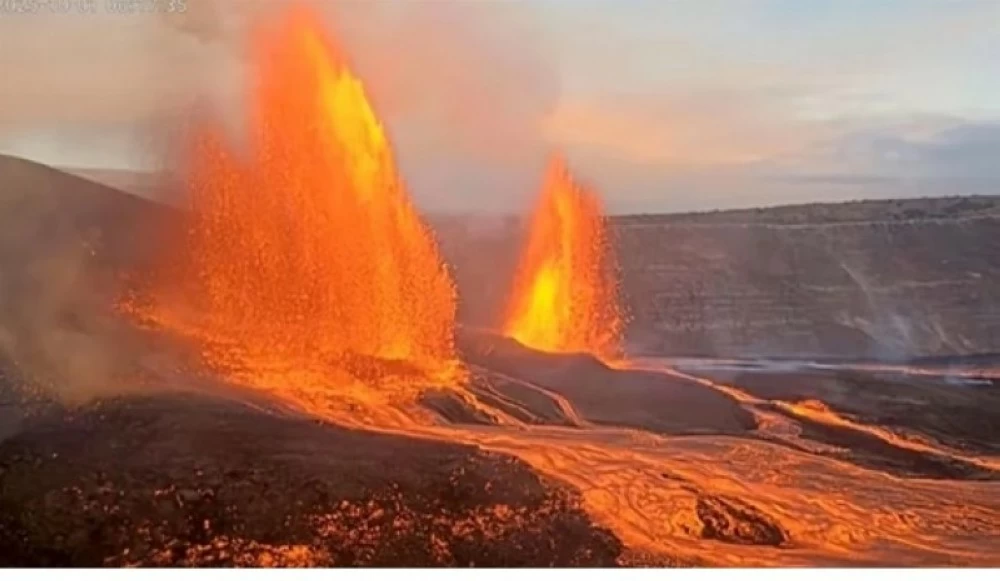
After 40 years of complete silence inside the El Chichon volcano, known for its bloody record, the horrors of one of Mexico’s worst disasters have returned to the forefront after scientists detected unusual activity indicators.
The volcano, which tragically erupted in 1982 and killed at least 2,000 people and destroyed an entire village, has shown worrying signs in recent months amid concerns that its internal systems are acting unexpectedly, prompting scientists to sound the alarm.
In addition to the release of dangerous gases such as hydrogen sulfide and carbon dioxide, researchers from the National Autonomous University of Mexico have recorded a significant increase in temperature inside the volcano’s crater, emissions that could pose an immediate threat to life if they accumulate.
The researchers also noticed a noticeable change in the color of the crater lake, from green to gray. This is a sign of deep chemical disturbances inside the volcano, with rare and previously unrecorded sulfur formations.
This activity is reminiscent of the scenario of the 1982 disaster, when the volcano released suffocating ash clouds and destructive volcanic flows, destroying villages and displacing thousands of residents, causing years of environmental and economic losses, especially in the agricultural and livestock sectors.
Despite the growing concerns, volcano experts stress that current indicators do not necessarily mean an eruption is imminent. Preliminary analysis suggests that what is happening now may be the result of hydrothermal reactions as groundwater within deep rocks is heated, rather than molten magma rising to the surface.
But scientists also stress that volcanoes do not always give clear warnings, and that changes in heat and gases, even if they appear limited, require careful and continuous monitoring.
The area is currently under intense surveillance using drones, satellites and seismic measurement equipment to monitor for sudden developments that could pose a danger to residents living near the volcano.
Experts warn that volcanoes that have witnessed large explosions could remain active for decades or even centuries after their last eruption, making responding to new indicators a matter of public safety and security.
After 40 years of complete silence inside El Chichon volcano, known for its bloody record, the ghosts of one of the deadliest disasters in Mexico’s history have resurfaced as scientists have discovered signs of unusual activity.
The volcano, which erupted in 1982 in a tragedy that killed at least 2,000 people and destroyed an entire village, has shown worrying signs in recent months, raising alarm among scientists, amid fears of unexpected movements within its internal systems.
A team of researchers from the National Autonomous University of Mexico has documented a significant rise in temperature inside the volcano’s crater, along with the release of harmful gases such as hydrogen sulfide and carbon dioxide, which if accumulated could pose a direct threat to life.
The researchers also noted that the color of the crater lake changed from green to gray, indicating deep chemical disturbances inside the volcano, with rare sulfur formations not previously recorded.
This activity is reminiscent of the scenario of the 1982 disaster, when the volcano released suffocating ash clouds and destructive lava flows, burying villages, displacing thousands of residents, and causing long-lasting environmental and economic losses, especially in the agricultural and livestock sectors.
Despite growing concerns, volcano experts insist that current indicators do not necessarily mean an eruption is imminent. Preliminary analysis suggests that what is happening now may be the result of hydrothermal interactions caused by the heating of groundwater deep inside rocks, rather than molten magma rising to the surface.
However, scientists stress that volcanoes do not always give clear warnings, and changes in heat and gases (even if they appear limited) require careful and continuous monitoring.
The area is currently under intensive monitoring using drones, satellites and seismic measurement equipment to monitor for sudden developments that could pose a danger to residents living near the volcano.
Experts warn that volcanoes that have experienced major eruptions can remain active for decades or even centuries after their last eruption, making handling the new indicators a matter of public safety and security.
