


A forgotten Roman city in northern Tunisia has come back from beneath the earth after recent scientific excavations revealed treasures dating back more than 2,000 years, creating a history-changing scene for the site, which has long been out of the limelight.
As part of an international collaboration between the National Heritage Institute and Italy’s University of Sassari, a Tunisian and Italian scientific team continues detailed archaeological excavations at the Hencil el Mataria archaeological site (Noumroli) in the province of Beja, resulting in the discovery of exceptional landmarks and artifacts from the Roman and Byzantine periods.
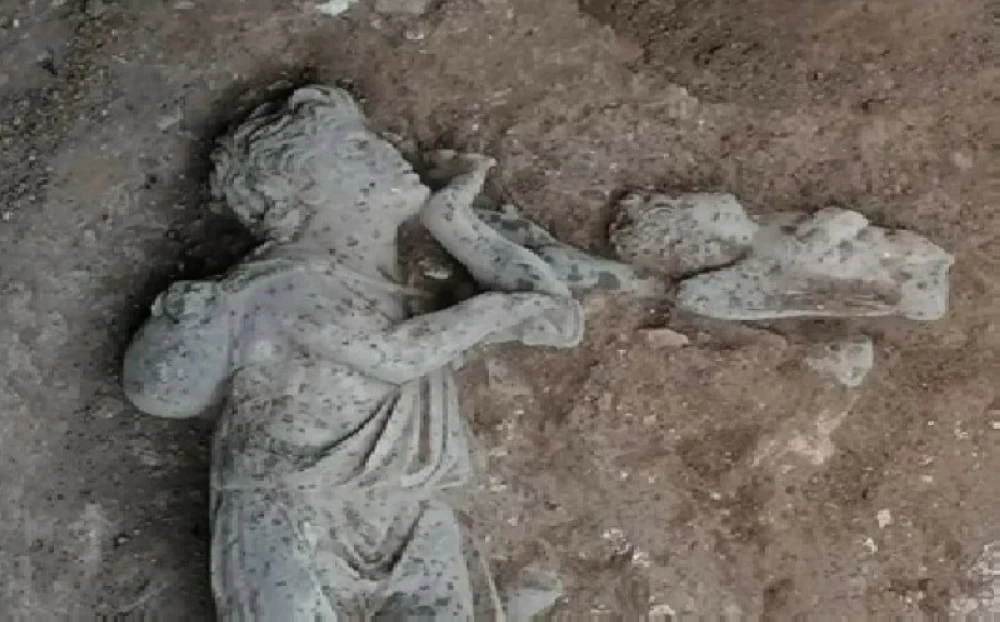
Excavations focused on public squares and Byzantine churches revealed statues of Roman gods, ceramic lamps, and rare Byzantine mosaic panels characterized by high artistic precision and remarkable state of preservation, as well as massive Roman capitals and columns that adorned the Capitol.
According to the National Heritage Institute, these discoveries not only enrich the archaeological stock but also provide a clearer picture of the religious and urban life of the city of Noumrouri, which is considered one of the best preserved Roman cities in northern Tunisia.
The city, so far only partially explored, includes a central square with a parliament building in the center, two temples, two Roman baths, as well as the Martyrium and the Old Christian Church, which later formed the core of Byzantine urban and religious transformation.
The Italian archaeological mission has been active at the site since 2022, focusing on the study of the urban structure and the discovered finds, with the participation of students and young researchers from Tunisia and Italy, within the framework of a scientific project aimed at restoring the reputation of the historic city, which has fallen out of the tourist and academic path for decades.
This mission is being carried out in full cooperation with the Tunisian authorities and with the support of the Italian Ministry of Foreign Affairs and International Cooperation and the Italian Embassy in Tunisia.
Experts believe that what has been revealed so far may be just the beginning, given strong indications of the existence of deeper archaeological layers that have not yet been touched, opening the door to larger discoveries that could make Hensir el-Mattaria one of Tunisia’s most important archaeological sites in the coming years.
A forgotten Roman city in northern Tunisia is back on the map of archaeological discoveries after recent scientific excavations uncovered treasures dating back more than 2,000 years, setting the scene for rewriting the history of long-obscured sites.
As part of an international collaboration between the National Heritage Institute and Italy’s University of Sassari, a Tunisian and Italian scientific team continues to carry out precise archaeological excavations at the site of Henchir Matarija (Numururi) in Beja province, which has resulted in the discovery of outstanding features and artifacts from the Roman and Byzantine periods.
The excavations, which focused on public squares and Byzantine churches, uncovered statues of Roman gods, ceramic lamps, and rare Byzantine mosaics characterized by high artistic precision and remarkable preservation on a large scale, as well as columns that decorated the Roman capital and parliament.
According to the National Heritage Institute, these discoveries not only enrich the archaeological inventory but also provide a clearer picture of the religious and urban life of Numourli, considered one of the best preserved Roman cities in northern Tunisia.
The city, so far only partially explored, includes a parliament building, two temples, a central square topped by Roman baths, a martyrdom complex and an old Christian church, which later formed the core of Byzantine urban and religious transformation.
The Italian archaeological mission at this site began in 2022 and focused on the study of architectural structures and discovered artifacts, with the participation of young students and researchers from Tunisia and Italy, as part of a scientific project aimed at restoring the importance of a historic city that has been off the tourist and academic routes for decades.
This mission is being carried out in full cooperation with the Tunisian authorities, with the support of the Italian Ministry of Foreign Affairs and International Cooperation and the Italian Embassy in Tunisia.
Experts believe that what has been discovered so far is just the beginning, given that it strongly hints at deeper archaeological strata that have not yet been touched, opening the door to larger discoveries that could make Henchil Matariya one of Tunisia’s most important archaeological sites in the coming years.
