


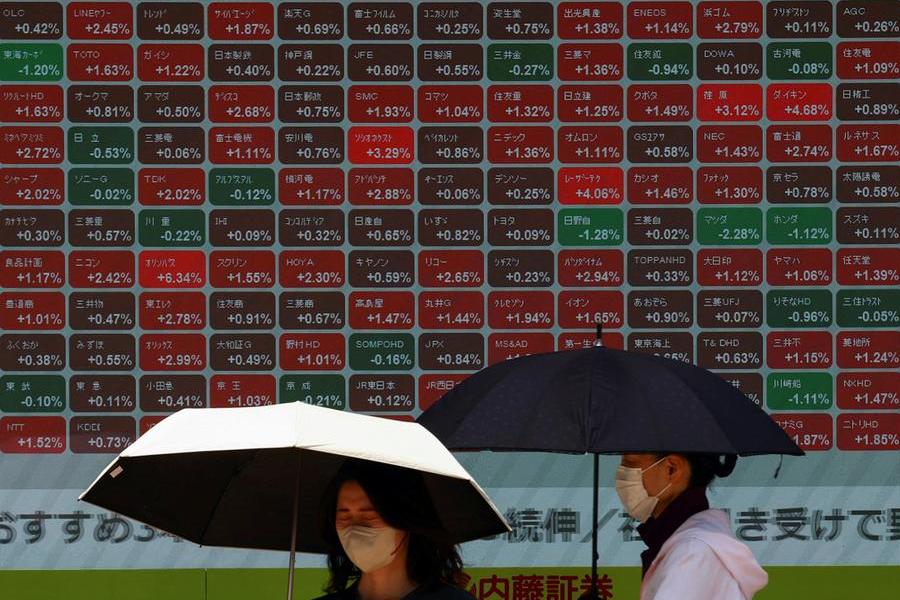
SINGAPORE: Asian stocks rose to a record high on Thursday, while the dollar firmed against most currencies except the yen as better-than-expected U.S. jobs data dampened hopes for short-term interest rate cuts, in preparation for Friday’s inflation report.
Stocks in South Korea and Japan hit record highs in early trading as the technology sector rose. Japanese stocks have fallen sharply since Prime Minister Sanae Takaichi won a landslide election victory over the weekend on the promise of stronger economic stimulus.
This pushed MSCI’s broadest index of Asia-Pacific stocks to another all-time high. The index rose 0.65%, bringing the gain for the first six weeks of the year to about 13%.
Markets are focused on a series of U.S. economic reports this week, with data on Wednesday showing that job growth unexpectedly accelerated in January while the unemployment rate eased slightly, offering signs of stabilization in the labor market and potentially prompting the Federal Reserve to keep interest rates on hold in the near term.
Thomas Matthews, head of Asia-Pacific markets at Capital Economics, said the big picture is that labor market conditions may be tight at the moment. “If that happens, investors may be overestimating the likelihood of further easing, and Treasuries could suffer a bit more.”
According to CME’s FedWatch tool, market expectations that the Fed would cut interest rates by at least 25 basis points at its March central bank meeting rose to about 20% before the jobs report, but receded after the jobs report and ended up at about 5%. Traders are still pricing in at least two rate cuts this year.
The two-year Treasury yield, which typically moves in step with the Federal Reserve’s interest rate expectations, rose 5.8 basis points in the previous session to 3.512% in Asian time, the biggest single-day rise since late October. The benchmark 10-year US government bond yield was 4.186%.
Rising yields supported the dollar, which is under pressure, and it rebounded slightly against most currencies. But analysts say uncertainties about the Fed’s independence and policy risks suggest the dollar will need more of these positive surprises in the data to sustain its rebound.
“USD weakness remains possible due to improved global growth prospects and continued outperformance of non-U.S. equities,” OCBC strategists said in a note.
Inflation data is expected to be released on Friday, the next test of market views on a rate cut.
The yen has become an outlier amidst the strong dollar, and has once again appreciated, recently reaching 153.02 yen to the dollar. The currency has appreciated nearly 3% since Takaichi’s victory. Investors suspect the huge mandate could obviate the need for negotiations with opposition parties and make the government more fiscally responsible.
“Yen shorts are collectively repositioning, but at this stage the bearish trend in the yen that began in early 2025 looks more like a reversion to the mean than the start of a structural bull market,” said Chris Weston, head of research at Pepperstone.
“That said, traders need to keep an open mind as the macro picture evolves and the market ultimately decides where to take JPY.”
In the commodity market, oil prices widened, with Brent crude oil futures up 0.4% to $69.68 a barrel as investors worried about escalating tensions between Iran and the United States. US West Texas Intermediate crude oil rose 0.46% to $64.93 per barrel.
Spot gold fell 0.44% to $5,058.49 after gaining more than 1% in the previous session. (Reporting by Ankur Banerjee in Singapore; Editing by Lincoln Feast.)
