

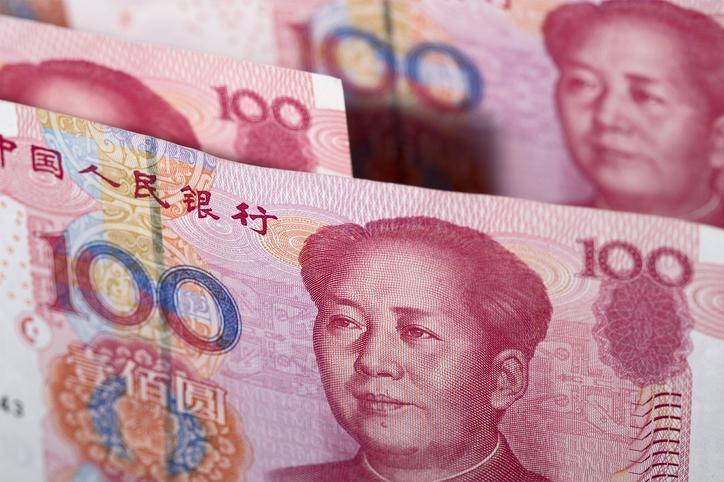
The investment corridor between the Middle East and Asia is intensifying, with fixed income investors from both regions looking to each other for attractive options in a volatile world.
These dynamics are not necessarily new, but they have become more pronounced over the past year or so, particularly with respect to China.
“This story is slowly becoming more visible and more meaningful,” said Alain Roque, head of Asia-Pacific credit markets at Credit Agricole. “This is not a fact forgotten by these (Middle Eastern) issuers. They are definitely noticing that more order books are going to Asia.”
Rocci said about 25% of the US dollar bond allocation from the Middle East is now allocated to Asian investors, up from 10% previously.
Faisal Ali, senior portfolio manager at Italian asset management firm Azimut, said there was also a noticeable increase in the number of Chinese banks acting as lead underwriters for Middle East bonds.
“Given that Chinese banks primarily serve Chinese institutional and corporate clients, their increased involvement suggests that a portion of Middle East bond issuance is being distributed to Chinese investors,” he said, calling this “increasing indirect participation channels for China.”
There are several reasons behind the growth. As an example, US dollar bond volume in Asian primary markets has been modest in recent years, below pre-2021 highs. Investors are therefore hungry for options where the growing Middle East can offer high-quality issuers and attractive spreads.
“(Asia) is a continent where there is more demand than supply,” Roch said. “Local investors in Asia are very comfortable with (Middle East) credit risk and are offering very competitive terms in the bond market.”
Middle Eastern banks are offering investment-grade capital deals at much more generous spreads than those seen in Asia, and longer-duration bonds in the region have steeper curves, said Zerlina Zeng, head of Asia strategy at research firm CreditSights.
Asian investors may also be less sensitive to some of the risks that could drive Western investors away from Middle East credit.
“Asian people are generally less sensitive to geopolitical noise than global investors,” Roch said. “They’ve done their job on what tensions in the Middle East mean in terms of risk and reward.”
political connections
For Chinese investors, the Middle East is geographically closer to home than Europe or the United States. Because they are looking for investment from Asia.
“When they look at space outside of China, they look at what they know well,” Zeng said. “They need a place that has a political and strategic investment perspective.”
Political relations between China and the Middle East have recently become closer, building on China’s long-standing investments through the Belt and Road Initiative. When China returns to the US dollar bond market in 2024 for the first time in three years, it will orchestrate a sale from Saudi Arabia and include Abu Dhabi in its roadshow for the first time.
Most recently, Chinese Foreign Minister Wang Yi visited the United Arab Emirates, Saudi Arabia, and Jordan in December. Hong Kong Chief Executive John Lee also visited Qatar and Kuwait in 2025 in a bid to make Hong Kong a “super connector” between the mainland and countries in the Middle East.
Chinese banks have also stepped up lending in the region, growing from financing Belt and Road-related infrastructure projects to increasing their presence in commercially-driven deals for Middle Eastern borrowers.
Benefits of diversification
Middle Eastern issuers have been active borrowers in the Formosa market, with three banks pricing US dollar deals in Taiwan so far this year. The number is expected to increase further after the Chinese New Year holiday.
For Middle Eastern issuers, Asia offers diversification and a liquid pool of capital. Asian investors will buy the US dollar, which remains dominant for the Middle East, but the region also has attractive local options such as the renminbi and Australian dollar. Roch said issuers are increasingly exploring these markets and the euro, and he expects to see trading in these currencies this year.
“The next step is to operate in Asia, but in currencies other than the dollar,” he said.
Alicia García Herrero, chief economist for Asia Pacific at Natixis, said while it makes sense for Middle East issuers to keep their debt denominated in dollars, they would be attracted to the renminbi’s pricing, which is about 220 basis points cheaper than dollar bonds.
“There is clearly an interest on the Chinese side in bringing Middle Eastern issuers into the CNH market,” García Herrero said, adding that onshore Panda bonds would also be a popular route. In January, Arab Energy Fund (ApiCorp) received marketing approval for the Debut Panda, becoming the first multilateral financial institution to market it in the Middle East and North Africa.
With oil prices below $70 a barrel, Gulf countries need money.
“Anything below $90 a barrel requires funding,” Garcia Herrero said. “They need a platform to issue bonds, and Hong Kong is particularly suitable, but so is the Panda bond market.”
At the same time, the growth of investment funds in the Middle East has led to more money being put into Asian bonds. Credit Sites’ Zeng said Gulf money is being actively used in dim sum bonds, which is consistent with increased investment activity across the region.
“These investors are buying risk in Asia. They understand Asia very well,” said Credit Agricole’s Rock. “They’ve developed more firepower, so they’re going to deploy more firepower than they have in the past.”
Source: IFR
