

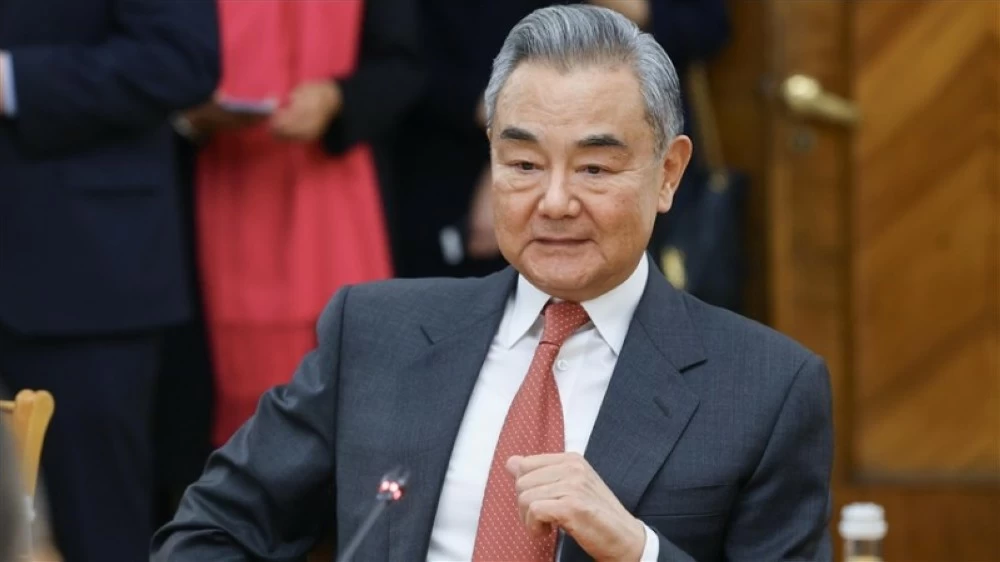
MUNICH – Chinese Foreign Minister Wang Yi on Saturday urged greater European involvement in negotiations to end the Russia-Ukraine war, saying the continent should be “at the table” rather than “on the menu”.
Speaking at the Munich Security Conference, Wang said Europe should not remain on the sidelines as diplomatic efforts move forward.
“Europe should not stand by and watch this happen,” he said.
“Europe has every right to participate in negotiations in due course. Europe should not be on the menu, it should be at the table.”
He called on European leaders to show “the courage to engage in dialogue with Russia” and present new ideas and plans, noting that the United States had previously engaged Russia in talks while Europe appeared to be left behind.
Wang said China is not directly involved in the conflict but supports dialogue. “China is not a direct party,” he said, adding that the Chinese government is promoting peace negotiations.
The United States, Russia and Ukraine are currently in trilateral dialogue aimed at ending the war that began in February 2022, and Wang said he welcomed the process.
Turning to the relationship between China and the EU, Wang said that the European Union and China are “partners, not systemic rivals or strategic competitors.”
“We acknowledge that there are differences and differences between us, but that does not mean that we could not reach better harmony,” he said.
Related articles

Von der Leyen says Europe must be ready to defend itself “at all times”
He called on both sides to practice multilateralism, uphold the authority of the United Nations, oppose unilateral action and defend free trade.
Mr. Wang also praised the role of the United Nations, saying that without it, “many small and medium-sized countries would lose the multilateral foundations essential for their survival and development.”
He accused unnamed countries of widening inequality and weakening the international system.
Regarding the Middle East, Wang said that achieving a ceasefire and reconstruction in the Gaza Strip requires continued efforts to realize a two-state solution, adding that it is the responsibility of the international community to restore justice to the Palestinian people.
He also said that Iran’s developments have a direct impact on regional stability.
Wang said there are “two paths forward” for U.S.-China relations. One path involves mutual understanding and pragmatic cooperation that benefits both countries and the world.
The other is to disrupt supply chains and confront China “in a purely emotional way,” including in efforts related to Taiwan, he warned.
Such a path is “very likely to push China and the United States into conflict,” he said.
Although China prefers the first scenario, it is prepared to deal with various risks, Wang added.
