


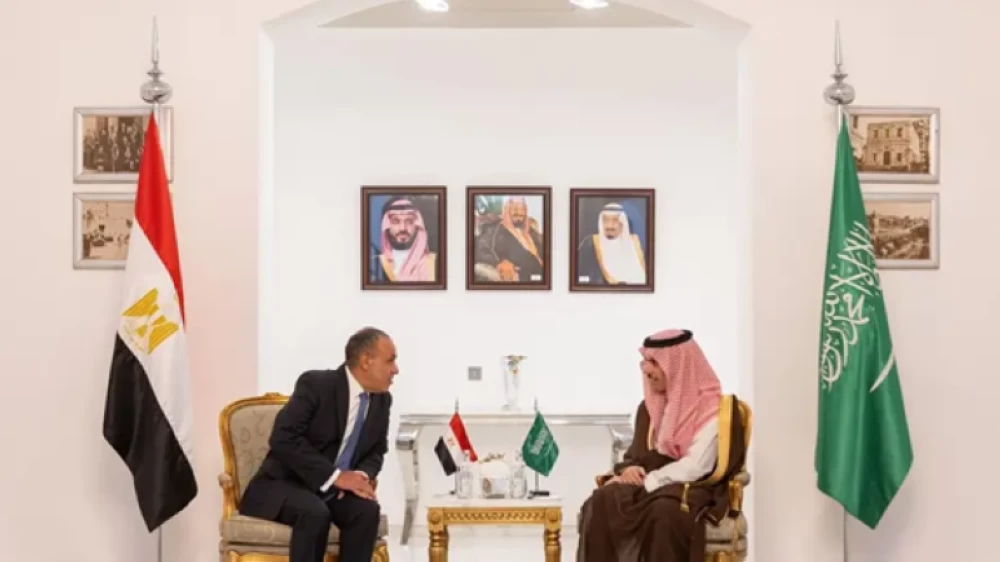
The Foreign Ministers of Saudi Arabia and Egypt discussed ongoing preparations for the next Peace Council meeting in Washington and stressed the importance of continuing Arab-Islamic collaboration in this framework in support of efforts to stabilize the ceasefire and achieve regional security and stability.
According to an official statement issued by the Egyptian Ministry of Foreign Affairs, a telephone conversation was held yesterday (Saturday) between Dr. Badr Abdul Ati, Minister of Foreign Affairs, International Cooperation and Egyptians Abroad, and Prince Faisal bin Farhan bin Abdullah, Minister of Foreign Affairs of the Kingdom of Saudi Arabia, within the framework of continued consultations and coordination between the two brotherly countries.
The call addressed developments related to Red Sea security, with the two ministers stressing the importance of strengthening cooperation between riparian countries to maintain the security and stability of this important maritime corridor and ensure freedom of navigation and international trade.
In this context, Minister Abdel Ati stressed that Egypt’s position remains unchanged on the need to limit the governance of the Red Sea to the countries adjacent to it and to reject any attempts to impose an external role in its management, in a manner that supports regional stability and contributes to protecting the global trade movement.
The telephone conversation also addressed the bilateral relations between the two countries, and the two ministers emphasized the strength of the fraternal ties that bind Egypt and Saudi Arabia, as well as their mutual eagerness to continue developing existing areas of cooperation and build on the positive momentum observed in the relationship, in a way that achieves the common interests of both countries and two brotherly peoples.
The two Ministers exchanged visions for regional development and emphasized the priority of de-escalating and containing tensions in the region, intensifying de-escalation efforts, and prioritizing political and diplomatic avenues to address regional crises, in a manner that contributes to maintaining regional security and stability.
The call touched on developments in the situation in the Gaza Strip, and both sides emphasized the need to quickly deploy an international stabilization force to implement the second phase of US President Donald Trump’s plan, support the Gaza Strip Administrative National Committee, monitor the implementation of the ceasefire, ensure full access to humanitarian assistance, and pave the way for an early recovery and reconstruction phase, while preserving the unity of the Palestinian people. territory.
Regarding the situation in Sudan, both sides stressed the need to intensify efforts towards a humanitarian ceasefire in preparation for a comprehensive ceasefire, and to start a political process in Sudan under pure national ownership, while preserving Sudan’s unity and the integrity of its territory and state institutions.
