

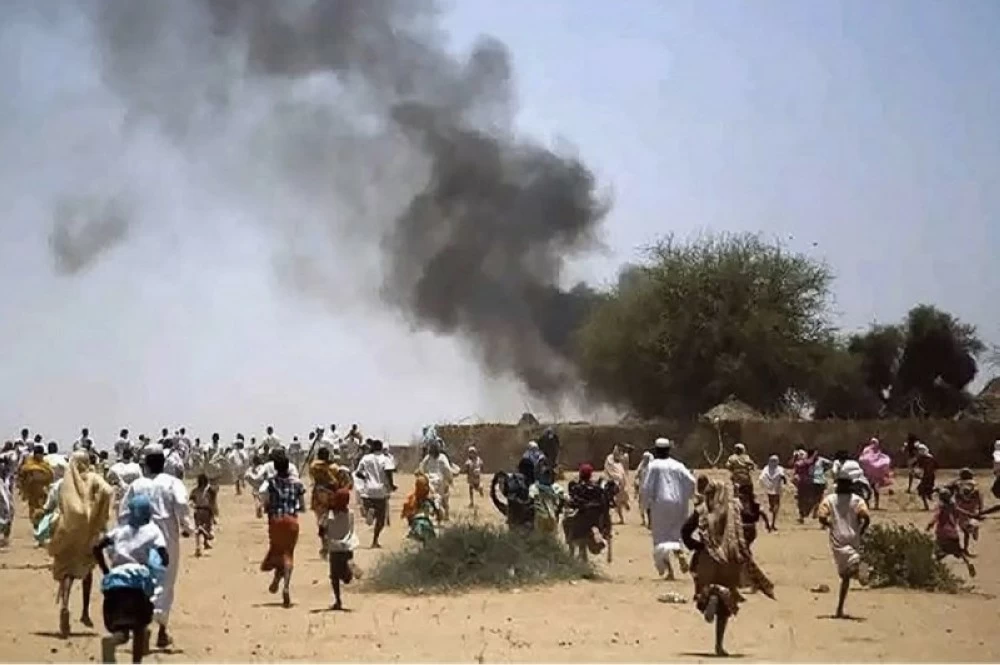
GENEVA — In late October, Sudan’s Rapid Relief Force (RSF) launched what the United Nations described as a “wave of intense violence…shocking in its scale and brutality” in the Darfur region, killing more than 6,000 people over three days.
In a 29-page report released on Friday, the UN human rights office said the RSF offensive to capture the city of El Fasher involved widespread atrocities that could amount to war crimes and crimes against humanity.
“The wanton violations committed by the RSF and allied Arab militias in the final attack on El Fasher highlight how persistent impunity fuels the cycle of violence,” said UN High Commissioner for Human Rights Volker Türk.
The RSF and allied Arab militias known as the Janjaweed captured El Fasher, the last remaining Sudanese military stronghold in Darfur, on October 26 after a siege that lasted more than 18 months, according to reports.
Mass murders, executions, sexual violence
The United Nations recorded at least 4,400 killings within El Fasher between October 25 and October 27.
More than 1,600 other people were reportedly killed trying to flee the city.
The figures are based on interviews with 140 victims and witnesses, and cross-checked with satellite imagery and video analysis.
The report detailed mass killings, summary executions, sexual violence, kidnapping for ransom, torture, arbitrary detention, and enforced disappearances. Many of the attacks have been described as ethnically motivated.
In the October 26 incident, RSF fighters are said to have fired heavy weapons at approximately 1,000 civilians sheltering in Rashid Dormitory at El Fasher University, killing approximately 500 people. Witnesses said it looked like a scene from a horror movie as bodies were thrown into the air.
In another incident, around 600 people, including 50 children, were reportedly executed while taking refuge in a university facility.
The United Nations has warned that the actual death toll from the week-long attacks is likely to be “substantially higher.”
Related articles

EU foreign policy chief rejects claims of Europe’s decline at Munich Security Conference
This estimate does not include at least 460 people who reportedly died when RSF fighters attacked a Saudi maternity hospital on October 28, according to the World Health Organization.
The report also stated that approximately 300 people were killed in RSF shelling and drone attacks on the Abu Shok refugee camp northwest of El Fasher between October 23 and 24.
During the assault, it is said that sexual violence, including rape and gang rape, was widespread. Women and girls from Africa’s Zaghawa non-Arab community were reportedly targeted for allegedly supporting Sudanese forces.
Turk, who visited Sudan last month, said survivors testified that sexual violence was being used “systematically as a weapon of war.”
RSF and allied forces also allegedly abducted civilians attempting to flee, releasing some only after ransoms were paid.
The UN documented at least 10 detention facilities run by the RSF in El Fasher, including a children’s hospital converted into a detention center. According to the report, thousands of people are still missing.
The Sudanese war began in April 2023 following a power struggle between the Sudanese Armed Forces and the RSF.
The conflict has caused what the United Nations calls the world’s biggest humanitarian crisis, with parts of the country suffering from famine.
The International Criminal Court investigates allegations of war crimes and crimes against humanity in conflicts. The United States has previously accused the RSF of committing genocide.
RSF commander General Mohammed Hamdan Dagalo previously acknowledged abuses by his forces, but disputed the scale of the atrocities.
Turk said there were “reasonable grounds” to believe that war crimes and crimes against humanity had been committed, and called for accountability for those responsible, including commanders.
“Perpetual impunity fuels the cycle of violence,” he said.
