

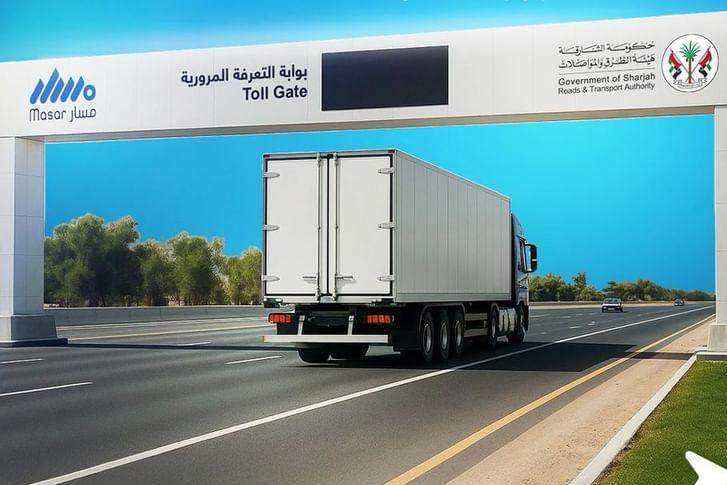
Sharjah Road Transport Authority (SRTA), in collaboration with Sharjah Finance Authority, announced the launch of the “Masar” system. This strategic initiative will strengthen the electronic collection system for high-value transport charges in the emirate.
The project is in line with Sharjah’s efforts to accelerate digital transformation and develop smart infrastructure, in line with global best practices in traffic management. ‘Masar’ also reflects the integration of roles between government agencies to provide innovative technological solutions that improve service efficiency, contribute to sustainability and strengthen the emirate’s competitiveness as an advanced logistics hub.
SRTA Chairman Yousef Khamis Al-Othmani asserted that the pioneering “Masar” project for electronic collection of commercial truck tolls represents a qualitative leap forward in the organization’s operational system. This embodies SRTA’s commitment to aligning with global best practices in the management and regulation of heavy goods transportation and driving comprehensive digital transformation.
He explained that the project relies on smart mechanisms supported by the latest sensing and artificial intelligence technologies, enabling highly accurate and instantaneous vehicle data readings. This contributes to replacing traditional manual systems with advanced digital solutions, increasing operational efficiency, reducing human intervention, and increasing the level of accuracy and reliability of the toll collection process.
Al Osmani pointed out that “Masar” is not only limited to the development of toll collection mechanisms, but also constitutes a fundamental pillar that supports flexibility and smooth flow of traffic by reducing waiting times and facilitating the passage of trucks at designated points, positively impacting the emirate’s transport sector.
Al Osmani added that the project promotes the principles of transparency and effective monitoring through accurate monitoring systems and real-time reporting that contribute to decision-making based on reliable data. This is in line with the desire to achieve environmental sustainability by reducing congestion and emissions, and strengthens the Authority’s leading role in infrastructure development in accordance with the highest international standards, in line with the Government of Sharjah’s vision of building a smart and sustainable transport system that supports inclusive development processes and improves the quality of life in the emirate.
Waleed Al Sayegh, Director-General of Sharjah Ministry of Finance, said that the project represents a strategic partnership between the emirate’s government agencies and will accelerate the pace of digital transformation by linking the electronic toll plazas of trucks to the Tarseer Smart Payment Gateway’s digital wallet system. This strengthens the integration of services and improves the efficiency of financial collection.
Al Sayegh added that adopting Tahseel as a digital option for projects will provide flexible and secure payment methods, contributing to faster transaction processing, accurate collection, and increased transparency. He emphasized that Masar is a fundamental pillar in realizing Sharjah’s vision of becoming an advanced smart city, thereby strengthening the emirate’s competitiveness as a leading regional logistics hub.
