


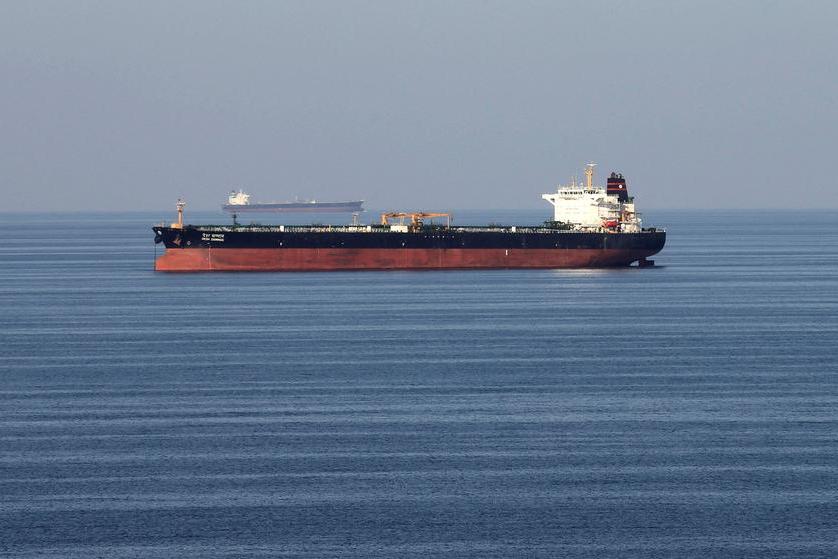
NEW DELHI – Brent crude oil prices fell in Asian trade on Tuesday as investors assessed the risk of supply disruptions after Iran held naval drills near the Strait of Hormuz ahead of nuclear talks with the United States later in the day.
Brent crude oil futures were down 0.86%, or 59 cents, at $68.06 a barrel at 0738 GMT, following a 1.33% rise on Monday.
U.S. West Texas Intermediate crude rose 32 cents, or 0.51%, to $63.21 a barrel, but the move included all of Monday’s price movement as contracts were not settled that day due to the U.S. President’s Day holiday.
Many markets in mainland China, Hong Kong, Taiwan, South Korea and Singapore will be closed on Tuesday for the Lunar New Year holiday.
US President Donald Trump said on Monday that he would be “indirectly” involved in the Geneva talks, adding that he believed Tehran wanted a deal.
U.S. special envoys Steve Witkoff and Jared Kushner will join Iranian Foreign Minister Abbas Araqchi in Oman-mediated negotiations, people briefed on the matter told Reuters.
“Market sentiment is closely tied to the tone and progress of these negotiations, leading to the maintenance of a geopolitical risk premium in prices,” said Sugandha Sachdeva, founder of New Delhi-based research firm SS Wealth Street.
Therefore, oil prices are likely to remain volatile, with wild swings in both directions driven by diplomatic signals rather than pure supply and demand fundamentals, Sahadeva added.
Iran on Monday began military exercises in the Strait of Hormuz, a key international waterway and oil export route from Gulf Arab states that have appealed for diplomacy to end the conflict.
Iran, along with OPEC members Saudi Arabia, the United Arab Emirates, Kuwait and Iraq, export most of its crude oil through the strait, mainly to Asia.
Meanwhile, Citi said if Brent prices remain in the $65-$70 per barrel range in the coming months due to Russian supply disruptions, OPEC+ is likely to respond by increasing production from spare capacity.
OPEC+ is leaning toward restarting increased oil production in April as it prepares for peak summer demand and prices are rising due to tensions between the United States and Iran, three OPEC+ officials said.
“Our base case scenario is that both Iran and Russia-Ukraine agreements occur by or during this summer, with Brent falling to $60-$62 per barrel,” Citi said.
Ukrainian and Russian officials are scheduled to meet in Geneva on Tuesday and Wednesday for a new round of U.S.-brokered peace talks, but the Kremlin said the talks were likely to focus on the main disputed territory.
(Reporting by Mohi Narayan in New Delhi and Anushree Mukherjee in Bengaluru; Editing by Kevin Buckland and Thomas Darpinhaus)
