

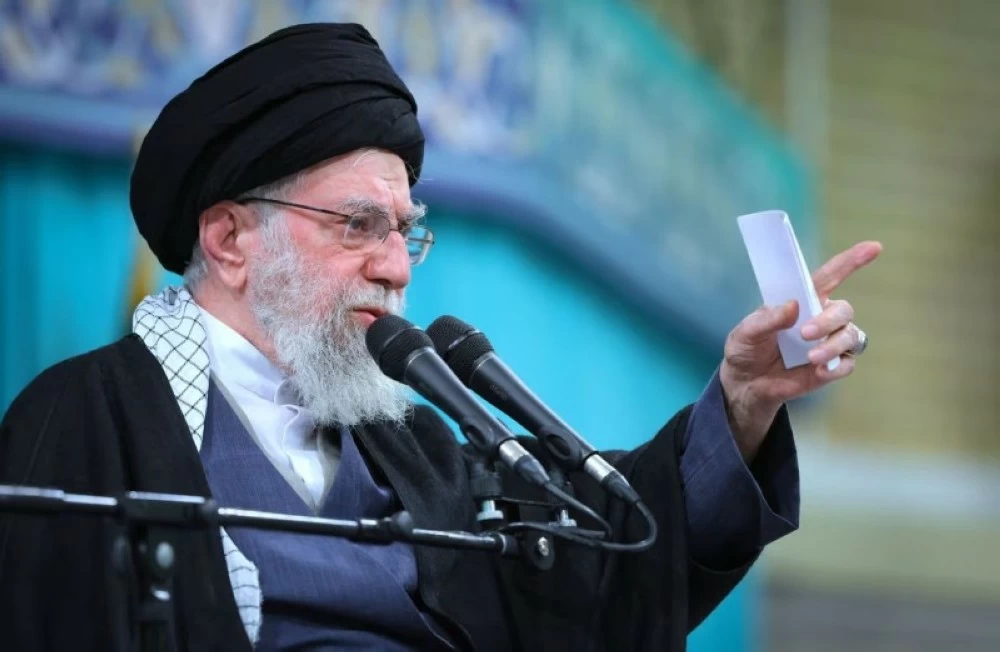
GENEVA — Iran’s supreme leader Ayatollah Ali Khamenei warned on Tuesday that attempts by the United States to overthrow the government in Tehran will fail, as the two countries begin a new round of indirect talks aimed at resolving their long-running nuclear conflict in Geneva amid a U.S. military buildup in the Middle East.
Just hours after negotiations began, Iran’s semi-official Fars news agency reported that part of the strategic Strait of Hormuz would be closed for several hours as a “security precaution” while Iran’s elite Revolutionary Guards conducted military exercises on the world’s most important oil export route.
Iran has in the past threatened to close the strait to commercial shipping if it is attacked, a move that would halt a fifth of global oil flows and send oil prices soaring.
The United States, which joined Israel in bombing Iran’s nuclear facilities in June, has sent combat troops to the region, and President Donald Trump has said “regime change” in Iran may be the best thing that can happen.
Trump told reporters on Air Force One ahead of the meeting that he intended to be “indirectly” involved in the Geneva talks and believed Iran wanted a deal.
“I don’t think they want the consequences of not getting a deal,” Trump said. “We could have made a deal instead of sending the B-2 to negate the nuclear possibility. And we had to send the B-2.”
In response to President Trump’s threat of military action, Ayatollah Khamenei said, “The only thing more dangerous than an aircraft carrier is a weapon that sends it to the bottom of the ocean.”
Khamenei also accused the United States of trying to predetermine the outcome of the negotiations, calling it a “wrong and foolish act.”
“The president of the United States says his country’s army is the strongest in the world, but even the strongest army in the world can sometimes get slapped so hard that it can’t stand up,” the supreme leader told Iranians in East Azerbaijan province on Tuesday.
A senior Iranian official told Reuters on Tuesday that the success of the Geneva talks depended on the United States not making unrealistic demands and being serious about lifting crippling economic sanctions against Iran.
Iran said Tuesday’s meeting, mediated by Oman, would focus on its nuclear program and the possibility of lifting economic sanctions from the United States.
The U.S. government has previously indicated its intention to discuss other issues, including Iran’s missile development.
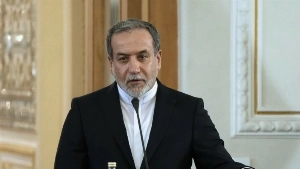
Iranian Foreign Minister Abbas Arakchi said on Monday he was in Geneva to meet with the head of the United Nations nuclear watchdog and “achieve a fair and impartial agreement” in a post on X.
“What is not on the table is compliance in the face of threats,” Arakuchi said.
The United States is also sending the world’s largest warship, the USS Gerald R. Ford, to the Middle East and reportedly could arrive in the region within the next three weeks.
Iran has responded to the US military buildup with its own show of force. On Monday, the Islamic Revolutionary Guards Corps (IRGC) began maritime exercises in the Strait of Hormuz, in the Gulf between Oman and Iran.
The White House announced Sunday that the U.S. government has sent special envoy to the Middle East Steve Witkoff and President Trump’s son-in-law Jared Kushner.
The two sides took part in indirect talks in Oman in early February, which Araghchi, who led the Iranian delegation, later described as a “good start”.
Talks with the United States are underway in Geneva as Iranians mark the end of Iran’s traditional 40-day mourning period for loved ones killed in the brutal crackdown on protesters.
Massive anti-government protests have pushed the regime into its biggest crisis in decades, killing thousands of people in the first few days of January.
It is not yet clear whether this week’s ceremony will remain a quiet, closed-door affair or an opportunity for Iranians to renew their anger against the regime.
According to state news agency IRNA, the Iranian government plans to hold its own ceremony to commemorate the “martyrs” killed for the cause of “Iran’s determination against destabilization.”
The Islamic Revolutionary Guards Corps (IRGC), the regime’s elite force, said on Tuesday it provides an opportunity to reflect on Iran’s “intransigence”, calling it “an intricate conspiracy between the United States and Israel to destabilize the country.” — Agency
Related articles