


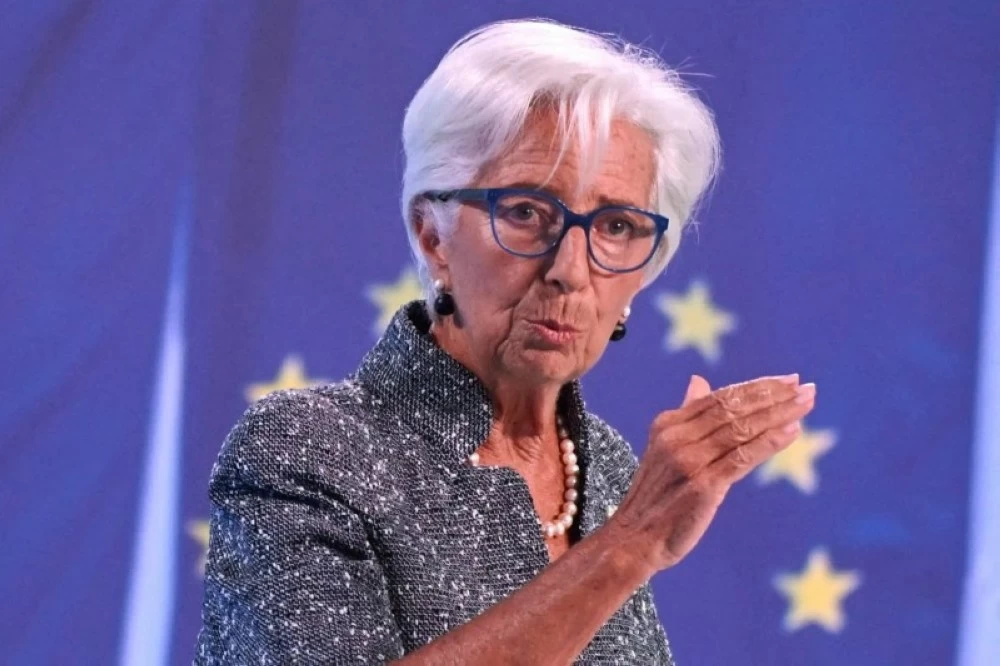
The Financial Times revealed today (Wednesday) that European Central Bank President Christine Lagarde is seriously considering resigning before her term ends on 31 October 2027, an unprecedented move that could reshape the direction of European monetary policy at a sensitive time of growing economic and political challenges.
The newspaper said, citing people familiar with her thinking, Lagarde wants to work with German Chancellor Friedrich Merz to resign before French presidential elections scheduled for April 2027, allowing French President Emmanuel Macron, whose term ends in May 2027, to play a key role in choosing his successor.
Franco-German control support
Sources said Lagarde has not yet determined the exact timing of her resignation, but the victory of far-right candidates such as Marine Le Pen and her ally Jourdan Bardera in the French general election is a key factor in the decision to appoint a new head of the European Central Bank. Lagarde explained that she wants Macron and Meretz to remain the main parties in the selection process, amid concerns that the appointment process would become significantly more complicated given France’s traditional role.
In response to this report, a spokesperson for the European Central Bank confirmed that “President Lagarde is fully focused on her mission and has not made any decision regarding the expiration of her term,” emphasizing her commitment to fulfilling her current duties.
Who is Christine Lagarde?
Christine Lagarde, 69, was appointed President of the European Central Bank in November 2019, succeeding Mario Draghi, after a distinguished career as Director-General of the International Monetary Fund (2011-2019) and Minister of Finance of France (2007-2011). Her term is now eight years long and is non-renewable. She is the first woman to hold this position.
During her term, Lagarde weathered the coronavirus pandemic and the severe inflation crisis from 2021 to 2023, raised interest rates in an unprecedented way to fight inflation, and began lowering them gradually from 2025 to 2026. Although he faced criticism from some stakeholders over the bank’s independence and sovereign debt policies, he maintained broad support within the board.
The position of president of the European Central Bank is considered one of the most important economic positions in the world and is chosen by consensus among the leaders of the euro area member states (currently 19), with France and Germany historically playing key roles.
Possible successors include Claes Knott, head of the Dutch central bank, Pablo Hernández Decos, head of the Spanish central bank, and Joachim Nagel, head of the German central bank.
The Financial Times revealed today (Wednesday) that European Central Bank President Christine Lagarde is seriously considering resigning before her term ends on 31 October 2027, an unprecedented move that could reshape the direction of European monetary policy at a sensitive time marked by growing economic and political challenges.
The newspaper, citing people familiar with Lagarde’s thinking, said Lagarde wants to resign before the French presidential elections scheduled for April 2027 in order to work with German Chancellor Friedrich Merz to give French President Emmanuel Macron a key role in selecting a successor, when his term ends in May 2027.
French-German control support
Sources said Lagarde has not yet decided exactly when she will step down, but she is keen for Macron and Merz to remain key to winning the selection process amid growing concerns that far-right candidates such as Marine Le Pen and her ally Jourdan Bardera could significantly complicate the selection process given their traditional roles in selecting a new head of the European Central Bank.
In response to the report, a spokesperson for the European Central Bank confirmed that “President Lagarde is fully focused on her mission and has not made any decisions regarding the end of her term,” stressing her determination to fulfill her current responsibilities.
Who is Christine Lagarde?
Christine Lagarde, 69, was appointed President of the European Central Bank in November 2019, succeeding Mario Draghi, after an illustrious career as Managing Director of the International Monetary Fund (2011-2019) and Minister of Finance of France (2007-2011). Her term will not be renewed and will last for a full eight years, making her the first woman to hold this position.
During her tenure, Lagarde led the bank through the coronavirus pandemic, a severe inflation crisis from 2021 to 2023, an unprecedented rise in interest rates to fight inflation, and subsequent gradual rate cuts from 2025 to 2026. Although he faced criticism from some political parties over the bank’s independence and policies on sovereign debt, he maintained broad support within the board.
The position of president of the European Central Bank is one of the most important economic roles in the world, and is chosen by consensus among the leaders of the euro area member states (currently 19), with France and Germany historically playing a key role.
Potential candidates to succeed him include Dutch Central Bank Governor Claes Nott, Spanish Central Bank Governor Pablo Hernández de Cos, and German Central Bank Governor Joachim Nagel.
