


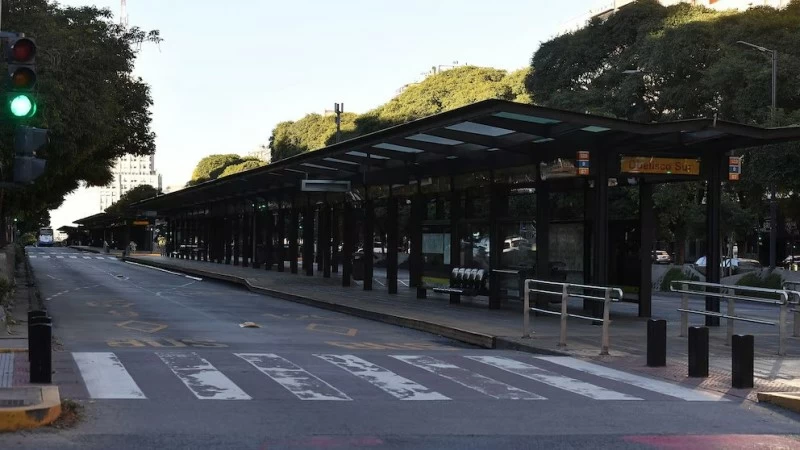
Today (Thursday) Argentina entered a state of widespread partial paralysis. The 24-hour national general strike, called by the United Front and the country’s largest trade union organization, the Confederation of Labor, to protest the controversial labor reform project being debated in the House of Representatives today, is the fourth since Libertarian Party President Javier Mairy came to power in December 2023.
The national carrier, Air Argentina, said in a statement that most public transport unions had taken part in the strike, which resulted in the cancellation of 255 domestic, regional and international flights, affecting more than 31,000 passengers.
Other companies, including JetSMART, have confirmed similar impacts, with some predicting the number of flights affected could reach 350 to 400 or more.
At the same time, loading and unloading operations were halted at the port of Rosario, one of the world’s largest export hubs for agricultural products, especially soybeans, corn and wheat, after the Maritime and River Workers’ Union took part in a 48-hour sectoral strike that began on Wednesday.
The port of Rosario is a key hub for Argentina’s economy, which exports much of the grain supplied to global markets, and a port suspension could cause significant delays in agricultural shipments.
The strike also included other sectors such as railways, most of Buenos Aires’ suburban lines, buses, banks, some public services, and trade in large areas, leaving the streets of the capital and major cities largely devoid of normal human movement.
The strike is a direct response to a labor reform project approved by the Senate last week and expected to be voted on by the House of Representatives today. The project aims to attract investment and stimulate economic growth by reducing redundancy payments, potentially extending the working day to 12 hours, and reducing some holidays and traditional labor rights.
Trade unions have described the amendments as “regressive” and “unconstitutional” and accused the government of trying to “return Argentina to a model of cheap and exploitative labor.” Meanwhile, President Miley believes reforms are needed to revive an economy plagued by chronic inflation and deflation and attract foreign capital after years of stagnation.
This is the fourth strike of this kind in less than two-and-a-half years under Myley, following previous strikes in response to harsh austerity measures, cuts to public spending and the end of government support for many sectors. Despite growing pressure from trade unions, the president insists he will “not back down” from reforms, seeing them as the only way out of the economic crisis.
Argentina entered widespread partial paralysis today (Thursday) with a 24-hour nationwide general strike. This is the fourth time since liberal President Javier Millay took office in December 2023. This was the call by the country’s largest labor organization, the General Trade Union and the United Trade Union Front, in protest against the controversial labor reform project being debated in the House of Commons today.
According to national carrier Argentina, public transport unions took part in the strike in large numbers, leading to the cancellation of 255 domestic, regional and international flights, affecting more than 31,000 passengers.
Other companies, including JetSMART, have confirmed similar impacts, with some estimates suggesting the number of affected flights could exceed 350 to 400.
At the same time, loading and unloading operations at the Port of Rosario, one of the world’s largest agricultural export centers, particularly for soybeans, corn and wheat, were halted after maritime and river workers’ unions took part in a 48-hour sectoral strike that began on Wednesday.
The Port of Rosario is a vital point for Argentina’s economy, with most of the grain supplied to the world market being exported from there, and any closure of the port could cause significant delays in shipments of agricultural products.
The strike also included activity in other sectors such as the railways, with most suburban lines in Buenos Aires suspended, as well as buses, banks, some public services and widespread commerce, leaving streets in the capital and major cities largely empty of normalcy.
The strike was a direct response to a labor reform project approved by the Senate last week and scheduled for a vote in the House of Representatives today. The project aims to attract investment and stimulate economic growth by reducing retirement benefits, potentially extending the working day to 12 hours, and cutting some traditional vacation and labor rights.
Trade unions have described the amendments as “regressive” and “unconstitutional” and accused the government of trying to “return Argentina to a model of cheap and exploitative labor.” President Milais, by contrast, believes reforms are essential to revive an economy suffering from chronic inflation and contraction and attract foreign capital after years of stagnation.
This is the fourth strike of this kind in less than two-and-a-half years under Millais, following previous strikes in response to harsh austerity measures, cuts to public spending and the end of government support for many sectors. Despite growing pressure from trade unions, the president insists he will “not back down” from reforms, seeing them as the only way out of the economic crisis.
