

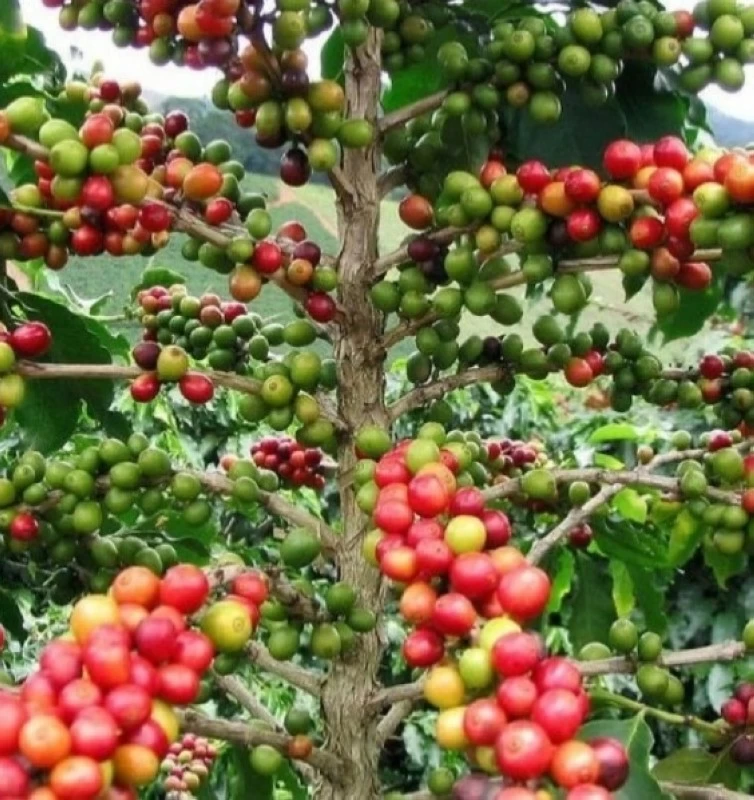
To resolve the issue of protecting coffee seedlings, Saudi Arabia has imposed a mandatory phytosanitary quarantine for all imported seedlings for two full years before being allowed to be traded or used as parent material for propagation, while banning the import of seedlings produced from genetically modified sources.
The decision was made by Engineer Ayman Al-Ghamdi, CEO of the National Center for Plant Pest and Animal Disease Prevention and Control (Waqa), and includes approving the terms and conditions for the import and trade of coffee seedlings in Saudi Arabia, with effect from today (Friday), and revoking previous decisions that contradict them.
The decision stipulates that in order to obtain an import permit, a phytosanitary certificate issued by the competent authority of the country of origin must be submitted, and that the seedlings must be produced in a licensed nursery, be subject to public supervision and undergo clinical testing at least (15) days before shipment. Shipments are also required to be free of quarantine or regulated pests, most notably the Xylella fastidiosa bacterium, in addition to a number of fungi, nematodes and insects specified on the regulatory list.
The decision stipulates that consignments will undergo virtual and laboratory inspections at ports of entry and samples will be taken at a rate of (1%) depending on the detection level of 95%. If infection is suspected or confirmed, the shipment will be seized and legal action will be taken leading to its destruction.
At the local production level, the decision limited the production of coffee seedlings to varieties officially registered in the Kingdom, while requiring nurseries to stay away from infected areas and use soil, agricultural conditions, and irrigation water that are free of pathogens and approved by the Ministry of Environment, Water, and Agriculture. Nurseries were also subject to regular on-site inspections by Weqa inspectors, and the transfer or distribution of seedlings between regions or farms was prohibited unless a “transfer certificate” was obtained proving that they had passed field and laboratory tests.
The decision confirmed that in the event of infection with the Xylella fastidiosa bacterium or other regulated pests, control, isolation and destruction procedures will be applied in accordance with approved regulations, as a step to strengthen plant protection systems and protect investments in the Saudi coffee sector.
Saudi Arabia has resolved the problem of protecting coffee seedlings by banning the import of seedlings produced from genetically modified sources and requiring all imported seedlings to undergo two full years of phytosanitary inspection before being allowed to be traded or used as mother plants for propagation.
The decision was taken by Engineer Ayman Al Ghamdi, CEO of Waqia, the National Center for Plant Pest and Animal Disease Prevention and Control, and includes the adoption of conditions for the import and trade of coffee seedlings in Saudi Arabia, effective today (Friday), and the reversal of previous contradictory decisions.
The decision requires that to obtain an import license, a phytosanitary certificate issued by the competent authority of the country of origin must be presented, that the seedlings must be produced in a certified nursery under government supervision, and that clinical tests must be carried out within 15 days before shipment. Shipments are also required to be free of quarantine and regulated pests, such as the Xylella fastidiosa bacterium, in addition to several fungi, nematodes, and insects specified in the regulatory list.
The decision stipulates that shipments will be subject to visual and laboratory inspections at the entrance, and samples will be taken at a rate of 1% with a detection level of 95%. If infection is suspected or confirmed, the shipment may be held and destroyed through legal proceedings.
Regarding local production, the decision limits the production of coffee seedlings to varieties officially registered in the Kingdom, and requires nurseries to avoid infected areas and use soil, agricultural conditions and irrigation water that are pathogen-free and approved by the Ministry of Environment, Water and Agriculture. Nurseries are also subject to regular inspections by ‘Waqiah’ inspectors and the transfer or trade of seedlings between regions or farms is prohibited unless they obtain a ‘Certificate of Transfer’ certifying that they have passed field and laboratory tests.
The decision confirmed that in the event of infection by the Xylella fastidiosa bacterium and other regulated pests, control, isolation and destruction procedures will be applied in accordance with approved regulations to strengthen plant protection systems and protect investments in the Saudi coffee sector.
