


SHANGHAI – Chinese stocks surged about 1% on Tuesday heading into the year, and the yuan rose to its highest level in nearly three years as traders returning from a nine-day weekend bet that the removal of U.S. tariffs will benefit the world’s second-largest economy.
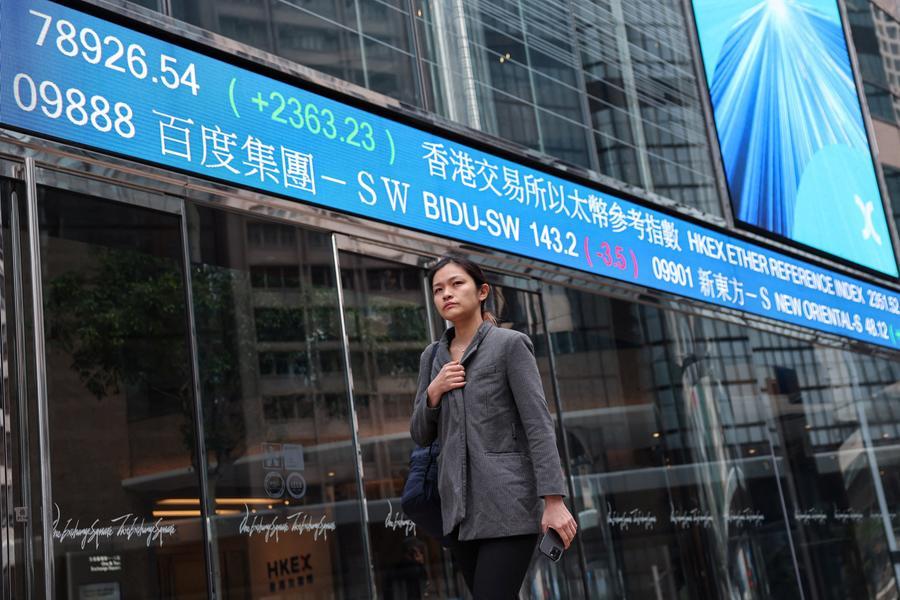
However, Hong Kong stocks gave up most of Monday’s 2.5% gain after Wall Street’s overnight selloff.
The U.S. Supreme Court’s decision to invalidate President Donald Trump’s “reciprocal” tariffs and his subsequent move to impose temporary 15% tariffs around the world has thrown global trade into fresh turmoil, but investors say the latest developments will likely benefit China.
“I think this is a positive for China,” said Wang Zhuo, a partner at Shanghai Zhuozhu Investment Management.
This could lead to tax cuts on Chinese goods, he said, and would also “put a check on President Trump’s tariff abuses,” adding that mainland Chinese stocks are less susceptible to volatility in the U.S. market.
China’s blue-chip CSI300 index closed 1% higher, while the Shanghai Composite Index rose 0.9%. Hong Kong’s Hang Seng Index fell nearly 2%.
The onshore yuan hit 6.8888 to the dollar in afternoon trading, its highest level since May 4, 2023.
The Chinese New Year holiday began on February 15 to celebrate the beginning of the Year of the Horse. The market resumed trading on Tuesday.
China tariff reduction
Chinese investors bought export stocks as analysts predict that a review of U.S. tariffs could lead to lower interest rates in China and weaken President Trump’s hand in trade talks with China.
The CSI Consumer Electronics Index rose nearly 2%, while the index tracking machinery stocks rose 1.8%.
“Generally speaking, tariffs on China will be lowered,” Deng Lijun, a strategist at Huajin Securities, said at a roadshow.
He said risk appetite is also improving as tensions between the U.S. and China ease and China looks ahead to its annual parliament in early March.
Goldman Sachs projects that the tariff reset will result in a net reduction in U.S. tariffs on Chinese goods of about 5 percentage points.
Analysts at Morgan Stanley and JPMorgan expect tariffs on China to fall to 24% and 27%, respectively, from 32% previously.
In the foreign exchange market, the onshore renminbi’s appreciation expanded amid signs of increased foreign exchange inflows following the record current account surplus in the fourth quarter.
Analysts expect the U.S. tariff cuts to strengthen China’s already strong exports and support the Chinese currency.
(Reporting by Shanghai Newsroom; Editing by Rashmi Aichi and Ronojoy Mazumdar)
