


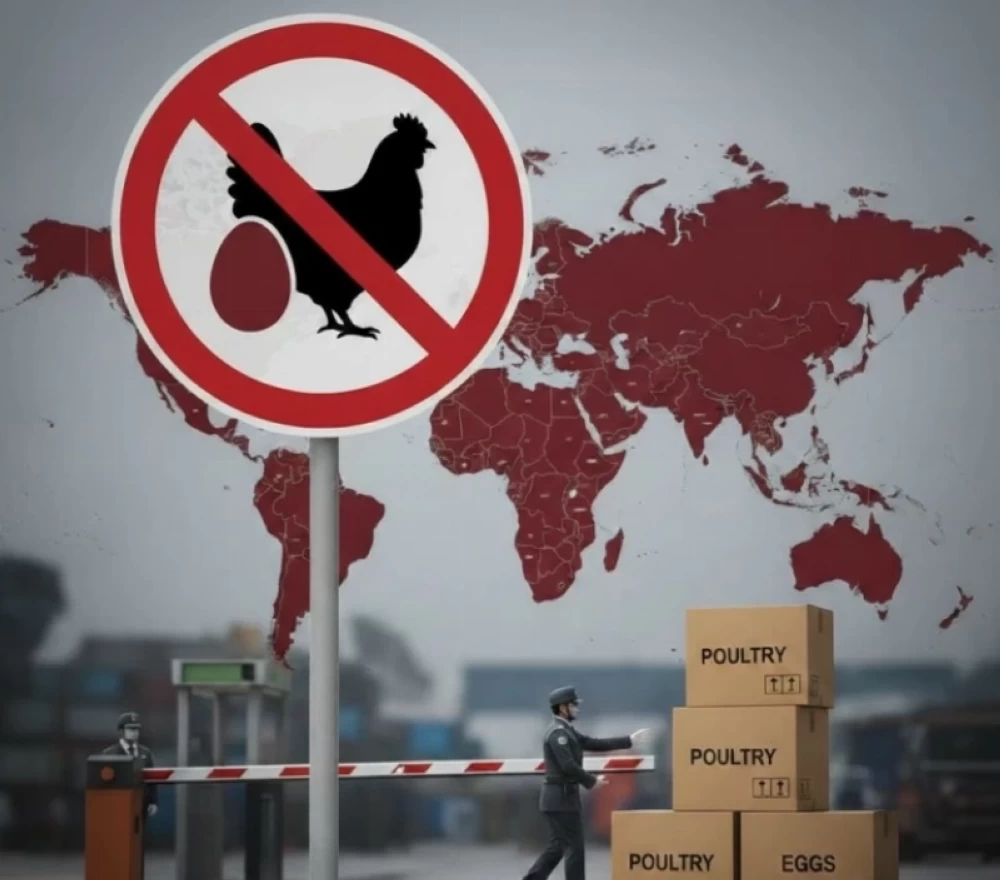
RIYADH — The Saudi Food and Drug Authority (SFDA) has imposed a complete ban on imports of poultry and eggs from 40 countries, in addition to partial bans targeting specific provinces and cities in 16 other countries.
The move is part of the authorities’ precautionary measures to protect public health and strengthen food safety standards in local markets. SFDA emphasized that this list continues to be subject to regular review in response to global health developments.
Bans have been in place in certain countries since 2004, while bans in other countries have been added gradually over the years based on risk assessments and international reports of outbreaks of animal diseases, particularly highly pathogenic avian influenza, according to the latest update seen by Okaz. This approach demonstrates the authorities’ continued commitment to closely monitor the evolving global epidemiological situation.
The 40 countries affected by the total ban are: Afghanistan, Azerbaijan, Germany, Indonesia, Iran, Bosnia and Herzegovina, Bulgaria, Bangladesh, Taiwan, Djibouti, South Africa, China, Iraq, Ghana, Palestine, Vietnam, Cambodia, Kazakhstan, Cameroon, South Korea, North Korea, Laos, Libya, Myanmar, UK, Egypt, Mexico, Mongolia, Nepal, Niger, Nigeria, India, Hong Kong, Japan, Burkina Faso, Sudan, Serbia, Slovenia, Ivory Coast, Montenegro.
Related articles

Absher executed over 44 million electronic transactions in January
The partial ban includes some states and cities in 16 countries, including Australia, the United States, Italy, Belgium, Bhutan, Poland, Togo, Denmark, Romania, Zimbabwe, France, the Philippines, Canada, Malaysia, Austria and the Democratic Republic of Congo.
The SFDA further clarified that poultry meat and related products that have undergone heat treatment or other processing methods sufficient to eliminate Newcastle disease virus are exempt from the temporary ban as long as they fully comply with approved health requirements, regulations and standards.
Such products must be accompanied by a health certificate issued by the competent authority of the country of origin confirming that the heat treatment or processing applied is sufficient to eliminate Newcastle disease virus. This exemption is granted without prejudice to the requirement that the product be produced from an approved facility.
