


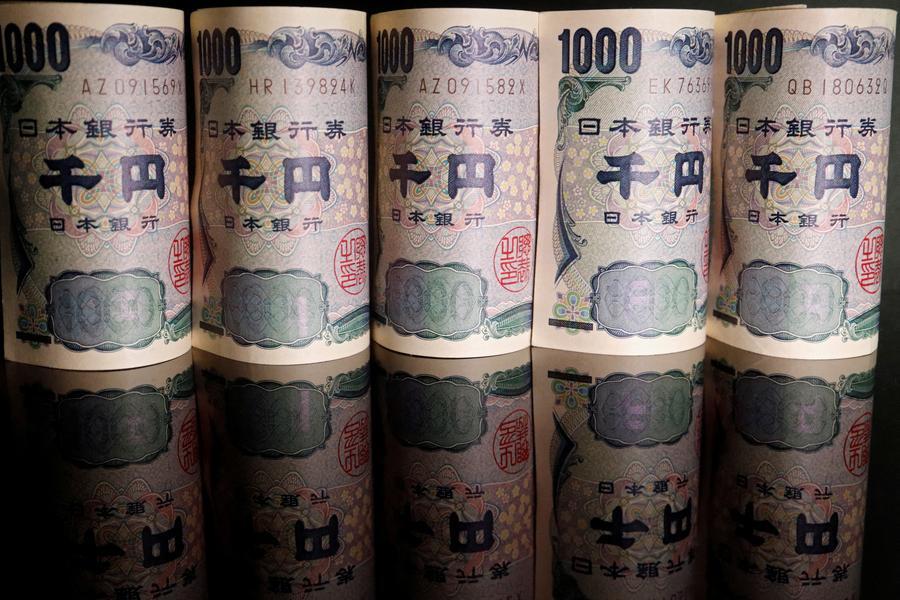
The yen hovered near a two-week low against the dollar on Wednesday, after falling the previous day on concerns about the Bank of Japan becoming dovish and escalating tensions with China, as investors focused on broader risk sentiment. Japan’s currency fell on Tuesday after reports that Prime Minister Sanae Takaichi told the Bank of Japan that she was concerned about further interest rate hikes in response to China placing more Japanese companies on its export control list in retaliation for Takaichi’s comments about Taiwan.
After Takaichi won a landslide victory in the Feb. 8 election, the yen rose as markets bet that if the government supported fiscal stimulus, the balance of risk would tilt toward further monetary tightening.
The yen has been hovering around 156 yen against the dollar, and was recently 156.10 yen. The Japanese government appointed two academics seen as strong stimulus proponents to the central bank’s board on Wednesday, a move that could push the Bank of Japan in a more dovish direction, although Derek Halpenny, head of research and global markets at MUFG, expressed some uncertainty on this point.
“I don’t know if this will dramatically change the policy committee, especially given that the two outgoing members were on the dovish side,” he said.
Focus on NVIDIA’s achievements
Investors are bracing for AI chip maker Nvidia’s earnings report after the bell on Wednesday, and the stock’s 8% weight in the S&P 500 means its results could have a big impact on the market’s risk appetite.
“If the US dollar declines in parallel with high-beta foreign exchanges, it would be a worrying signal that the market is developing broader US-specific concerns related to the AI revaluation,” said Francesco Pesole, currency strategist at ING.
“We feel that is unlikely, and the dollar will continue to have a negative correlation with U.S. stocks, although the correlation has declined slightly,” he added.
The US dollar index fell 0.10% to 97.78. President Donald Trump did little in his State of the Union address Tuesday to allay concerns about tariffs and the future of global trade policy. The Australian dollar rose 0.55% to $0.7097 as rising inflation raised the risk of interest rate hikes. The Australian currency is a so-called high-beta currency and remains the most vulnerable to stock market turbulence due to its strong correlation with global risk assets, particularly equities, and its particularly overbought position.
The euro rose 0.15% against the dollar to $1.1792.
The yuan, which has appreciated nearly 7% in the past 10 months, hit a nearly three-year high of 6.8766 to the dollar on Tuesday, and was trading at 6.8778 in offshore trading.
Analysts at Goldman Sachs said: “The basic foundations of our renminbi appreciation outlook – the starting point of severe currency undervaluation and significant strength in the export sector – remain substantial.”
“While uncertainty remains, we believe it is unlikely that President Trump will impose additional Section 301 tariffs on Chinese goods ahead of his planned visit to China at the end of March.”
The New Zealand dollar inched up to $0.5983, while the Chinese yuan extended Tuesday’s surge to hit an almost three-year high of 6.8703 yuan. China has said it is closely monitoring U.S. policy and will decide “in due course” whether to adjust measures to counter U.S. tariffs.
