


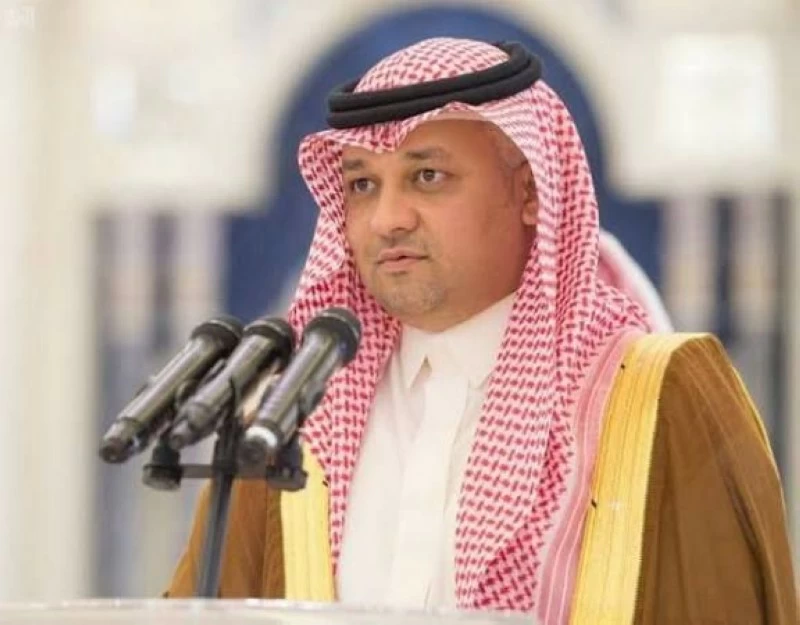
Adel Ezzat, former president of the Saudi Football Association, confirmed that Saudi football is undergoing a pivotal period of change and requires the clarification of a vision and the development of a long-term strategic plan, including performance indicators announced to the media and public, suggesting that qualifying for the World Cup should be part of a broader system of work rather than the final goal.
In his speech at the In the Goal program, Ezzat reflected on his administrative experience, explaining that he now runs a business and regularly practices sports, noting that on his last visit the Japan Football Association had presented a strategic plan for the period 2000 to 2050, drawn up by domestic and international experts and reviewed every four years, and called on him to benefit from such experience and develop a plan that will last until at least 2040.
He pointed out that the current stage is neither a failure nor a huge success, but rather a transition from the concept of sports practice to an open professional market that requires governance, accountability and transparency, stressing that large amounts of financial support require knowing what is being built in return, and the need to publish performance indicators at the end of each season and compare them with the best leagues in the world.
He indicated that the federation’s budget at that time was limited, as government support amounted to approximately 80 million riyals, of which 30 million riyals were allocated to clubs and 18 million riyals for salaries, relying on sponsorship to supplement its financial resources, and that the current budget for this period only corresponds to the federation’s salary items.
Regarding the arbitration file, Ezzat expressed dissatisfaction with the level of arbitration, called for the reinforcement of the “umpire is the master of the field” philosophy, requested that matches not be managed from the video technology room, and pointed out the high cost of bringing in foreign referees compared to previous terms.
He emphasized the importance of building a clear artistic identity for the Saudi national team and establishing operational and technical constants, as well as reevaluating several projects, including the Birth Project, and stressing that the Kingdom is full of talent that can represent the national team without the need for naturalization.
He also stressed the importance of developing grassroots activities across schools and establishing regional training centers and integrated elite centers, as well as the need to return to the Football Association’s open election system to ensure a plurality of voices within the council, taking into account that the presence of different opinions improves the quality of decisions.
Ezzat concluded his speech by stressing that the next stage requires institutional commitment based on clarity of goals, measurement of results and long-term planning to ensure sustainability of achievements and enhance the status of Saudi football at continental and international level.
Adel Ezzat, former president of the Saudi Football Federation, acknowledged that Saudi football is undergoing a pivotal transformation, which requires the establishment of a clear vision and long-term strategic plan, including performance indicators that will be published to the media and public. He noted that qualifying for the World Cup should not be the end goal, but rather part of a broader operational framework.
In a speech on the program “In the Goal,” Ezzat reflected on his office experience and explained that he currently manages his work and regularly exercises. He said the Japan Football Association had previously presented him with a strategic plan for the period 2000 to 2050, drawn up by domestic and international experts and reviewed every four years. He called for drawing from such experience and developing a plan that would last until at least 2040.
He pointed out that the current stage is neither a failure nor a huge success, but a transition from the concept of sports practice to an open professional market that requires governance, accountability and transparency. He emphasized that in order to receive significant financial support, we need to understand what we are building in return, and that we need to publish performance metrics at the end of each season and compare them to the best leagues in the world.
He explained that the federation’s budget during his term is limited, with government support amounting to around 80 million riyals, of which 30 million riyals is allocated to clubs and 18 million riyals for salaries, but it has to rely on sponsors to cover its finances. He pointed out that the budget at that time only corresponded to the federation’s salary items now.
Regarding refereeing, Ezzat expressed his dissatisfaction with the level of refereeing and called for the establishment of the philosophy that “the referee is the master of the playing field” and for the video technology room not to control the match. He also noted that the cost of inviting foreign referees increased compared to the previous period.
He affirmed the importance of building a clear artistic identity and establishing operational and technical constants for the Saudi national team, as well as reevaluating several projects, including the Birth Project. He stressed that Saudi Arabia has a wealth of talent that can make the national team without the need for naturalization.
He also stressed the need to return to the Football Federation’s open election system to ensure diversity of opinion within the council, considering that having different opinions improves the quality of decision-making. He also emphasized the importance of developing grassroots activities through schools and establishing regional training centers and integrated elite centers.
Ezzat concluded his remarks by stressing that the next stage requires an institutional commitment based on clear goals, results measurement and long-term planning to ensure the sustainability of results and elevate the status of Saudi football at both continental and international levels.
