


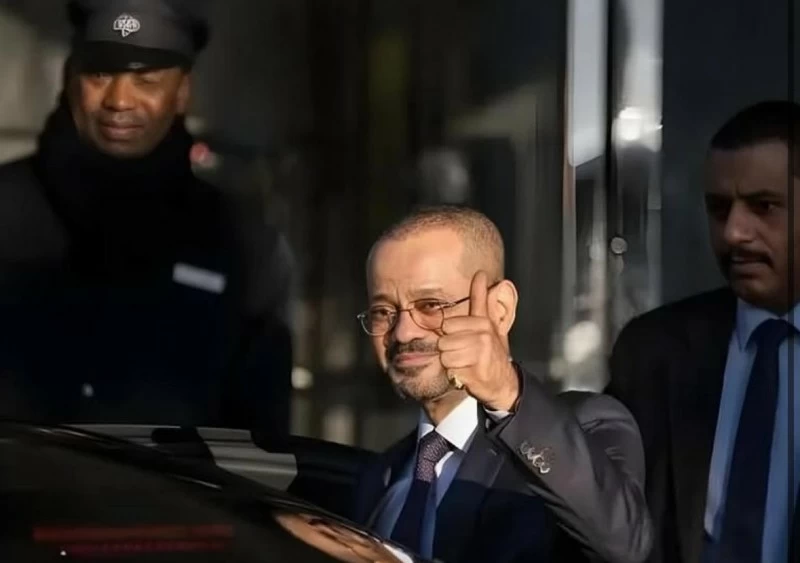
After negotiations that lasted three hours and resumed in the evening, Omani Foreign Minister Badr Al Busaidi announced today (Thursday) that there were constructive and positive exchanges of views during the US-Iran nuclear negotiations in Geneva.
Mr Al-Busaidi said negotiations would resume later today after negotiators took a break and expressed hope that further progress would be achieved.
Meanwhile, Iranian officials said that the proposal presented by Iran today in negotiations with the United States in Geneva is politically serious and technically original and contains everything necessary to reach an immediate agreement, and that the proposal includes aspects of achieving common interests, especially in the economic dimension.
He added: “Our proposal focuses on transparency and includes reducing uranium stockpiles to low enrichment levels under the supervision of the International Atomic Energy Agency.”
“The principles of permanently reducing enrichment to zero, dismantling nuclear facilities and relocating uranium stocks are completely rejected,” he added.
The official made clear that Iran’s solution in Geneva does not include any ideas regarding missile systems or Iranian defense plans.
Iranian officials stressed that the proposal affirms uranium enrichment as a sovereign right, proposes a temporary freeze on enrichment for a limited period of time, and includes technical and practical pathways and data to prove that Tehran does not want nuclear weapons.
He noted that the proposal primarily focuses on lifting sanctions and addressing US concerns.
At the same time, Iranian Foreign Ministry Spokesperson Ismail Baghaei said that today’s Geneva talks between Tehran and Washington were “serious” and hoped that the talks would continue until the evening, explaining that Iran’s position was firm.
Iran’s Mehr news agency quoted Baggaei as saying, “We held vigorous negotiations for about three hours in the presence of the Omani foreign minister and the head of the International Atomic Energy Agency,” adding that “negotiations will resume in Geneva at around 5:30 and 6:00 pm local time.”
He noted that the U.S.-Iranian negotiating team presented their opinions seriously, and noted that contradictory statements from some U.S. officials cast doubt on the team’s seriousness.
“We have presented important and realistic proposals and initiatives in the field of the nuclear file and the lifting of sanctions,” Bakuayi said, stressing that the proposals were submitted during today’s negotiations, some of which require consultation with the leaders of the capital.
U.S. officials told Fox News that the deal requires Iran to halt enrichment and provide guarantees that its nuclear program will not resume.
Meanwhile, US website Axios cited sources as saying that the third round of talks was held between the US and Iran in two forms, indirect and direct, and that the Iranian side had presented an expected draft of the nuclear deal.
Sources reported that Oman’s foreign minister and the head of the International Atomic Energy Agency took part in the negotiations, suggesting that Witkoff and Kushner held talks with Iran’s foreign minister in Geneva that lasted more than three hours.
After three hours of negotiations scheduled to resume in the evening, Omani Foreign Minister Badr Al Busaidi announced today (Thursday) that the U.S.-Iranian nuclear negotiations in Geneva resulted in constructive and positive exchanges of views.
Al-Busaidi said negotiations would resume later today after negotiators took a break and expressed hope for further progress.
Meanwhile, Iranian officials said that the proposal presented by Iran today in negotiations with the United States in Geneva is politically serious and technically creative, contains everything necessary to reach an immediate agreement, and has shown that the proposal includes aspects of achieving common interests, especially in the economic dimension.
He added: “Our proposal focuses on transparency under the supervision of the International Atomic Energy Agency (IAEA) and includes reducing uranium stockpiles to low enrichment levels under that agency’s supervision.”
“The principles of zero enrichment forever, the dismantling of nuclear facilities, and the transfer of uranium stockpiles are completely rejected,” he added.
The official made clear that Iran’s solution in Geneva does not include any ideas regarding missile systems or Iranian defense plans.
Iranian officials emphasized that the proposal affirms uranium enrichment as a sovereign right, proposes a temporary freeze on enrichment for a limited period of time, and includes technical and practical pathways and data to prove that Tehran does not seek nuclear weapons.
He noted that the proposal primarily focuses on lifting sanctions and addressing U.S. concerns.
At the same time, Iranian Foreign Ministry Spokesperson Ismail Baquai described today’s Geneva talks between Tehran and Washington as “serious” and expressed hope that the talks would continue in the evening, making it clear that Iran’s position was firm.
Iran’s Mehr news agency quoted Baqai as saying, “We held intensive negotiations for about three hours in the presence of the Omani foreign minister and the head of the International Atomic Energy Agency,” adding that “negotiations in Geneva will resume around 5:30 to 6:00 p.m. local time.”
He noted that the U.S.-Iranian negotiating team had seriously presented its views, and noted that contradictory statements from some U.S. officials have cast doubt on the team’s seriousness.
“We have presented important and realistic proposals and initiatives regarding the nuclear file and sanctions relief,” Bakuayi said, confirming that some of the proposals, which require consultation with the capital’s leadership, were raised in today’s negotiations.
U.S. officials told Fox News that any deal would require Iran to halt enrichment and provide guarantees against restarting its nuclear program.
Meanwhile, Axios, citing sources, reported that a third round of talks was held between the US and Iran in both indirect and direct formats, indicating that the Iranian side had presented the long-awaited draft version of the nuclear deal.
Sources said Oman’s foreign minister and the director-general of the International Atomic Energy Agency participated in the negotiations, and noted that Mr. Witkoff and Mr. Kushner held talks with Iran’s foreign minister in Geneva that lasted more than three hours.
