


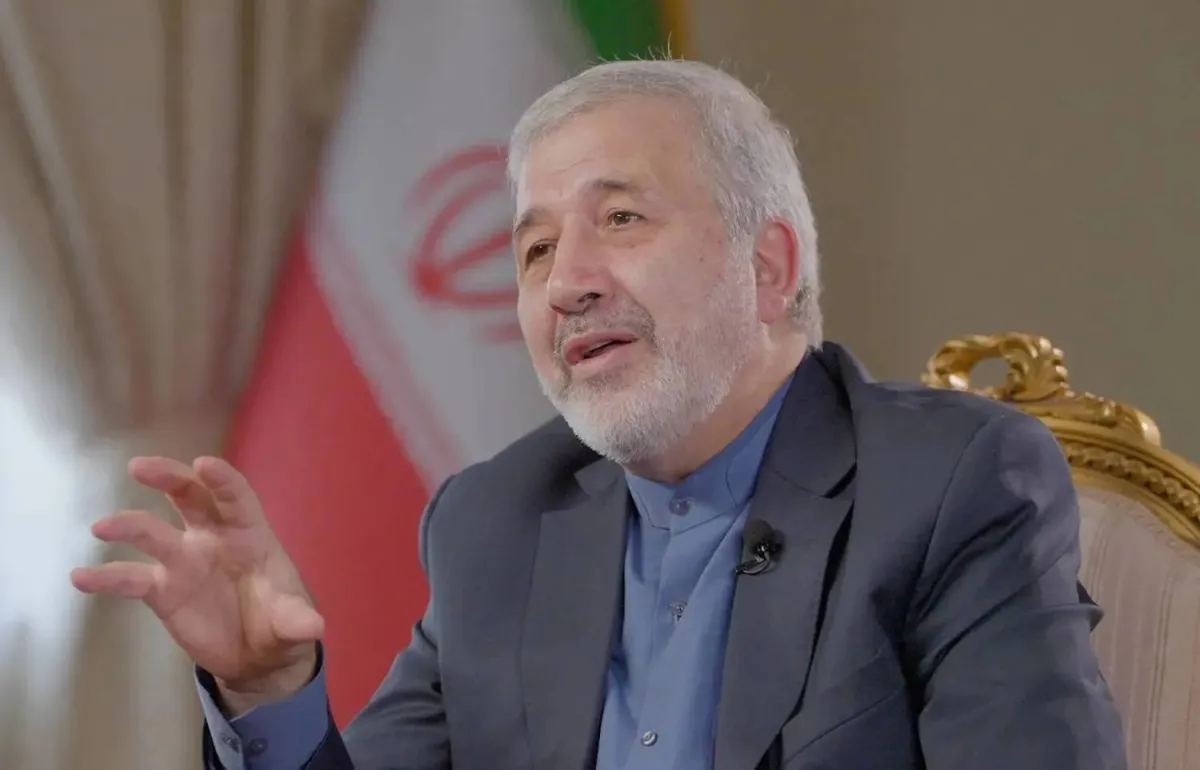
Alireza Enayati, Iran’s ambassador to Saudi Arabia, said that Iran has consulted with Gulf Cooperation Council countries, especially Saudi Arabia, regarding nuclear negotiations with the United States, and expressed gratitude for Riyadh’s support for the talks and the agreement in the early rounds.
He told Asharq Al-Awsat that Iranian President Masoud Pezeshkian discussed recent regional developments with Crown Prince Mohammed bin Salman and Crown Prince and Prime Minister, and both sides emphasized “the need to achieve regional security and peace and avoid war.”
He said Iran’s foreign minister also held several telephone conversations with his Saudi counterpart and briefed them on developments in the nuclear file.
Omani Foreign Minister Badr al-Busaidi, who is mediating the negotiations, said the third round of nuclear talks between Iran and the United States concluded in Geneva on Thursday after “significant progress”.
US President Donald Trump’s special envoys Steve Witkoff and Jared Kushner held direct and indirect talks with Iranian Foreign Minister Abbas Araghchi in two stages.
The meeting began Thursday morning and lasted about three hours before taking a break for consultations. It resumed later in the evening and ended about 90 minutes later.
Enayati welcomed Oman’s “active and influential” role, saying it reflected “the region’s shared vision of addressing issues with wisdom and diplomacy through fair dialogue.”
“Serious” negotiations
Enayati said Iran approached Thursday’s talks “with complete seriousness, based on the fundamental principle of giving priority to dialogue,” reiterating Iran’s desire for a diplomatic solution to the nuclear issue.
He outlined what he described as the key pillars of the file. “The right for Iran to enrich uranium to a certain level, a promise not to seek nuclear weapons, and the lifting of sanctions.”
He said the talks in Geneva lasted about seven hours, with Al-Busaidi and International Atomic Energy Agency (IAEA) Director-General Rafael Grossi conveying their positions. Negotiators held serious discussions on the content of a potential agreement, including both nuclear issues and sanctions, he said.
Enayati quoted Iran’s foreign minister after the meeting and said, “Agreements were reached on some issues.”
A technical team will begin a detailed review on Monday at IAEA headquarters in Vienna with the assistance of experts. The conference will focus on setting up frameworks and methodologies to address technical issues.
Consultations with Gulf States
Enayati said countries in the region were working together to ensure security and prevent war, adding that the Iranian government had discussed nuclear talks with Gulf states, including Saudi Arabia.
Pezeshkian told Asharq Al-Awsat that he discussed regional development with Crown Prince Mohammed and the two leaders emphasized the need to ensure peace and stability and avoid conflict.
He added that Iran expressed its appreciation for Saudi Arabia’s support for the dialogue path and the agreements reached in previous rounds.
A senior Iranian official told Reuters that the two countries could reach a framework for a nuclear deal if the US separates nuclear and non-nuclear issues, adding that a third round in Geneva should narrow remaining differences.
President Trump has called for a complete halt to Iran’s uranium enrichment and for talks to include support for Iran’s ballistic missile program and regional armed groups.
Iran insists that negotiations remain limited to the nuclear issue and that its plans are for peaceful purposes only.
fear of military escalation
If diplomacy fails, the timing of a U.S. attack becomes uncertain. If military action is aimed at forcing concessions at the negotiating table, it is unclear whether a limited attack can achieve that objective.
If the goal is to remove Iranian leadership, the United States is likely to face a broader and longer-term operation. There are no public signs that it is planning anything going forward, including the risk of destabilization within Iran.
