


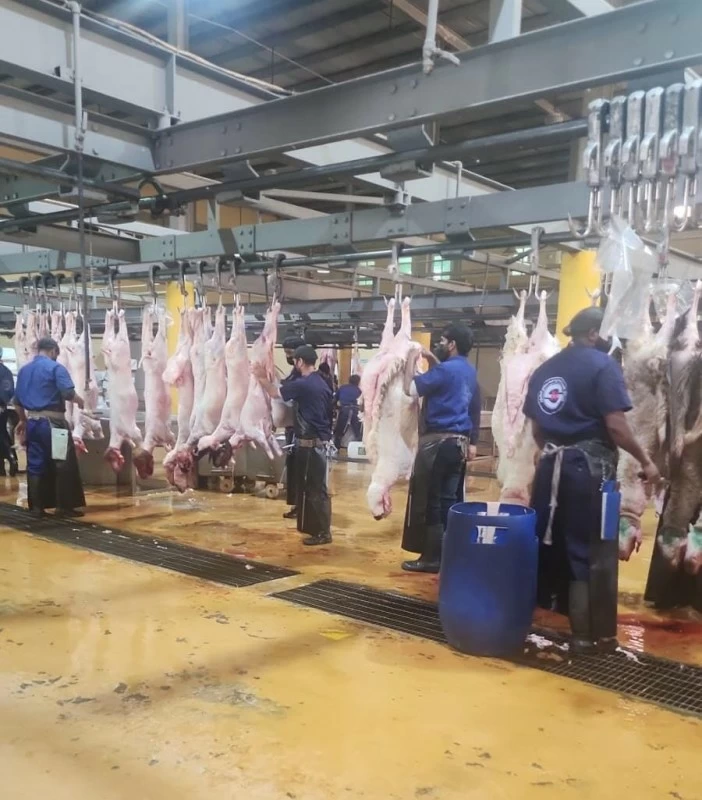
Meat prices in Taif province soared to alarming levels during the holy month of Ramadan after the price of a kilogram of mutton exceeded 80 riyals, with marked price differences between stores and no specific price cap.
According to information monitored by Okaz, the price of hasil meat reached around 70 riyals per kilogram, and 75 riyals for goat, while the price of hash has fallen to 60 riyals, although market participants attributed the rise to increased seasonal demand and the lack of a unified official price.
In the same context, Taif Municipality clarified that the responsibility for price setting rests with the Ministry of Commerce, stressing that the Ministry of Commerce’s role is limited to health management and follow-up of requirements and sanitary conditions.
No specific pricing
The ministry stressed that there is no specific price for meat and that prices depend on supply and demand, but called on establishments to provide consumers with a clear price list.
The ministry has confirmed the enforcement of regulations against violators, including failing to provide price lists, refraining from issuing invoices, failing to issue periodic invoices, not providing electronic payment methods and refraining from transactions on the network. You also receive consumer reports through the “Commercial Reports” application and integrated call center (1900).
Many residents pointed out that the sale of livestock by weight, which previously took place on the public market, but before that procedure was withdrawn due to lack of scales, was, in their opinion, contributing to rising and volatile prices, calling it unfair and calling for drastic solutions to curb price increases.
Meat prices in the Taif region soared to alarming levels during the blessed month of Ramadan, with a kilogram of mutton costing more than 80 riyals, with marked price differences between stores and no fixed price ceiling.
According to a report in Okaz, the price of “Hashir” meat has reached around 70 riyals per kilogram, while the price of “tios” has fallen to 75 riyals and the price of “hashi” has fallen to 60 riyals. Market traders attribute the increase to seasonal demand and lack of unified official pricing.
In this regard, Taif Municipality clarified that the responsibility for setting prices rests with the Ministry of Commerce, stressing that the role of the Ministry of Commerce is limited to monitoring health conditions and ensuring compliance with conditions and cleanliness.
No fixed price
The ministry stressed that meat does not have a fixed price and prices depend on supply and demand, requiring establishments to clearly display price lists to consumers.
The Ministry confirmed that regulations will be enforced against violators who fail to display price lists, refuse to issue invoices, do not have proper invoices, do not provide electronic payment methods and refuse online transactions. We also accept consumer complaints through the ‘Commercial Report’ app and our integrated call center (1900).
Many residents are calling for a radical solution to be found to curb price increases they say are unwarranted, pointing out that selling livestock by weight previously took place on public markets before being abolished due to a lack of scales, which they believe contributed to the rise in prices and disparity.
