


SYDNEY: Oil prices soared on Monday and stocks fell on signs that a military conflict in the Middle East is likely to begin last week, with investors flocking to the relative safety of the dollar and gold.
Brent crude rose 4.5% to $76.07 per barrel, briefly exceeding $82.00, while U.S. crude rose 3.9% to $69.59 per barrel. Gold rose 1.0% to $5,327 an ounce.
While US and Israeli military attacks on Iran show no signs of slowing, Iran responded with a barrage of missiles across the region, risking drawing its neighbors into conflict.
President Donald Trump suggested the conflict could last another four weeks, posting to the Daily Mail that attacks would continue until US goals are achieved.
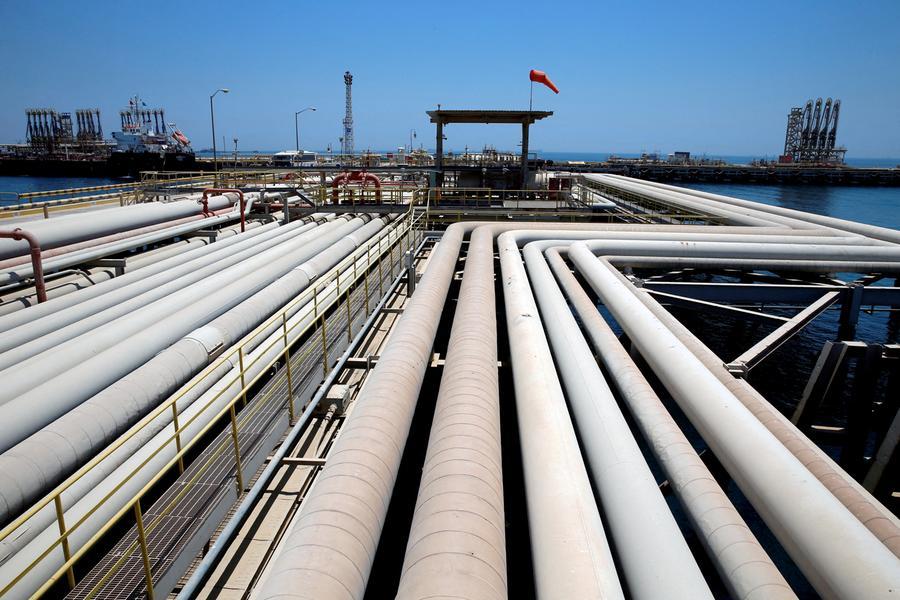
All eyes were on the Strait of Hormuz, through which about one-fifth of the world’s maritime oil trade and 20% of liquefied natural gas flow. The vital waterway has not yet been closed, but maritime tracking sites show tankers piling up on both sides of the strait as they fear attack or may not have insurance for the voyage.
“The most immediate and concrete development that will impact the oil market is that it will effectively shut down traffic in the Strait of Hormuz, preventing 15 million barrels per day (bpd) of crude oil from reaching the market,” said Jorge León, head of geopolitical analysis at Rystad Energy.
“Unless there is a signal of de-escalation soon, we expect oil prices to rise significantly.”
If oil prices continue to rise for an extended period of time, there is a risk of reinvigorating inflationary pressures around the world, and at the same time, it could serve as a tax on businesses and consumers, suppressing demand.
OPEC+ agreed on Sunday to modestly increase oil production by 206,000 barrels per day in April, but much of that output still has to be shipped out of the Middle East by tanker.
“In our view, the closest historical analogy was the Middle East oil embargo of the 1970s, when oil prices rose 300 percent to about $12 a barrel in 1974,” said Alan Gelder, Wood Mackenzie’s senior vice president of refining, chemicals and petroleum markets.
“This is only US$90 per barrel in 2026 terms. In today’s market, where significant losses in supply are a concern, exceeding this seems very achievable.”
This was expensive for Japan, which imports all of its oil, and the Nikkei Stock Average fell 1.4%, with airlines being hit the hardest. China’s blue-chip companies followed their own path and remained strong.
MSCI’s broadest index of Asia-Pacific stocks outside Japan fell 1.2%.
And this week is an important data week for the United States.
In the Middle East, the UAE and Kuwait temporarily closed their stock markets, citing “exceptional circumstances”.
In Europe, Eurostoxx 50 futures fell 1.4% and DAX futures fell 1.3%. On Wall Street, S&P 500 futures and Nasdaq futures both fell 0.6%.
The oil shock spread to the foreign exchange market, with the dollar as the main beneficiary. The euro fell 0.2% to $1.1788, with the United States a net energy exporter and Treasuries still seen as a haven for liquidity in times of stress.
The Japanese yen is often a safe harbor, but since Japan imports all of its oil, the flow is more bidirectional. The dollar rose 0.1% to 156.25 yen, while the Australian dollar, often sold as a proxy for global risk liquidity, also rose.
In the bond market, the 10-year U.S. Treasury yield held steady at 3.970%, and at one point hit an 11-month low of 3.926%.
The bonds were sold at auction on Friday, when British mortgage lender MFS was put into administration following allegations of financial fraud. Its collapse sparked broader credit turmoil, with well-known major banks among the lenders. MFS owed £2 billion ($2.69 billion).
The news, coupled with a drop in bank stocks and turmoil over AI stocks, sent Wall Street into a broader throes.
Investors will have to weather a storm of U.S. economic data this week, including the ISM survey on manufacturing, retail sales and the always important payroll report.
A weak economy after a disappointing fourth quarter could undermine confidence in the economy, but it would also likely narrow the chances of the Fed cutting interest rates.
Markets currently suggest there is a 50% chance of easing in June and a rate cut of about 60 basis points this year. (Reporting by Wayne Cole; Editing by Sam Holmes and Sri Navaratnam)
