


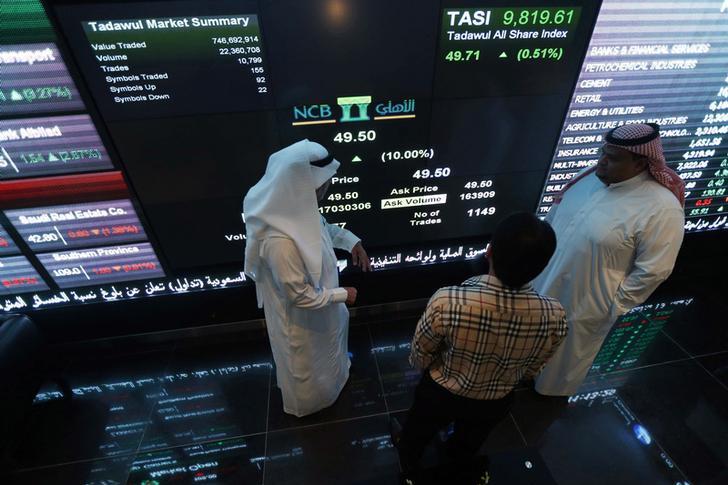
Most Gulf stock markets fell on Tuesday, with Qatari indexes extending losses after the country halted liquefied natural gas production amid escalating air wars in the region.
Israel expanded its operations with new attacks against Iran and Hezbollah, while Iran fired missiles and drones at Israel, several Gulf states and a British air base in Cyprus, raising fears of a protracted conflict.
Qatar’s state-run Qatar Energy, with 82% of its customers in Asia, had planned to declare force majeure on its LNG shipments following an Iranian drone attack on its facilities at the vast Ras Laffan complex.
Qatar’s benchmark index traded 0.9% lower, weighed down by a 2.5% decline in Qatar Islamic Bank. The country condemned Iran’s attacks on its territory and said it reserves the right to retaliate in a letter to the United Nations Secretary-General and Security Council President on Monday.
In the Muscat market, the index fell sharply, dropping more than 1%, while the Kuwait index reversed early losses and rose 0.6%.
The GCC Sovereign Wealth Fund can play a vital role in supporting local stock markets by increasing liquidity, injecting additional capital and strengthening investor sentiment.
Summer Hasn, senior market analyst at XS.com, said now is the ideal time to channel that support through a fund of funds structure.
Meanwhile, oil prices rose for a third straight day on Tuesday as threats to shipping through the Strait of Hormuz heightened concerns about supply disruptions. According to Iranian media, the commander of Iran’s Revolutionary Guards said on Monday that the strait had been closed and warned that Iran would set fire to any ships attempting to pass.
Saudi Arabia’s benchmark index rose 0.5%, supported by a 2.2% rise in oil giant Saudi Aramco, while petrochemical maker Saudi Basic Industries Corporation, which is 70% owned by Aramco, rose 3.1%.
The Saudi energy index rose 2.1%. Among individual stocks, Saudi Arabia’s low-cost airline Flynas extended its decline into the third session, falling 2.8% as air travel in the region took a hit.
Hassoun said the Saudi market has shown unexpected resilience despite the rapid and sudden escalation of the war, impacting various critical infrastructure sectors across the GCC.
“Investors appear to be banking on hopes that the conflict will not drag on, along with expectations for large-scale support from the Saudi government for affected sectors.”
Elsewhere, Bahrain’s index remained largely unchanged. Meanwhile, the UAE’s Securities and Commodities Authority announced that the Abu Dhabi Stock Exchange and Dubai Financial Market will remain closed on Tuesday, citing supervisory and regulatory obligations for the country’s capital markets. We were also closed on March 2nd.
(Reporting by Ateeq Shariff in Bengaluru; Editing by Sumana Nandy, Kirsten Donovan and Harikrishnan Nair)
