


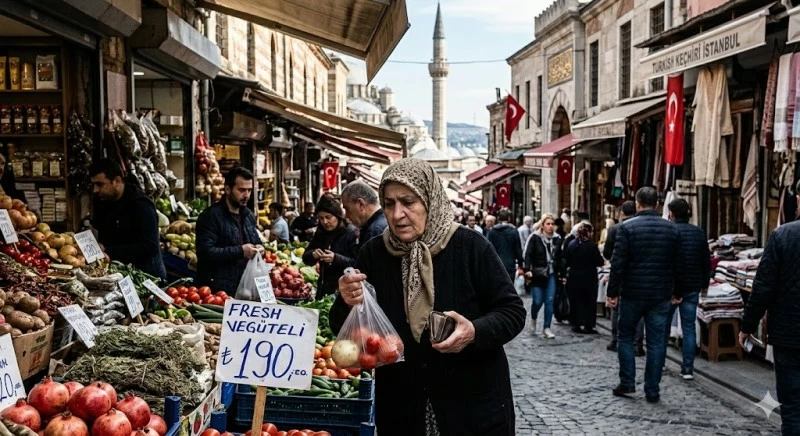
Turkey’s annual inflation rate soared in February last year, complicating the central bank’s efforts to rein in inflation, already challenged by rising energy costs caused by the Iran war.
The annual inflation rate rose from 30.65% in January last year to 31.53% in February last year.
The monthly inflation rate reached 2.96% last month, compared to 4.84% in January last year.
Earlier, Turkey’s central bank announced that it had decided to suspend spot auctions for one week and start selling foreign currency futures contracts denominated in Turkish lira, due to the impact of the ongoing conflict in the region on the market.
Prevent currency fluctuations
“These measures have been taken in response to the current situation and to ensure the proper functioning of the foreign exchange market, while preventing potential fluctuations in exchange rates and stabilizing foreign exchange liquidity,” the bank said in a statement.
Meanwhile, Turkey’s Financial Stability Board indicated it had held a meeting to assess the impact of the regional conflict on financial markets, energy prices and macroeconomic expectations.
The committee, chaired by Finance Minister Mehmet Simsek, added in a statement that the Turkiye government will take all necessary measures to ensure the continued functioning of the market and limit the negative impact of the conflict.
Turkey’s annual inflation rate soared in February, complicating the central bank’s efforts to curb inflation, already challenged by rising energy costs caused by the Iran war.
The annual inflation rate rose to 31.53% in February from about 30.65% in January.
The monthly inflation rate reached 2.96% last month, compared to about 4.84% in January.
Earlier, Turkey’s central bank announced that it had decided to suspend repurchase auctions for one week and start trading in future foreign currency sales denominated in Turkish lira, as the regional conflict continues to have an impact on the market.
Prevention of exchange rate fluctuations
“This measure has been taken in light of recent developments to ensure the proper functioning of the foreign exchange market, while preventing potential fluctuations in exchange rates and stabilizing foreign exchange liquidity,” the bank said in a statement.
Meanwhile, Turkey’s Financial Stability Board indicated it had held a meeting to assess the impact of the regional conflict on financial markets, energy prices and macroeconomic forecasts.
The committee, chaired by Finance Minister Mehmet Simsek, added in a statement that Turkey will take all necessary measures to ensure the continued operation of the market and reduce the negative impact of the conflict.
