


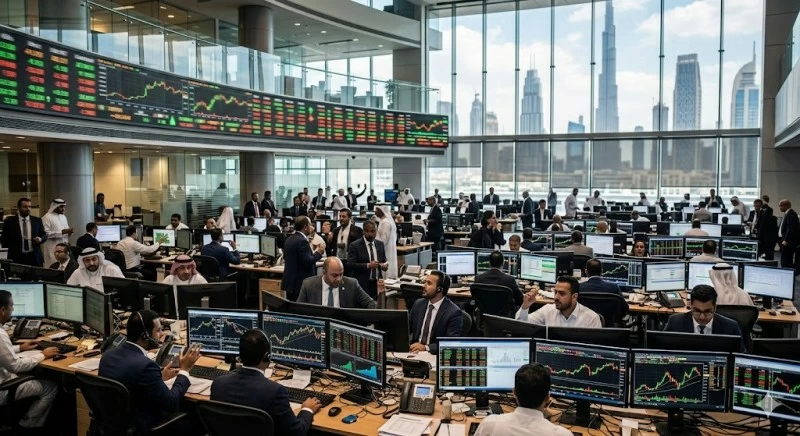
The UAE stock market suffered a sharp decline today in its first trading session after resuming trading following a temporary closure against the backdrop of recent geopolitical developments and the Iranian attack.
The Dubai Financial Market Index fell by 4.6% to a level of 6,200 points at the start of trading, while the Abu Dhabi Securities Market Index (FTSE Abu Dhabi General) fell by around 3.5% to 10,083 points, affected by a nearly 5% decline in Etisalat, ADNOC Gas and First Abu Dhabi shares.
maximum
To limit volatility, Dubai regulators have set a maximum daily decline of 5%.
The Securities and Commodities Authority announced that, after continued coordination with both markets, it will resume trading, clearing and settlement activities in the domestic capital markets from today, in accordance with the previously announced deadlines.
The authorities confirmed that they will continue to closely monitor regional developments and take necessary measures within their legal and regulatory powers to ensure investor protection and market stability.
Authorities had decided to close the market last Monday and Tuesday, given concerns about the escalating conflict in the Middle East and continued military operations between the United States, Israel and Iran, and the ensuing escalation of tensions in the region.
The UAE stock market experienced a significant decline in the first trading session today, following recent geopolitical developments and expected activity following a temporary shutdown due to the Iranian attack.
The Dubai Financial Market Index fell by 4.6% at the start of trading, reaching a level of 6,200 points, while the Abu Dhabi Stock Exchange Index (FTSE Abu Dhabi General) fell by around 3.5% to 10,083 points, affected by a nearly 5% decline in the share prices of Etisalat, Adnoc Gas and First Abu Dhabi Bank.
Upper limit value
To limit volatility, Dubai regulators have set a daily decline cap of 5%.
The Securities and Commodities Authority announced that it will begin trading and clearing and settlement activities in the domestic capital markets from today, in accordance with the previously announced schedule, after continued coordination with both markets.
The authorities confirmed that they will continue to closely monitor developments in the region and take the necessary measures within their legal and regulatory powers to ensure investor protection and market stability.
Authorities had decided to close the market last Monday and Tuesday amid concerns about the escalating conflict in the Middle East, ongoing military operations between the United States, Israel and Iran, and the ensuing escalation of tensions in the region.
