


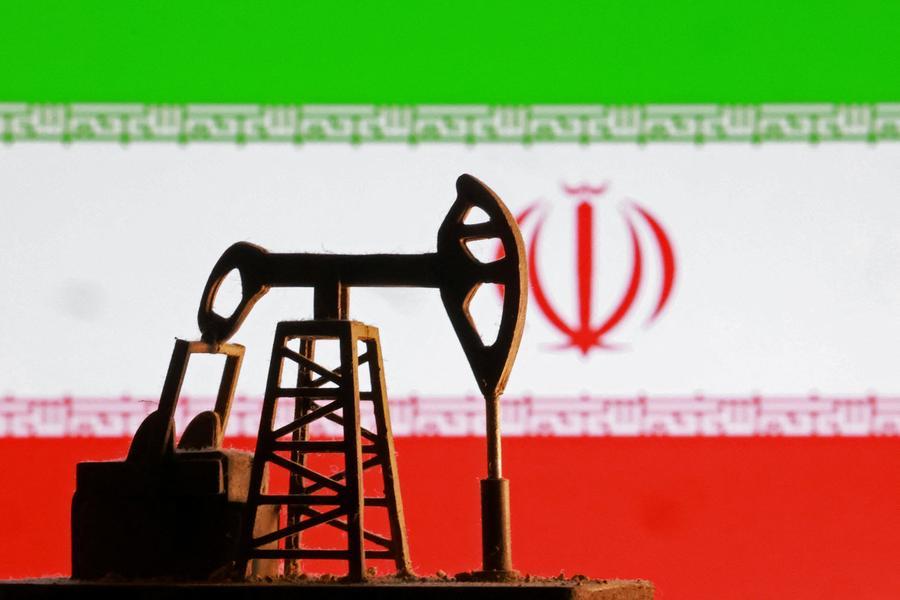
TOKYO: Oil prices rose on Thursday as war between the United States and Iran disrupted vital Middle East oil and gas flows and raised concerns about a prolonged closure of the Strait of Hormuz as production facilities limit output.
Brent crude oil was trading at $83.07 a barrel, up $1.67, or 2.05%, at 0141 GMT. US West Texas Intermediate crude oil rose $1.94, or 2.60%, to $76.60.
The war between the US and Iran escalated on Wednesday after a US attack hit an Iranian warship off the coast of Sri Lanka, with US Senate Republicans backing President Donald Trump’s military campaign against Iran.
They voted against a bipartisan resolution aimed at calling on Congress to halt air combat and authorize hostilities against Iran.
Iraq, the Organization of the Petroleum Exporting Countries’ second-largest oil producer, has cut production by nearly 1.5 million barrels a day due to a lack of storage and export routes, officials told Reuters.
Qatar, the Gulf’s biggest liquefied natural gas producer, on Wednesday declared force majeure on gas exports, and sources said it could take at least a month to return to normal production.
Shipping through the Strait of Hormuz, a vital shipping route that accounts for nearly a fifth of the world’s energy consumption, has been at a near standstill for five days amid the war with Iran and Tehran’s retaliation.
Britain’s Maritime Trade Services Agency said the captain of the tanker, which was anchored 30 nautical miles south-east of Mubarak Al Kabir in Kuwait, reported hearing and seeing a large explosion, after which a small vessel was seen leaving the area.
JPMorgan said in a note to clients that Iran has refrained from targeting most critical energy infrastructure, leaving shipping risks extremely elevated, and estimates that around 329 oil vessels are stranded in the Gulf.
“Storage capabilities and prevailing energy prices in Gulf Cooperation Council countries are limiting factors in the duration of U.S. operations,” it added.
The reference was to the political and economic alliance of Saudi Arabia, the United Arab Emirates, Qatar, Kuwait, Oman, and Bahrain.
Most oil fields can be restarted within days, and full production capacity is typically restored within two to three weeks, JPMorgan said.
“Especially in Iraq, where water injection is critical, operators will need to gradually rebuild reservoir pressure, but today the main constraint is not geology but logistics.” (Reporting by Katya Golubkova in Tokyo; Editing by Chris Rees and Clarence Fernandez)
