


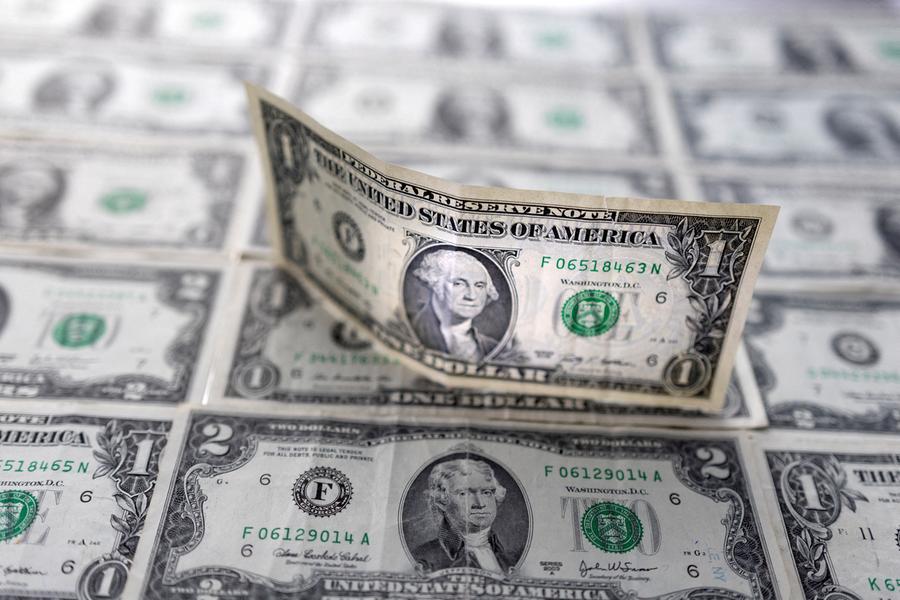
SINGAPORE: The dollar ended a wild rally on Thursday, giving the battered euro some respite as investors clung to the fragile assumption that Middle East wars may not last as long as first expected.
Investors were quickly reassured by reports that Iranian intelligence officials had indicated they were open to talks with the CIA to end the war, despite Tehran’s subsequent denials, underscoring the uneasy feeling about the conflict gripping global markets.
Traders are also hopeful that oil shipments through the Strait of Hormuz will resume after insurance broker Marsh said on Wednesday it had met with US officials to consider restoring maritime trade.
The dollar fell further from its more than three-month high hit earlier this week to 98.82 against a basket of currencies.
The euro fell to a three-month low on Tuesday but held steady at $1.1628, while the pound was little changed at $1.3368.
“It’s not particularly good news. It’s like Iran has come out and dismissed the report, so obviously it’s still unclear how long the war is going to last and its impact, but I think the market is certainly feeling relatively optimistic,” said Carol Conn, currency strategist at Commonwealth Bank of Australia.
He added that upbeat US economic data released on Wednesday showing service sector activity soared in February above its highest level in more than three-and-a-half years also supported sentiment.
Still, the dollar has gained more than 1% for the week so far, emerging as one of the few winners in a volatile few trades that have dragged down stocks, bonds and even safe-haven precious metals.
Soaring energy prices in the aftermath of Middle East wars are raising concerns about a resurgence in inflation that could derail the interest rate outlook of major central banks.
“Markets are primarily trading the Middle East war as an inflation risk,” said Bas van Geffen, senior macro strategist at Rabobank.
“For[the Federal Reserve and the Bank of England]this means that rate cuts are priced in less, but the euro money market is currently pricing in a roughly 40% chance that[the European Central Bank]will have to raise rates by the end of the year.”
The yen similarly received some support from the dollar’s weakness on Thursday, rising 0.2% to 156.79 per dollar.
The Australian dollar maintained its 0.57% rise from the previous session, and was last at $0.7068, while the New Zealand dollar fell slightly to $0.5939.
Australia’s energy reserves have been broadly volatile this week, used as a proxy for risk sentiment and at times providing a rare safe haven as Australia’s energy reserves offset the impact of rising oil prices.
China has set an economic growth target of 4.5% to 5% for 2026, a slight downward revision from the 5% pace achieved last year, although this leaves room for greater efforts to curb industrial overcapacity and rebalance the economy, although this is not definitive.
The yuan recently rose more than 0.1% in domestic trading to 6.8862 yuan to the dollar, which traders interpreted as an attempt to stabilize the currency, pushing the yuan’s official midpoint to its highest level in 34 months on Thursday.
Bitcoin and Ether each fell nearly 1% before rebounding sharply overnight as risk appetite improved.
(Reporting by Rae Wee; Editing by Shri Navaratnam and Thomas Derpinghaus)
