


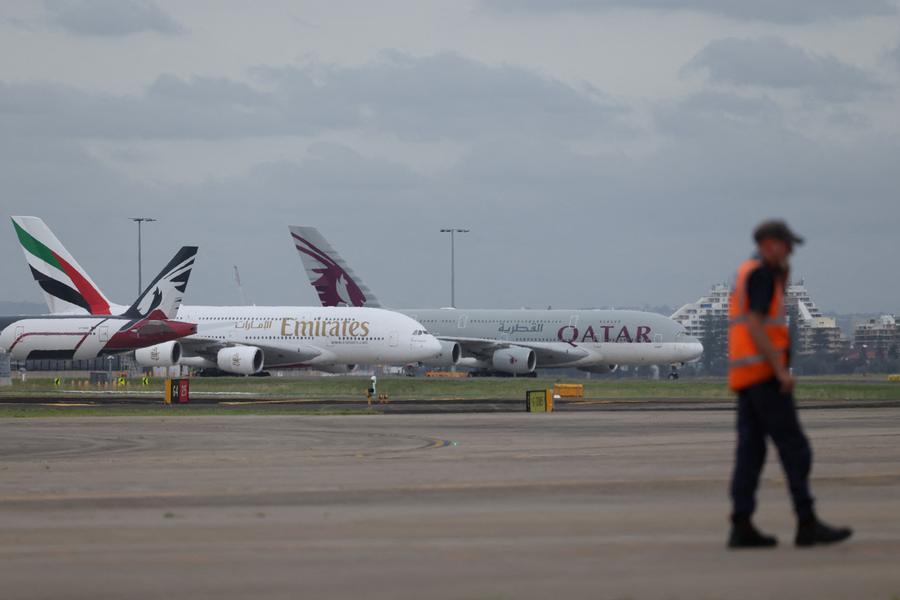
According to Fitch Ratings, the period of aviation disruption following the attacks launched by Israel and the United States against Iran on February 28, and Iran’s subsequent attacks on countries in the region, will be the basis for determining the impact on affected sectors, including airlines, airports, lodging, insurance, and rental companies.
Our underlying expectation that the conflict in the Middle East will last no more than a month is likely to limit the impact on Fitch-rated issuers in sectors affected by aviation disruption. Our base case involves particularly high uncertainty. Further prolonged disruption could have a more significant impact on affected sectors and issuers, particularly smaller and less diverse issuers, the report said.
Since February 28, aviation across the Middle East has been severely disrupted by widespread airspace closures and restrictions, with airlines rerouting, diverting and canceling services.
Major hub airports, including Dubai, Abu Dhabi and Doha, are experiencing significant schedule disruptions and congestion. More than 15,000 flights were reportedly canceled at seven major regional airports between February 28 and March 5, affecting more than 1.5 million passengers. Flights are also being diverted to European airports.
Those most directly affected are airlines operating disrupted routes. Airlines face revenue losses from flights that were not operated, with the greatest exposure concentrated among airlines with hubs in directly affected countries, the top rating agency said.
Air operations over the UAE and Qatar appear to be particularly restricted, which is important given the size of the region’s hub airline operations.
Other airlines are primarily affected by the suspension of service to affected destinations and the need to reroute around restricted airspace in certain corridors. Among the airlines in the EMEA network rated by Fitch, those with the highest exposure to the entire Middle East region do not exceed a high single-digit percentage.
Disruptions increase operating costs through longer routes, additional technical stops, overtime for crew and staff, and increased accommodation and processing costs. Since this dispute is outside of the airline’s control, compensation to passengers is likely to be limited, but the airline may still incur meal and lodging costs and may be required to provide refunds or vouchers for canceled services.
Finally, disruptions often increase fares on affected and adjacent lines, which could partially offset the negative economic impact, experts say.
Airlines could be affected by higher fuel prices as well as lost revenue. Most EMEA airlines, including those in the Middle East, typically maintain relatively high fuel hedge coverage. Hedging levels for the next three months range from approximately 50% to over 80%.
The impact on Fitch-rated European airports is likely to be mixed, due to revenue losses from reduced point-to-point traffic from the Far East and spillover effects on retail spending per passenger, but may be offset by increased ancillary revenues such as parking fees and, where applicable, regulatory protection against traffic fluctuations.
Fitch-rated lodging issuers with exposure to the Middle East are primarily global companies with a high degree of geographic diversification.
Given the regional nature of the conflict, it should be able to absorb the impact of travel and booking disruptions. Experts say the impact could be further mitigated in the Mediterranean and Asia-Pacific regions as revenue per available room increases.
Your aviation insurance policy may give your insurance company the right to cancel your coverage. War coverage typically relates to aircraft damage, while business interruption policies typically exclude the risk of war. Portfolios with large Gulf exposures and less diversification are most likely to be under pressure. Reinsurers may increase the primary carrier’s exposure by reducing coverage or increasing attachment points.
The top rating agency said the impact of the dispute on Fitch-rated aircraft lessors would be very limited, reflecting their globally diversified fleets and generally well-managed regionally concentrated exposures.
It added that the credit profile also benefits from primarily fixed-rate long-term lease income, strong liquidity buffers and a well-laddered debt maturity profile, which should reduce the impact of adverse disruptions in the sector. -TradeArabia News Service
Copyright 2026 Al Hilal Publishing and Marketing Group Provided by SyndiGate Media Inc. (Syndigate.info).
