


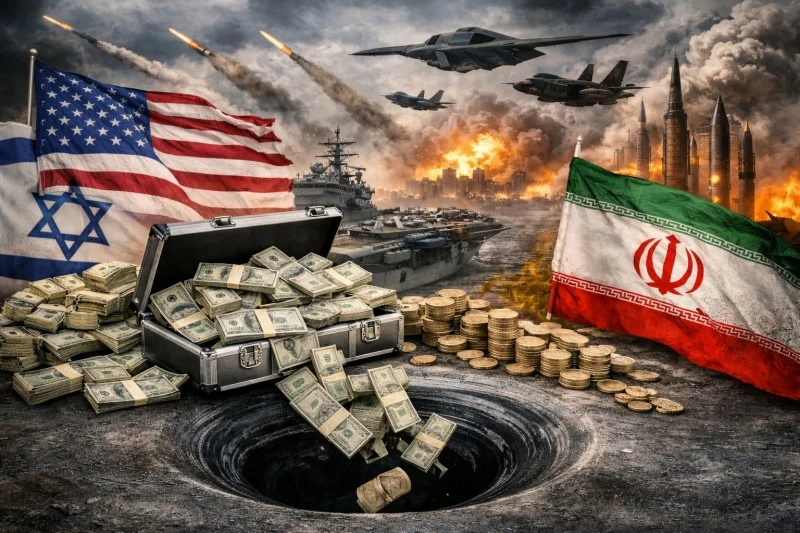
As attention turns to the course of America and Israel’s war against Iran and its declared military objectives, the scale of the conflict’s exorbitant economic costs is slowly becoming clearer. In addition to the explosions that hit targets inside Iran, the US Treasury has recorded a rapid financial hemorrhage that could change Washington’s defense spending equation. Preliminary estimates from media reports and research centers have warned that the cost of military operations could reach around $1 billion per day, and that continuing the war could turn it into a “black hole” that swallows America’s defense budget.
1 billion dollars a day…an expensive war
According to a report in The Atlantic, US Congressional officials have revealed that preliminary estimates by the Department of Defense show that the ongoing war against Iran is costing nearly $1 billion per day.
Expenditures are not limited to the price of bombs and missiles, but also include logistics operations and large-scale military deployments in the region, as well as the costs of operating air and naval fleets and advanced defense systems.
According to U.S. Central Command, the U.S. military struck more than 1,250 targets inside Iran within the first 48 hours of the offensive, using more than 20 types of military assets and a variety of combat systems.
Day 1: $779 million in 24 hours
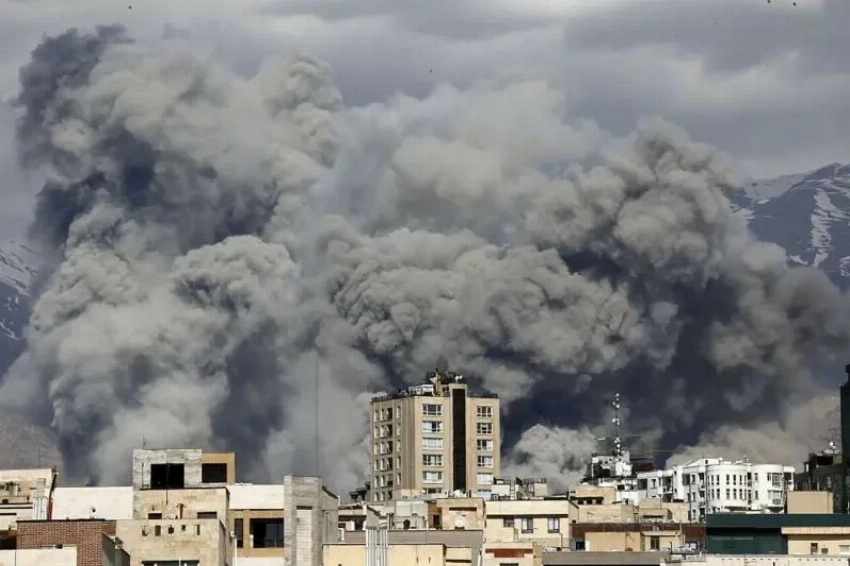
While the explosion rocked Tehran, the U.S. Treasury was spending at an unprecedented pace. Anadolu Agency estimates that the US military spent about $779 million in the first 24 hours of the attack, equivalent to about 0.1% of the US defense budget for 2026.
Military deployments include:
•B-2 stealth bomber
•F-22, F-35, F-16 fighters
•A-10 attack aircraft
・Electronic warfare aircraft EA-18G
•MQ-9 Reaper Drone
・Nuclear-powered aircraft carrier and missile destroyer
・Patriot and THAAD missile defense systems
Four B-2 stealth bombers also flew long distances from Whiteman Air Force Base, Missouri, attacking targets using JDAM-guided bombs weighing approximately 2,000 pounds.
Drone…the cheapest weapon
Bloomberg estimates that operating costs for some military assets range from $35,000 to several million dollars.
for example:
•Suicide drones cost around $35,000.
•Using approximately 1,250 drones could cost approximately $43.8 million.
Drones are considered the cheapest option compared to advanced missiles, but their heavy use doubles the total expenditure.
Stealth bombers and missiles… millions of shots per attack
Large-scale attacks are the costliest of the war, with some estimates saying some operations could cost tens of millions of dollars.
The most prominent names in circulation are:
• B-2 bombers cost between $130,000 and $150,000 per flight hour to operate.
・The cost of THAAD interceptor missiles is approximately $12.8 million per missile.
And precision operations carried out by advanced manned and unmanned aircraft can add millions of dollars to the cost of war.
Aircraft carrier…Bleeding that continues every day
Naval operations make up the bulk of the war bill. International reports say the cost of operating two aircraft carriers in the region is about $13 million a day.
Bloomberg previously estimated that operating costs alone for the USS Gerald Ford aircraft carrier during military deployments cost about $11.4 million per day.
Military operations…where will the billions of dollars go?
An analysis published by the Center for Strategic and International Studies estimates the cost of the war to be around $891.4 million per day, with costs expected to decline later as more cheap ammunition is relied upon.
Daily expenses are roughly distributed as follows:
Air operations:
•Carriers and delivery companies: $9 million
•Normal fighter jets: 5 million aircraft
•Stealth fighters: 5 million aircraft
Naval operations:
• Aircraft carriers: 6 million ships
•Destroyer: 5 million ships
Ground operations:
・Artillery Brigade: Approximately 1 million dollars
•National Guard Battalion: Less than $1 million
compared to last year’s strike
A comparison shows that the current war has been much more expensive than previous operations.
The June 2025 U.S. attack on Iran’s nuclear facilities, known as Operation Midnight Hammer, cost only about $2.26 billion to $2.26 billion and took about two and a half hours.
As for the current war, an American research center estimates that the cost of the first 100 hours alone amounted to about $3.7 billion.
Where will the war bill go?
Experts warn that the final cost of the war will remain unknown until the operation is over.
Lindsey Khoshgarian, director of the National Priorities Program at the Institute for Policy Studies, said it is difficult to accurately estimate the cost of such a conflict before it ends, noting that the Iraq war was about $3 trillion in size.
Meanwhile, Kent Smetters, head of the Budget Modeling Program at the University of Pennsylvania, estimated that a war that could last two months could cost between $40 billion and $95 billion, depending on the scale of the operation and the potential deployment of ground forces.
However, some experts believe that the US government may consider these costs to be much lower than the cost of allowing Iran to acquire nuclear weapons, a scenario that they estimate could result in losses running into the trillions of dollars.
As attention turns to the course of America and Israel’s war against Iran and its declared military objectives, the scale of the conflict’s prohibitive economic costs is slowly becoming clearer. In parallel with the explosions hitting targets inside Iran, the US Treasury is recording rapid financial drains that could change Washington’s defense spending equation. Preliminary estimates reported by news organizations and research centers say the cost of military operations could reach around $1 billion each day, warning that if the war continues it could turn into a “black hole” that eats away at the U.S. defense budget.
1 billion dollars a day…an expensive war
U.S. Congressional officials have revealed that initial estimates from the Department of Defense show the cost of the ongoing war against Iran is approaching $1 billion each day, The Atlantic reported.
Costs are not limited to the price of bombs and missiles. These include the costs of operating air and naval fleets and advanced defense systems, as well as logistics operations and large-scale military deployments in the region.
According to U.S. Central Command, U.S. forces targeted more than 1,250 sites in Iran during the first 48 hours of the attack, using more than 20 types of military assets and various combat systems.
First day…$779 million in 24 hours
While the explosion rocked Tehran, the U.S. Treasury was spending at an unprecedented pace. According to estimates by Anadolu Agency, the US military spent about $779 million in the first 24 hours of the attack, equivalent to about 0.1% of the US defense budget in 2026.
Military deployments include:
• B-2 stealth bomber
• F-22, F-35, and F-16 fighters
• A-10 attack aircraft
• EA-18G electronic warfare aircraft
• MQ-9 Reaper Drone
• Nuclear-powered aircraft carriers and guided missile destroyers
• Patriot and THAAD missile defense systems
Additionally, four B-2 stealth bombers flew extended missions from Whiteman Air Force Base, Missouri, attacking targets using JDAM-guided bombs weighing approximately 2,000 pounds.
Drones…cheap weapons
Bloomberg estimates that operating costs for some military assets range from $35,000 to several million dollars.
for example:
• Suicide drones cost about $35,000.
• Using approximately 1,250 drones could cost approximately $43.8 million.
Drones are considered a cheaper option compared to advanced missiles, but their intensive use can double the total expenditure.
Stealth bombers and missiles… millions of dollars per attack
Large-scale attacks are the costliest of the war, with some estimates saying they could run into the tens of millions of dollars.
Some of the notable figures in circulation include:
• B-2 bombers cost between $130,000 and $150,000 per flight hour to operate.
・The cost of each THAAD interceptor is approximately $12.8 million.
Additionally, precision operations carried out by manned aircraft and advanced unmanned aircraft can add millions of dollars to the cost of war.
Aircraft carrier…Bleeding that continues every day
Naval operations form an important part of the war bill. International reports say the cost of operating two aircraft carriers in the region is about $13 million a day.
Bloomberg previously estimated that operating the aircraft carrier Gerald Ford alone costs about $11.4 million each day it is deployed.
Military operations…where are billions of people going?
An analysis by the Center for Strategic and International Studies estimates the cost of the war to be about $891.4 million per day, with the hope that relying on cheaper munitions would reduce costs later.
Daily expenses are approximately distributed as follows:
Air operations:
• Carrier and transportation costs: $9 million.
• Conventional fighter jets: 5 million aircraft
• Stealth fighters: 5 million
Naval operations:
• Aircraft carriers: 6 million ships
• Destroyers: 5 million ships
Ground operations:
• Artillery Brigade: Approximately $1 million
• National Guard Battalion: Less than $1 million
Comparison with last year’s strike
A comparison shows that the current war has been significantly more expensive than previous operations.
The June 2025 U.S. attack on Iran’s nuclear facilities, known as Operation Midnight Hammer, cost only about $2 billion to $2.26 billion and lasted about two and a half hours.
According to estimates by American research centers, the cost of the first 100 hours of the current war alone amounted to about $ 3.7 billion.
Where will the war bill go?
Experts warn that the ultimate cost of the war will not be clear until the operation is over.
Lindsay Khoshgarian, director of the National Priorities Project at the Institute for Policy Research, noted that the Iraq war cost about $3 trillion, and said it is difficult to accurately estimate a conflict like this before it ends.
Meanwhile, Kent Smetters, director of the Budget Modeling Program at the University of Pennsylvania, estimated that a two-month war could cost between $40 billion and $95 billion, depending on the size of the operation and the potential for ground troops to be deployed.
However, some experts believe that the US government may consider these costs to be far lower than the cost of allowing Iran to obtain a nuclear weapon, a scenario they estimate could result in losses in the trillions of dollars.
