


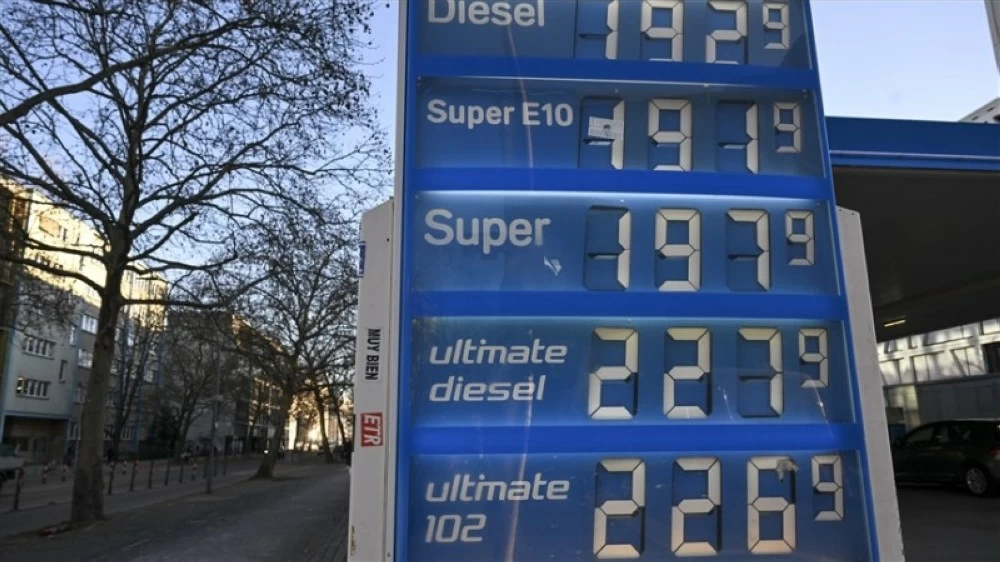
LONDON – Global oil prices soared on Friday as escalating conflict in the Middle East raised concerns about disruptions to energy supplies and shipping routes.
Brent crude oil, the international benchmark, was trading at $90.25 per barrel as of 4:54 a.m. local time (13:54 Japan time), an increase of about 5.7% from the previous closing price of $85.41, and the highest price since April 2024.
The surge comes as a military conflict involving the United States, Israel and Iran enters its seventh day, fueling concerns about the security of the world’s energy supply routes.
The escalation has effectively brought traffic to a standstill in the Strait of Hormuz, a key corridor for global oil and gas transport.
Saad bin Sharia Al Kaabi, Qatar’s energy minister and CEO of Qatar Energy, warned in an interview with the Financial Times that the conflict could have a serious impact on the global economy.
He said continued fighting in the region could “collapse the global economy.”
Qatar Energy on Wednesday declared force majeure against affected buyers after it halted production of liquefied natural gas (LNG) and related products following an attack on its facilities.
Related articles
Muhir and SFG20 (UK) sign groundbreaking partnership to improve maintenance governance in Saudi Arabia
Other Gulf exporters may be forced to take similar measures soon if the situation continues, al-Kaabi said, adding that it could take “weeks to months” for normal LNG shipping to return.
He also warned that oil prices could soar to $150 a barrel within weeks if commercial ships remain unable to pass through the Strait of Hormuz, which normally carries about a fifth of the world’s oil and gas shipments.
Meanwhile, Danish shipping giant Maersk announced it had suspended two major shipping routes connecting the Middle East, Asia and Europe due to safety concerns.
The company suspended its FM1 service between the Far East and the Middle East and its ME11 service between the Middle East and Europe, citing risks to ships and crew.
Maersk has also suspended its regional shuttle service in the Arab Gulf, while many container shipping companies are rerouting ships around the Cape of Good Hope in southern Africa to avoid conflict zones.
