


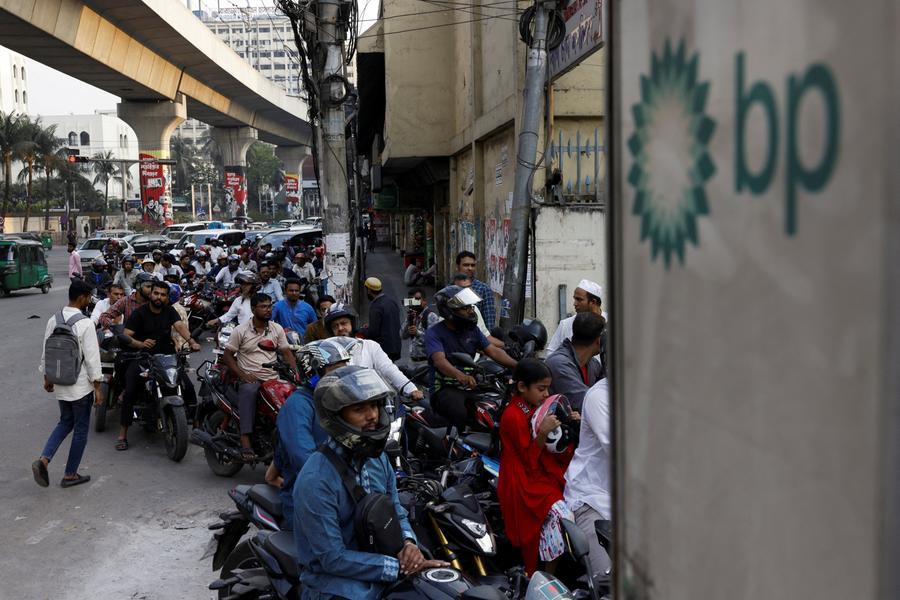
Bangladesh imposed daily limits on fuel sales on Friday after panic buying and stockpiling heightened supply concerns as Middle East wars disrupted global energy markets.
This measure follows the US. Israel’s airstrikes against Iran and Iran’s retaliatory attacks across the Middle East disrupted oil shipments through the Strait of Hormuz, an important energy route, and caused energy prices to soar.
State-run importer and distributor Bangladesh Petroleum Corporation (BPC) said the curbs are aimed at curbing excessive demand, calming the public and keeping stocks stable across the country.
“Heavy oil is essential for a country’s development, but about 95% of it must be imported,” he said, adding that shipments were sometimes delayed due to the unstable global situation.
Rumors of fuel shortages have prompted consumers and retailers to stock up on fuel.
Within the limits, motorcyclists can purchase up to 2liters of octane or gasoline per day. 10 liters for private cars. SUV, Jeep, Microbus 20-25 liters. Pickups and local buses are 70-80 liters. Coaches, trucks and container carriers carry between 200 and 220 liters of diesel.
BPC said there has been unusually high demand at its warehouses, with some dealers trying to withdraw more fuel than usual and some consumers illegally storing fuel. Gas stations are now required to issue a cash memo with quantity and price and verify previous purchase receipts before filling up.
BPC said despite the rush, imports are continuing as normal and supplies are being sent to warehouses via rail tankers. He said buffer stocks should stabilize soon and urged consumers not to stock up. He also warned that selling fuel above the government-set price would be subject to penalties.
Bangladesh also faces rising costs of importing liquefied natural gas after Qatar cut off supplies during the conflict and authorities rationed gas and closed some fertilizer plants.
The country secured two spot LNG cargoes in March, but authorities warned that prolonged disruption could increase reliance on the volatile spot market and increase import bills.
(Reporting by Ruma Paul; Editing by Mark Potter)
