

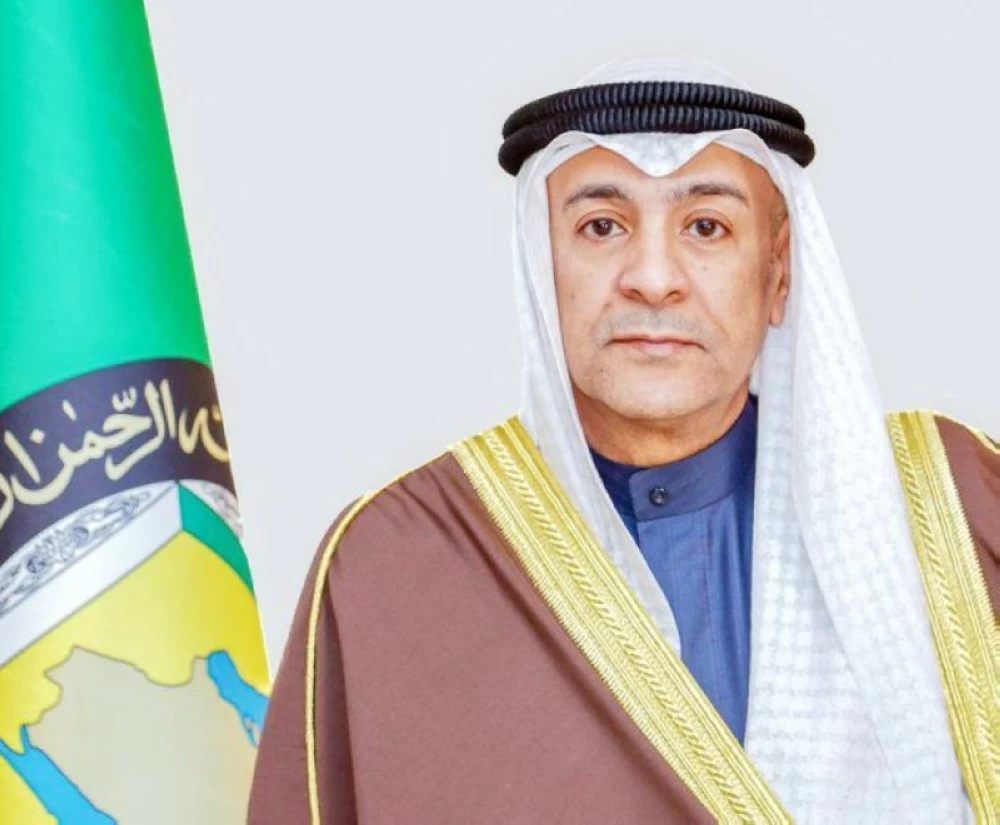
Jassim Al-Budawi, Secretary-General of the Gulf Cooperation Council, confirmed that the economic relationship between the Gulf and Europe is moving from trade exchange to building long-term joint value chains.
This was revealed today during a dialogue session on Gulf-European economic relations entitled “The Next Investment and Trade Competition” between Mr. Al-Budawi and the European Union’s Special Envoy for Foreign Affairs Luigi Di Maio.
He explained that the relationship between the Gulf Cooperation Council and the European Union is one of a partnership established on the basis of a long history of institutional cooperation that began with the signing of the Cooperation Agreement in 1988, which established a solid framework for political and economic dialogue and contributed to opening broad horizons for cooperation in the fields of trade, investment, energy, development and education.
paradigm shift
He pointed out that recent years have seen qualitative changes in this partnership, including, inter alia, the adoption of a joint work program for the period (2022-2027), the holding of the Gulf Europe Summit in Brussels, the follow-up of the implementation of the results, the subsequent ministerial meeting aimed at strengthening trade and investment cooperation, improving market access, supporting supply chains and sustainable development.
He said the merchandise trade between the two countries amounted to about $197 billion. This has made the European Union one of the GCC countries’ most important trading partners, in addition to increased direct investment by the European Union in the GCC countries, reflecting the depth of economic interdependence and growing confidence in the Gulf business environment.
wide field
In his speech on prospects for future cooperation, Mr. Al-Budawi emphasized that the economic transformation witnessed by the GCC countries, in light of ambitious national visions, opens wide areas for partnership with the European Union, especially in the areas of clean energy, green hydrogen, digital transformation, artificial intelligence, smart infrastructure and cybersecurity.
He stressed that the success of the Gulf-European Partnership will not be measured solely by the volume of trade and investment flows, but by its ability to transform to an integrated cooperation model based on trust, share risks and build a common economic future that contributes to strengthening global economic stability and growth.
Gulf Cooperation Council Secretary-General Jasem Al-Budawi confirmed that economic relations between the Gulf and Europe are moving away from trade exchanges and toward building long-term shared value chains.
This was revealed today during a dialogue session on Gulf-European economic relations entitled “Future Investment and Trade Competition” between Mr. Al-Budawi and the European Union’s Special Envoy for Foreign Affairs Luigi Di Maio.
He explained that the relationship between the Gulf Cooperation Council and the European Union is one of a partnership built on a long history of institutional cooperation that began with the signing of the Cooperation Agreement in 1988. He explained that this has contributed to establishing a solid framework for political and economic dialogue and opened wide horizons for cooperation in the fields of trade, investment, energy, development and education.
qualitative leap
He noted that the partnership has made qualitative leaps in recent years, including, inter alia, the adoption of the Joint Plan of Action for the period (2022-2027), the holding of the Gulf Europe Summit in Brussels, the follow-up of the implementation of the results, the subsequent ministerial meeting aimed at strengthening trade and investment cooperation, improving market access, supporting supply chains and sustainable development.
He pointed out that the volume of trade in goods between the two countries amounts to approximately $197 billion, making the European Union the most important trading partner of the GCC countries, reflecting the depth of economic interconnections and growing confidence in the Gulf business environment, along with increased direct investment in GCC countries.
wide area
Discussing prospects for future cooperation, Mr. Albdaiwi emphasized that, in light of ambitious national visions, economic transformation is taking place in the GCC countries, opening up wide areas for partnership with the European Union, especially in the areas of clean energy, green hydrogen, digital transformation, artificial intelligence, smart infrastructure and cybersecurity.
He asserted that the success of the Gulf-European Partnership will not be measured only by trade and investment flows, but by its ability to transform into an integrated cooperation model based on trust, risk sharing and building a common economic future that contributes to strengthening global economic stability and growth.
