

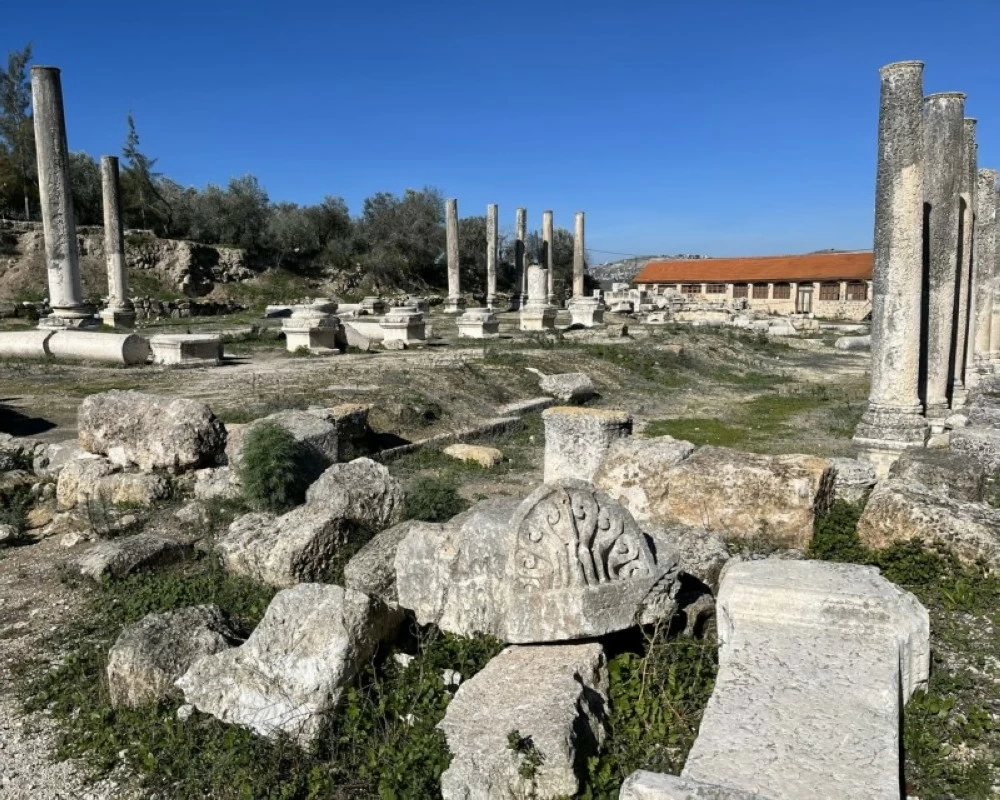
Perched atop a historic hill at the crossroads of civilizations, Palestine’s Sebastia ruins are a witness to thousands of years of accumulated history, from the Byzantine and Roman eras to the Islamic and Ottoman eras. However, this rich archaeological landscape is today threatened not by the factor of time but by widespread confiscation decisions that cause concern for small town residents and threaten their sources of livelihood and identity.
Measures to isolate people in the West Bank
The Guardian reports that Israeli occupation authorities have announced a major “archaeological development” project that Palestinians see as another step in isolating them from their land and heritage, amid accusations that they are using archeology as a political tool to impose new facts on the occupied West Bank.
Seizure of Palestine ruins
Last November, Sebastia’s mayor, Mahmoud Azem, received official notification from Israeli authorities that the entire ruins, spread out in the hills adjacent to the town, had been confiscated.
News of an Israeli project to develop the site had been circulating for years, but the decision came as a shock to the town’s population of about 3,500 people, most of whom make their living primarily from tourism or olive cultivation associated with the site.
According to published plans, the project includes the construction of a fence separating the site from the town, as well as the creation of a visitor center and parking lot, effectively separating residents from the site and the remaining olive groves that surround it.
Mayor Mahmoud Azem said: “Unfortunately, Sebastian has entered a dark tunnel. What is happening now is an attack on Palestinian land, olive trees, tourist sites and a blatant violation of Palestinian history and heritage.”
Largest land seizure for archaeological purposes
The confiscated land, approximately 182 hectares (450 acres), is the largest land seizure for archaeological purposes since Israel occupied the West Bank in 1967 following a war with Egypt, Syria and its Arab allies.
Antiques are political weapons
Experts believe the archaeological project is just a cover for the expansion of Jewish settlements in the West Bank, a policy that has been strongly reinforced in recent years under the current right-wing Israeli government.
Activists say much of the confiscated land was privately owned by Palestinians, setting a dangerous precedent.
Aron Arad, from the Israeli non-governmental organization Emek Shaveh, told the Guardian that archeology was being “politically weaponized”, adding: “What is being planned for Sebastia is unprecedented in its scale and very opportunistic. The problem is not history, it’s land and annexation.”
The project is estimated to cost millions of dollars and is controlled by members of the far-right Otzma Yehudit party, a partner in the most extremist ruling coalition in Israel’s history. The plan also includes the construction of a new road that would allow visitors to arrive directly from inside Israel, bypassing Palestinian towns, and is expected to expand a large Jewish settlement located just about a kilometer from the site.
Israeli Minister of Culture and Heritage Amihai Eliyahu, a member of the party and a West Bank settlement resident, is one of the most prominent advocates of annexing all Palestinian territory. “Sebastia is one of the most important places in our national and historical heritage,” he declared last year, stressing that his goal was “to revive this place and transform it into a destination visited by hundreds of thousands of visitors every year.”
Multi-layered history, one story
However, Palestinian researchers and experts warn against reducing Sebastia’s history to an era. Wala Ghazal, a curator at a small museum in the courtyard of the town’s 13th-century mosque, says focusing on one period is a distortion of history, since the Ottoman mosque was originally a Crusader cathedral, was previously a Byzantine church, and also contained the tomb of the Prophet Yahya (John the Baptist).
“Continuous life took place here for centuries. Focusing on just one era is unforgivable. The kingdom of Samaria was in the Iron Age, but humans have been here long before that.”
Archaeologists point out that the kingdom of Samaria was destroyed by the Assyrians in 722 B.C., after which Alexander the Great re-destroyed a settlement there, then King Herod rebuilt the kingdom of Samaria and named it in honor of Emperor Augustus, followed by periods of Byzantine, Islamic, Crusader, Ottoman, and British rule.
International criticism and population issues
Other Israeli government-backed archaeological projects in the West Bank and East Jerusalem have faced similar criticism, amid accusations that they are using archeology for ideological purposes. A 2018 European Union report noted that some of these projects are being used “as political tools to change historical narratives and support and expand settlements.”
International law prohibits occupying powers from interfering with or developing archaeological sites.
Sebastian is on UNESCO’s list of Palestinians.
Since 2012, Sebastia has been included in UNESCO’s Tentative List of World Heritage Sites under the name of the State of Palestine.
Despite tourist numbers declining since the outbreak of the Gaza war in October 2023, residents of the town had hoped that the hundreds of visitors who had previously arrived daily would return.
“This project will destroy Sebastia,” said Mahmoud Ghazal, who lives next to the ruins of a Roman basilica and said his home, shop and restaurant were threatened by the proposed fence. “They will take everything from us.”
Perched atop a historic hill at the crossroads of civilizations, Palestine’s Sebastia ruins are a witness to thousands of years of accumulated history, from the Byzantine and Roman eras to the Islamic and Ottoman eras. However, this rich archaeological site is now threatened not by the passage of time but by widespread confiscation decisions that cause concern for the small town’s residents and threaten their livelihoods and identity.
A step towards isolating people in the West Bank
The Guardian reports that as the Israeli occupation authorities announce a major “archaeological development” project, Palestinians see it as another step in isolating them from their land and heritage, amid widespread accusations that they are using archeology as a political tool to impose a new reality on the occupied West Bank.
Seizure of Palestine ruins
Last November, Sebastia’s mayor, Mahmoud Azem, received an official notice from Israeli authorities to confiscate the entire ruins, which are spread over a hill next to the town.
The decision came as a shock to the town’s approximately 3,500 residents, despite years of rumors about an Israeli project to develop the site. Most of the residents rely on tourism and olive cultivation associated with the location as their main source of income.
According to published plans, the project includes the creation of a visitor center, a parking lot and the construction of a fence separating the ruins from the town, effectively isolating residents from the ruins and the remains of the surrounding olive groves.
Mayor Mahmoud Azem said: “Unfortunately, Sebastian has entered a dark tunnel. What is happening now is an attack on Palestinian land, olive trees and tourist sites, and a blatant violation of Palestinian history and heritage.”
Biggest land grab for archaeological purposes
The area of land confiscated was approximately 182 hectares (450 acres), making it the largest land grab for archaeological purposes since Israel occupied the West Bank in 1967 following a war with Egypt, Syria and their Arab allies.
Archeology as a political weapon
Experts believe the archaeological project is just a cover for expanding Jewish settlements in the West Bank, a policy that has been strongly strengthened in recent years under the current right-wing Israeli government.
Activists say much of the confiscated land is privately owned by Palestinians, setting a dangerous precedent.
Aron Arad, from the Israeli NGO Aimek Shaveh, told the Guardian that archeology was being “politically weaponized”, adding: “What is being planned for Sebastia is unprecedented and extremely opportunistic. The problem is not history, it’s land and annexation.”
The project, estimated to cost millions of dollars, is being promoted by members of the far-right Otzma Yehudit party, a partner in the most radical ruling coalition in Israel’s history. The plan also includes the construction of a new road through the Palestinian town, with direct access from inside Israel, and is expected to expand the large Jewish settlement located just about a kilometer from the site.
Israeli Minister of Culture and Heritage Amihai Eliyahu, who belongs to the same party and lives in a West Bank settlement, is one of the most prominent proponents of annexation of all of Palestine. “Sebastia is one of the most important places in our national and historical heritage,” he said last year, stressing that his goal was “to revive this place and turn it into a destination visited by hundreds of thousands of people a year.”
Multi-layered history and a single story
However, Palestinian researchers and experts caution against reducing Sebastian history to a single era. Wala Ghazal, curator of a small museum in the courtyard of the town’s 13th-century mosque, says focusing on one period distorts history. The Ottoman mosque was originally a Crusader cathedral, and in front of it was a Byzantine church, and also contains the tomb of John the Prophet (John the Baptist).
She added: “There has been continuous life here for centuries. We cannot afford to focus on just one period. The Kingdom of Samaria existed in the Iron Age, but humans have been here long before that.”
Archaeologists point out that the kingdom of Samaria was destroyed by the Assyrians in 722 BC, after which Alexander the Great destroyed the settlements in its place, after which King Herod rebuilt the kingdom of Samaria and named it in honor of Emperor Augustus, followed by periods of Byzantine, Islamic, Crusader, Ottoman, and British rule.
International criticism and residents’ concerns
Other Israeli government-backed archaeological projects in the West Bank and East Jerusalem have faced similar criticism, amid accusations that they are using archeology for ideological purposes. A 2018 report by the European Union noted that some of these projects are being used “as political tools to change the historical narrative and support and expand settlements.”
International law prohibits occupying powers from interfering with or developing archaeological sites.
Sebastian listed on UNESCO list as Palestine
Sebastia has been on the Tentative List of UNESCO World Heritage Sites since 2012 under the name of the State of Palestine.
Despite tourist numbers declining since the outbreak of the Gaza war in October 2023, residents of the town had hoped that the hundreds of visitors who previously flocked daily would return.
Mahmoud Ghazal, who lives next to the ruins of a Roman cathedral, said his home, shops and restaurants are now threatened by the proposed fence. “This project will destroy Sebastia. They will take everything from us.”
