


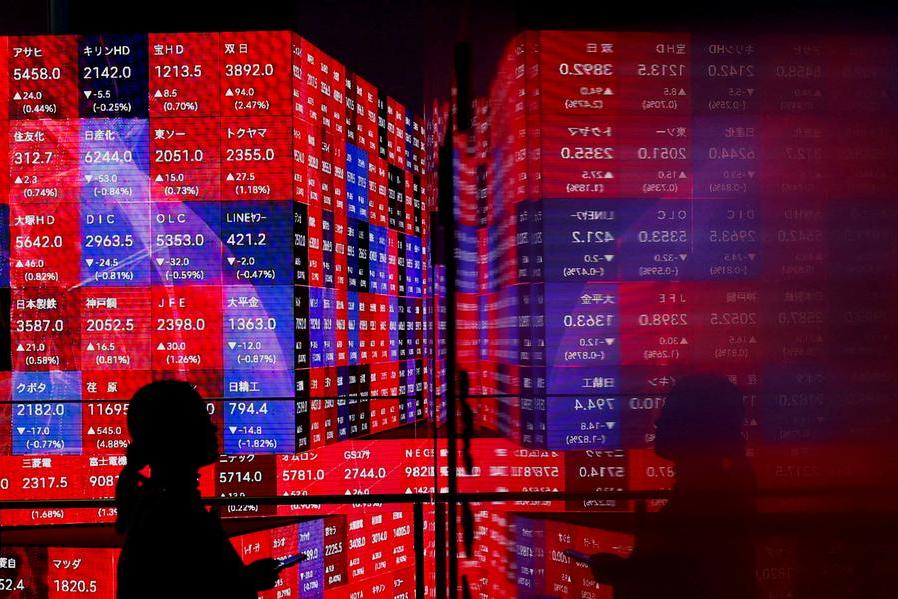
TOKYO – Asian stocks rallied on Thursday and U.S. Treasuries fell, signaling a tentative recovery in risk appetite hit by the escalation of war in the Middle East.
South Korea’s KOSPI gauge has recovered from heavy losses from the previous session following a rebound on Wall Street. The dollar resumed its rise, and oil and gold rose.
Chinese stocks rose as party elites in Beijing unveiled broad economic and development goals. The US Senate has backed President Donald Trump’s military campaign against Iran, suggesting a quick resolution to the war that has disrupted financial markets, transportation networks and energy production is impossible.
“The initial gains seen in Asia-Pacific equity markets this morning may be short-lived as geopolitical risks could resurface quickly,” MooMu Australia and New Zealand dealing manager Paco Chow said in a note. “The outlook remains cautious until oil flows return to normal.”
MSCI’s broadest index of Asia-Pacific stocks outside Japan rose 3.9%. South Korea’s KOSPI led the regional index with an 11.2% rise, recovering from a historic selloff, while Japan’s Nikkei average rose 2.5%.
The benchmark 10-year U.S. Treasury yield rose 3.9 basis points to 4.121%. Meanwhile, the 30-year Treasury yield rose 4.4 basis points to 4.7607%. Yields move inversely to bond prices.
Iran launched a wave of missiles toward Israel early Thursday, just hours after a move by Washington to halt U.S. air strikes was blocked.
U.S. Energy Secretary Chris Wright told Fox News on Wednesday that the impact of the conflict on energy markets would be “difficult” and would be a “small price” to pay to achieve U.S. military goals. But International Monetary Fund Managing Director Kristalina Georgieva warned the world could be plunged into prolonged volatility as hostilities test economic resilience.
Concerns about energy supplies have continued to push oil prices higher, rising about 16% since the start of the war. U.S. crude rose 3.94% to $77.60 per barrel on Thursday, while Brent crude rose 3.5% to $84.25 per barrel.
Spot gold rose 0.78% to $5,175.47 per ounce.
“Markets continue to trade on the headlines and we are likely to see further volatility going forward,” London-based ANZ economist Henry Russell said on a podcast. “Energy supplies continue to face constraints, including the disruption of production facilities, and are likely to be further affected if this conflict continues.”
China has set an economic growth target of 4.5% to 5% for 2026, a slight downward revision from the 5% pace achieved last year, leaving room for efforts to curb industrial overcapacity and rebalance the economy. The Chinese government also announced its 15th Five-Year Plan, pledging to invest in innovation, high-tech industry and a “significant” increase in household consumption.
China’s blue-chip CSI300 index rose 1.4%, while the Shanghai Composite Index rose 1%.
The dollar resumed its rise after a lull in the previous session. The dollar index, which measures the greenback against a basket of currencies, rose 0.19% to 98.99. The euro fell 0.21% to $1.1609, and the yen fell 0.06% to $157.15.
Among cryptocurrencies, Bitcoin fell 0.73% to $72,807.71, and Ether fell 0.66% to $2,136.43.
