


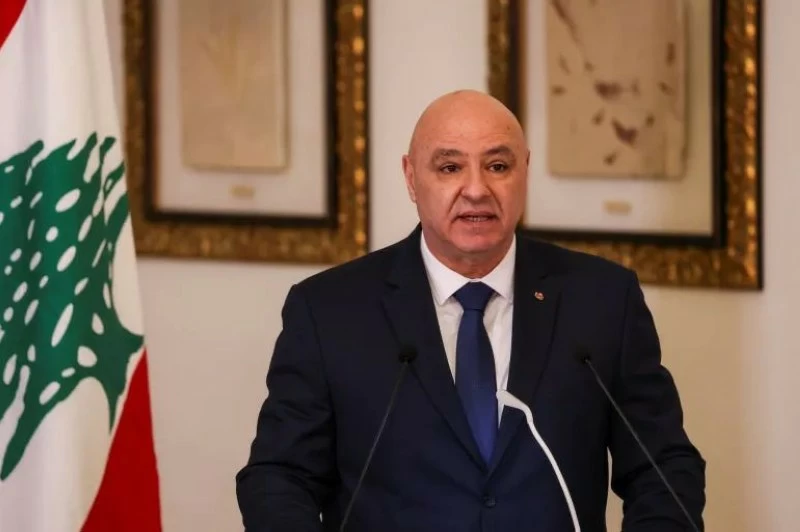
The decision taken today (Monday) by the Lebanese Council of Ministers, chaired by President Joseph Aoun, to ban Hezbollah’s military and security activities was not a reaction to a one-off security incident, but rather a deliberate political move in the face of an upward trend that began since the ceasefire agreement (November 2024). During that phase, the state equation began to be constantly tested by Hezbollah’s escalating and frequent speeches and the suggestion that weapons outside the organization were its guarantee. Faced with this reality, the government and its actual president were faced with two choices: either establish actual constitutional authority of the state, or accept its gradual erosion.
In this context, the decisions of the Council of Ministers become very important. For the first time, the Lebanese government has taken a clear decision to ban Hezbollah’s military and security activities and limit its role to a political framework subject to law. This is not a theoretical formulation, but rather a political declaration for which the executive authorities are collectively responsible, first and foremost the President of the Republic, who presides over the Council and signs its decrees. While it is true that such a measure should have been proposed years ago, its value today lies in the fact that President Aoun chose to turn what was stated in his swearing-in speech and ministerial statement into a clear executive decision.
The boldness of a decision is measured not by its words, but by its nature. The Council of Ministers, headed by President Aoun, was not facing a regular political party, but rather the equation of force that had long accompanied Lebanese political life. Therefore, for a government to formally adopt the principle of “prohibiting” military and security activities abroad means redrawing the boundaries of power between the state and other powers. Especially here, the president is given that right. This is because you are not satisfied with managing your balance, but before you try out your term.
The decision garnered broad political consensus within and outside the government, reflecting a recognition that what had happened was not a partisan dispute, but rather a question of sovereignty. Without a single reference to weapons, the state cannot negotiate, request international assistance, or assert its ability to protect the Lebanese people from the effects of open regional conflict. Through this decision, the Covenant Government signals to the international community that Official Lebanon is ready to fully fulfill its obligations, including the fulfillment of the commitments made in the Ministerial Statement on Arms Monopolies and Settlements of War and Peace.
But historical significance is not given in advance. The Council of Ministers’ decision will put the entire state to the test of its implementation. If the government succeeds in translating this position into practical measures, President Aoun will solidify his country’s position as the ultimate point of reference. If implementation stalls, the decision becomes a temporary political milestone.
In this sense, what the Council of Ministers announced was not just a statement, but rather a political choice for which the President of the Republic takes personal responsibility as Head of State. He chose to approach the arms issue from a constitutional rather than a compromise position. Throughout Lebanon’s history, such an opportunity rarely occurs twice.
