


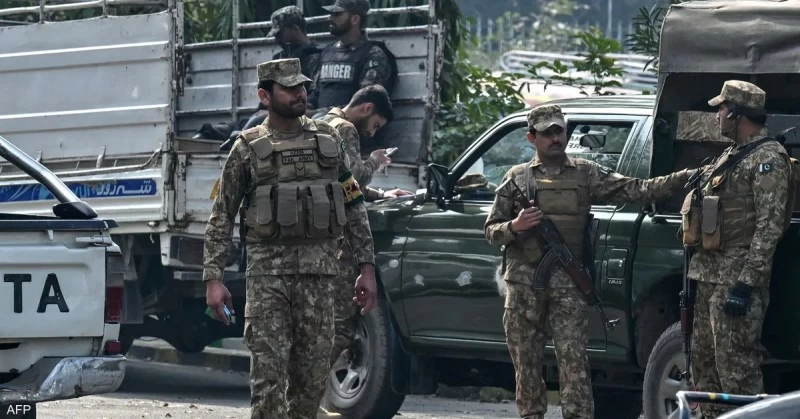
Pakistani authorities announced yesterday (Sunday) morning that the military carried out intensive airstrikes targeting seven camps and militant hideouts in Afghan territory along the common border area, killing at least 70 militants. The operation is described by Islamabad as a “retaliatory measure” for recent suicide bombings witnessed in the country during the month of Ramadan, which claimed dozens of lives.
Pakistan’s Deputy Interior Minister Talal Chaudhry said the airstrikes were “sensible and selective” and were carried out based on accurate intelligence information, targeting members of the ISIS-Khorasan group as well as camps belonging to the Pakistan Tehreek-e-Taliban and its affiliates. He acknowledged that the death toll was at least 70, but Pakistani media reports later raised that number to 80.
mutual accusation
Meanwhile, Taliban authorities in Kabul strongly condemned the airstrike, which targeted civilian areas in eastern Afghanistan’s Nangarhar and Paktia provinces and caused casualties among civilians, including women and children. They described it as a “flagrant invasion” of Afghanistan’s sovereignty, vowed an “appropriate and calculated” response and warned of repercussions that could threaten the fragile ceasefire between the two countries.
Since early 2026, Pakistan has seen a notable escalation in armed attacks, particularly in Khyber Pakhtunkhwa province and the tribal areas bordering Afghanistan, where the Pakistani Taliban, Tehreek-e-Taliban, carried out a series of suicide bombings, including attacks targeting a Shiite mosque in Islamabad and two other mosques in Bannu and Bajaur, resulting in dozens of terrorist attacks. civilian and military casualties.
root of stress
Islamabad has accused the Afghan Taliban movement of providing safe haven to members of the Pakistani Taliban on Afghan territory and has demanded the handover of its leaders and the dismantling of camps. Kabul, on the other hand, denies these accusations, pointing to civilian deaths in previous operations, particularly Operation Khyber Storm in October 2025, and considers Pakistan’s airstrikes to be a repeat military intervention.
The rise in tensions stems from the Taliban taking control of Kabul in 2021, and Pakistan believes reduced security pressure on the insurgents has allowed the Pakistani Taliban to regroup and carry out cross-border attacks. The recent airstrike was one of the largest air operations by Pakistan inside Afghanistan in years, opening the door to a new phase of border expansion and security situation complexity in the region.
Pakistani authorities said yesterday morning (Sunday) that the military carried out intensive airstrikes targeting seven camps and militant hideouts in Afghan territory along the shared border, killing at least 70 militants. The operation is described by Islamabad as a “retaliatory measure” for the recent wave of suicide bombings the country witnessed during Ramadan, which claimed dozens of lives.
Deputy Interior Minister Talal Chaudhry said the airstrikes were “sensible and selective” and were carried out based on accurate intelligence information, targeting elements of the ISIS Khorasan organization as well as camps belonging to Tehreek Taliban Pakistan and related facts. He acknowledged that the death toll was at least 70, but Pakistani media later reported that the death toll had been raised to 80.
mutual accusation
Meanwhile, Taliban officials in Kabul strongly condemned the attack, which they said targeted civilian areas in eastern Afghanistan’s Nangarhar and Paktia provinces and caused casualties among civilians, including women and children. They described it as a “blatant invasion” of Afghanistan’s sovereignty, vowed an “appropriate and calculated” response, and warned of possible repercussions that could threaten the fragile ceasefire between the two countries. Ryogoku.
Since the beginning of 2026, there has been a marked increase in armed attacks in Pakistan, particularly in Khyber Pakhtunkhwa province and the tribal areas bordering Afghanistan, where the Pakistan Taliban carried out a series of suicide bombings, including attacks on a Shiite mosque in Islamabad and two other mosques in Bannu and Bajar, killing dozens of civilians. and military casualties.
source of tension
Islamabad has accused the Afghan Taliban of providing safe haven to elements of Tehreek Taliban Pakistan on Afghan territory and has demanded the handover of its leaders and the dismantling of its camps. In contrast, Kabul denies these accusations, given Pakistan’s repeated military interventions and pointing to civilian casualties in previous operations, particularly Operation Khyber Storm in October 2025.
Escalating tensions date back to the Taliban’s takeover of Kabul in 2021, but Pakistan believes that reduced security pressure on the insurgents has allowed Tehreek-Taliban Pakistan to regroup and carry out cross-border attacks. The recent airstrike is one of the largest Pakistani air operations inside Afghanistan in recent years, opening the door to a new phase of border tensions and complicating the regional security situation.
