

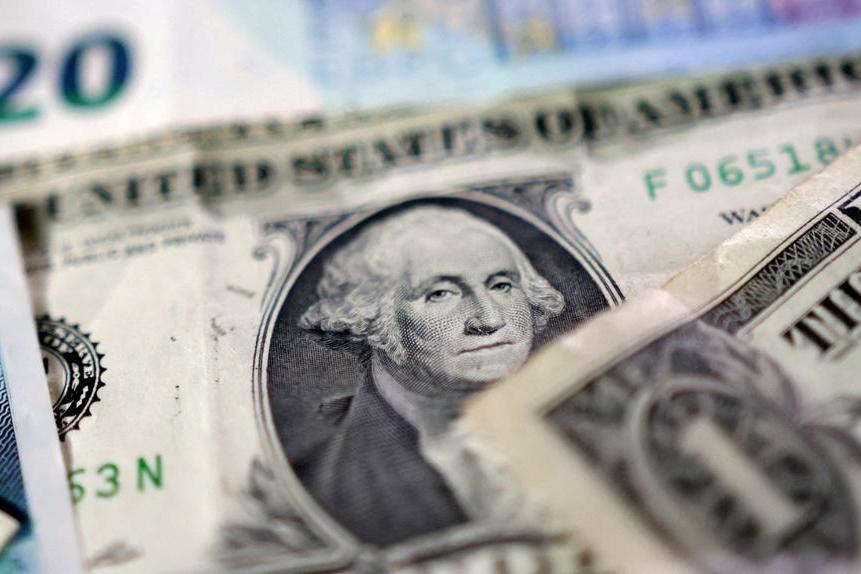
The dollar posted its biggest weekly gain since October on Friday, buoyed by a string of better-than-expected economic data and a more hawkish outlook from the Federal Reserve amid rising tensions between the United States and Iran.
The dollar index, which measures the greenback against a basket of currencies, rose slightly on Friday and was on track to rise about 1.1% for the week.
Last week’s jobs report boosted the dollar and the number of Americans filing new claims for unemployment benefits fell more than expected last week, underscoring stability in the labor market.
Earlier this week, minutes from the Fed’s most recent meeting showed policymakers divided on the outlook for interest rates given continued inflation.
“With relatively solid indicators, a slightly less dovish stance from the Fed in terms of agenda, some tensions in the Middle East, and…positioning that’s starting to pick up a little bit, you can kind of see why the dollar has managed to rebound,” said Dominic Banning, head of G10 currency strategy at Nomura.
When geopolitical tensions rise, investors often buy dollars.
Market “risk positioning”
US President Donald Trump on Thursday warned Iran that it needed to reach a deal over its nuclear program or “really bad things” would happen, and set a deadline for Iran to cooperate in 10 to 15 days. Iran said it would retaliate if U.S. military bases in the region were attacked.
“Given the increased military presence in the Middle East and President Trump’s comments, markets are definitely bracing for the risk of something happening over the weekend,” said Derek Halpenny, head of global markets EMEA research at MUFG.
Mr Halpenny said a rise in oil prices could make a range of currencies vulnerable, including the euro, Japanese yen and British pound.
“These currencies could make bigger moves,” he added.
The pound last languished near a one-month low of $1.3455, heading for its biggest weekly decline of 1.4% since January 2025.
The euro was down 0.1% at $1.1760, on track for a weekly decline of nearly 0.9%, with uncertainty over the term of office of European Central Bank President Christine Lagarde also weighing on the euro.
fees, fees, fees
Markets on Friday also await the release of the US Core PCE Price Index and Q4 GDP preliminary figures later in the day, which could prompt the currency’s next move.
Investors continue to price in about two rate cuts from the Fed this year, but around 58% expect a rate cut in June, down from 62% a week ago, according to the CME FedWatch tool.
“The big debate within the Fed is whether to cut interest rates aggressively to support the job market or keep rates high for an extended period of time to fight inflation,” said Chris Zaccarelli, chief investment officer at Northlight Asset Management.
Friday’s PCE report will “further accelerate the debate,” Zaccarelli added.
In Japan, data on Friday showed the country’s annual core consumer inflation rate reached 2.0% in January, the slowest pace in two years.
“Today’s numbers don’t exactly create a sense of urgency for the (BoJ) to restart the tightening cycle, especially given the lackluster recovery in economic activity last quarter,” said Abhijit Surya, Asia Pacific senior economist at Capital Economics.
The yen fell more than 0.4%, hitting a low of 155.53 yen to the dollar.
The currency had little reaction to Friday’s speech by Japanese Prime Minister Sanae Takaichi, who emphasized his administration’s efforts to revitalize the economy.
Elsewhere, the New Zealand dollar headed for a weekly decline of 1.3%, affected by the Reserve Bank of New Zealand’s dovish interest rate outlook.
(Reporting by Sophie Kiderin and Lei Wee; Editing by Sri Navaratnam, Kate Mayberry and Helen Popper)
