


The death of American actor Eric Dane, star of the series “Grey’s Anatomy,” has sparked a wave of questions about the rate and severity of amyotrophic lateral sclerosis (ALS).
Eric Dane dies
Dane announced in April 2025 that he had the disease, but later revealed that his first symptoms began with mild weakness in his right hand, which gradually worsened over several weeks.
This disease, also known as Lou Gehrig’s disease, is a rare and serious neurodegenerative disease. According to data from the Amyotrophic Lateral Sclerosis (ALS) Association, approximately 5,000 people are diagnosed with the disease each year in the United States, and the life expectancy of those affected ranges from two to five years.

What is amyotrophic lateral sclerosis?
Amyotrophic lateral sclerosis is a progressive disease in which the brain loses its ability to communicate with muscles, gradually robbing patients of their ability to move, speak, swallow, and breathe.

most noticeable symptoms
Symptoms of ALS include weakness, stiffness, muscle spasms (often starting in one limb), general fatigue, muscle tremors, difficulty speaking and swallowing as the condition progresses, and in advanced stages, worsening of the ability to breathe.
Despite its devastating effects on movement, the disease does not affect the senses, eye muscles, or bladder control, and many patients remain fully conscious and mentally throughout their illness.
The disease is usually diagnosed between the ages of 40 and 70, and approximately 20% of patients survive for more than 5 years, but no more than 5% of patients survive for more than 20 years.
How is diagnosis and treatment performed?
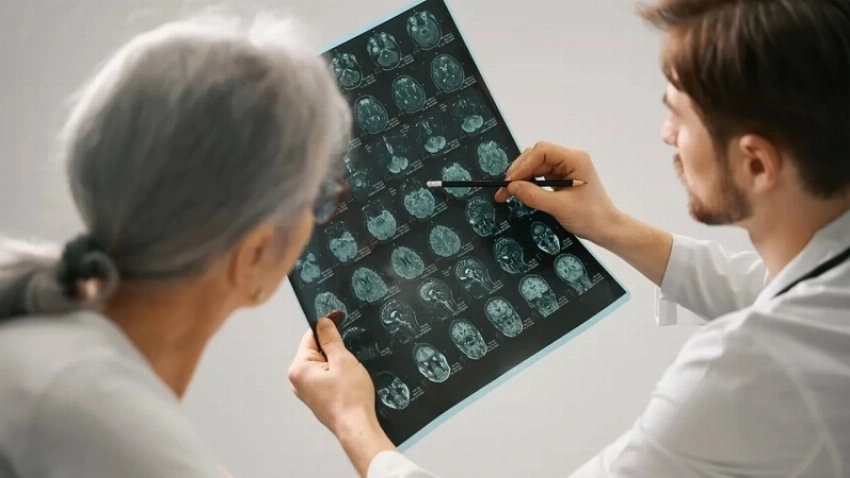
The disease is often diagnosed by a neurologist using electromyography (EMG) along with blood tests, urine tests, MRI, lumbar puncture, muscle biopsies, and nerve biopsies.
Although there is no treatment yet to stop the progression of the disease, some treatments can help slow progression and reduce symptoms.
cause of disease
According to experts, about 10% of infections are due to genetic factors, but 90% of infections have no clear genetic cause, opening the door to hypotheses regarding environmental factors and potential toxins.
Experts say the disease often starts on one side of the body, then gradually spreads, affecting the extremities, then the diaphragm muscle, which controls speech, swallowing, and finally breathing.
Strengthen research efforts
Despite the rapid progression of the disease in most cases, research is progressing toward developing more personalized treatments for each patient. The cost of developing drugs that can slow or stop disease progression is estimated to be approximately $2 billion, while the annual cost of treatment per patient is estimated to be approximately $250,000.
Funding for ALS research has increased significantly since the famous “Ice Bucket” Challenge in 2014, which, with support from the Amyotrophic Lateral Sclerosis Association, successfully raised $115 million to be allocated to research and patient care.
Eric Dane has been praised for his courage in the face of the disease, calling for significant government funding to support efforts to find effective treatments and supporting new research efforts.
His death thrust ALS back into the spotlight and reminded the world of the need to step up scientific and humanitarian efforts to combat one of the cruelest neurological diseases.
The death of American actor Eric Dane, star of the series Grey’s Anatomy, has raised many questions about the rapid progression and severity of amyotrophic lateral sclerosis (ALS).
eric dane death
Dane announced his diagnosis of the disease in April 2025, later revealing that his first symptoms began with mild weakness in his right hand, which gradually worsened over a few weeks.
The disease, also known as “Lou Gehrig’s disease,” is considered a rare and severe neurodegenerative disease, with approximately 5,000 people diagnosed in the United States each year. According to data from the ALS Association, the average life expectancy of those affected is two to five years.
What is amyotrophic lateral sclerosis?
Amyotrophic lateral sclerosis (ALS) is a progressive disease in which the brain loses its ability to communicate with muscles, gradually robbing patients of their ability to move, speak, swallow, and breathe.
Main symptoms
Symptoms of amyotrophic lateral sclerosis include weakness, stiffness, muscle spasms that often begin in one limb, general malaise, muscle spasms, difficulty speaking or swallowing as the condition progresses, and, in more advanced stages, a decreased ability to breathe.
Despite its devastating effects on movement, the disease does not affect the senses, eye muscles, or bladder control, and many patients remain fully conscious and mentally alert throughout the course of the disease.
The disease is usually diagnosed between the ages of 40 and 70, and about 20% of patients survive for more than 5 years, but only about 5% survive for more than 20 years.
How is it diagnosed and treated?
The disease is often diagnosed by a neurologist using blood tests, urine tests, magnetic resonance imaging (MRI), lumbar puncture, and muscle and nerve biopsies, as well as electromyography (EMG).
Currently, there is no treatment that can stop the progression of the disease, but some treatments can help slow progression and reduce symptoms.
cause of disease
According to experts, about 10% of cases are thought to be due to genetic factors, but 90% of cases have no clear genetic cause, opening the door to hypotheses related to environmental factors or potential toxins.
Experts say the disease often starts on one side of the body and then gradually spreads, affecting the limbs, then the diaphragm muscle, which controls speech, swallowing, and finally breathing.
Increased research effort
In most cases, the disease progresses rapidly, but research is progressing to develop more personalized treatments for each patient, with annual treatment costs estimated at about $250,000 per patient, although the cost of developing drugs that can slow or stop disease progression is estimated at about $2 billion.
Funding for ALS research has increased significantly since the famous 2014 “Ice Bucket Challenge” supported by the ALS Association, which successfully raised $115 million for research and patient care.
Eric Dane has been praised for his courage in the fight against the disease as he joined in supporting new research efforts by calling for significant government funding to support efforts aimed at finding effective treatments.
His death brought amyotrophic lateral sclerosis back into the spotlight and reminded the world of the need to step up scientific and humanitarian efforts to combat one of the most brutal neurological diseases.
