


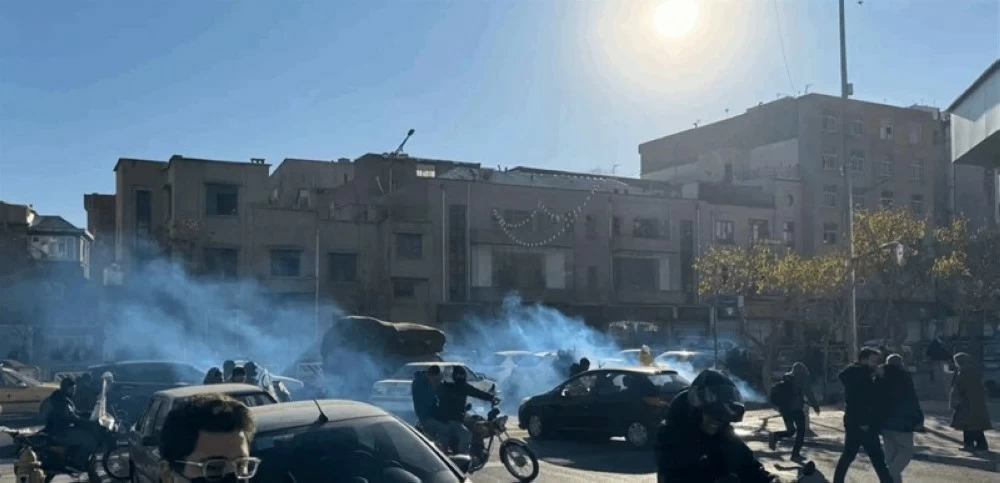
In Brussels, European Union foreign ministers approved sanctions against 17 Iranian officials, including Interior Minister Eskander Momeni and Prosecutor General Mohammad Vahedi Azad.
Sanctions affect six companies
Today (Thursday), the Coalition Ministers imposed sanctions on 15 other officials and six entities, including Revolutionary Guards Commander Saeed Majeed Fayed Jafari, President of the Revolutionary Court Iman Afsahari, and Qatam al-Anbiya Military Chief of Staff Ali Abdullah, according to a list published in the Coalition’s Official Gazette.
Sanctions include asset freezes and travel visa bans for the aforementioned officials.
EU foreign policy official Kaya Karas predicted further sanctions would be imposed on perpetrators of violence against protesters in Iran and that Iran’s Revolutionary Guards Corps would be added to the list of terrorist organizations.
A symbolic change in Europe’s approach
European ministers are expected to reach a political agreement to include the Revolutionary Guards on the EU’s list of terrorist organizations, putting them in the same category as ISIS and al-Qaeda and marking a symbolic shift in Europe’s approach to Iran’s leadership.
In recent days, several European countries, most notably France and Italy, have announced support for including the Guards on the European Union’s list of terrorist organizations.
The measures come as human rights groups accuse the Revolutionary Guards of being behind the recent crackdown on protests that left thousands of people dead.
It is worth noting that since December 28 in Iran, widespread demonstrations that began in the capital Tehran Bazaar have spread to several regions, shifting from economic and livelihood demands to political demands.
Iranian authorities have accused Israel and the United States of interfering and seeking to destabilize the country. He also accused “terrorist elements” of infiltrating and firing bullets at demonstrators to increase the death toll.
Refrain from using force
Meanwhile, Russia’s presidential office said the possibility of holding fruitful negotiations on Iran was “not yet exhausted” after US President Donald Trump warned Tehran that “time is running out” to avoid a military attack.
In a press conference today (Thursday), Kremlin Spokesman Dmitry Peskov called on all parties to exercise restraint and refrain from using force to resolve the conflict. He stressed that any use of force would only cause chaos in the region and have extremely dangerous consequences.
Amid unprecedented tensions between Iran and the United States, Iranian Army Commander Amir Khatami has ordered a military buildup of 1,000 strategic drones. “Given future threats, maintaining and consolidating strategic advantages for rapid combat and overwhelming response to any aggressor remains the Army’s top priority,” Khatami said after issuing the order to integrate land and sea drones, according to Tasnim news agency.
EU foreign ministers in Brussels approved sanctions against 17 Iranian officials, including Interior Minister Iskander Moameni and Attorney General Mohammad Mohammadi Azad.
Six organizations are subject to sanctions.
According to a list published in the bloc’s official journal, the Cabinet today (Thursday) imposed sanctions on 15 other officials and six entities, including Revolutionary Guards Commander Seyyed Majid Faiz Jafari, Revolutionary Court President Eman Afshari, and Quds Force Chief of Staff Ali Abdullahi.
Sanctions include asset freezes and travel bans against the officials cited.
EU foreign policy chief Kaja Karas expected further sanctions against those responsible for violence against protesters in Iran, as well as the addition of Iran’s Revolutionary Guards Corps to the list of terrorist organizations.
A symbolic change in Europe’s approach
European ministers are expected to reach a political agreement to add the Revolutionary Guards to the EU’s list of terrorist organizations, putting them in the same category as ISIS and al-Qaeda, representing a symbolic shift in Europe’s approach to Iran’s leadership.
Several European countries, most notably France and Italy, have recently announced support for including the Guards on the EU’s list of terrorist organizations.
The measures come as human rights groups accuse the Revolutionary Guards of involvement in a recent crackdown on protests that left thousands dead.
It is noteworthy that in Iran, since December 28, large-scale protests that began in Tehran’s bazaars have spread to several regions, shifting from economic demands to political demands.
Iranian authorities have accused Israel and the United States of intervening and trying to destabilize the country. It also accused “terrorist elements” of infiltrating demonstrators and opening fire to increase the death toll.
refrain from using force
In a separate story, Russia’s presidential office reported that the possibility of fruitful negotiations on the Iranian file “has not yet been exhausted” after US President Donald Trump warned Tehran that “time is running out” to avoid a military attack.
Kremlin Spokesman Dmitry Peskov called on all parties at a press conference today (Thursday) to exercise restraint and refrain from using force to resolve the conflict. He stressed that any use of force would only cause chaos in the region and would have extremely serious consequences.
Amid unprecedented tensions between Iran and the United States, Iranian military commander Amir Khatami has ordered a military buildup of 1,000 strategic drones. “Given future threats, maintaining and consolidating strategic advantages for swift combat and overwhelming response to any invasion or aggressor remains the Army’s top priority,” Khatami said after issuing the order to integrate the Army and Navy’s unmanned aerial vehicles, according to Tasnim news agency.
