

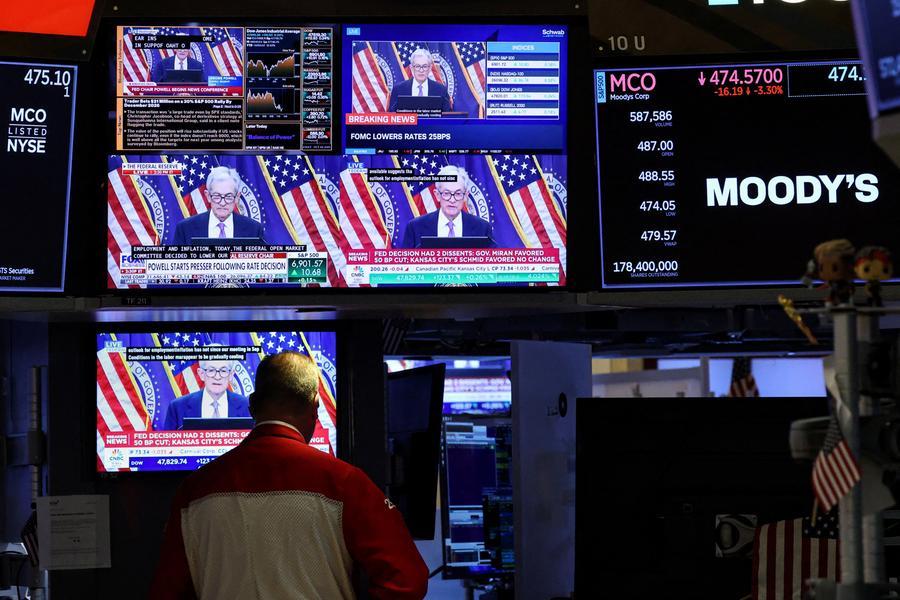
Minutes from the Federal Reserve’s Jan. 16-17 meeting, released Wednesday, are expected to provide more details about why central bankers kept interest rates on hold last month and what it will take to convince them that further rate cuts are warranted as risks to the job market may be easing and progress in lowering inflation is slow.
Fed Chairman Jerome Powell said in a post-meeting press conference that there was “broad support” among policymakers to keep interest rates unchanged at their current range of 3.5% to 3.75%, a sharp contrast to the previous meeting in December, when the decision to cut rates divided the central bank between those who favored deeper cuts and those who opposed no cuts at all. Minutes will be released at 2:00 pm ET. Policymakers were largely on the same page as of mid-January, and the document could provide some insight into how they are weighing economic risks, and Powell said that while there may remain conflicts over what the Fed should do, it also appears to be becoming more balanced.
The Fed seeks to maintain maximum employment consistent with the annual inflation rate of 2%, but its most difficult decisions can be made when inflation is above target and the job market appears to be weakening, as it has been in recent months.
At the time of the January meeting, Chairman Powell said that while the risks of significant increases in inflation and unemployment had diminished, some tensions remained.
“There’s still some tension between employment and inflation, but it’s less so than it used to be. I think the upside risks to inflation and the downside risks to employment have probably both declined a little bit,” he said.
But amid last month’s broad agreement to keep interest rates on hold, policymakers may have widely differing views on what and how much to react, with analysts particularly focused on whether inflation begins to ease, as Powell and others expect by mid-year. Chicago Fed President Austan Goolsby said in a speech Tuesday that “several” rate cuts could be justified this year if inflation starts to fall from its current level, which is about 1 percentage point above the Fed’s target, while President Michael Barr said the current pause in rate cuts would likely last “for some time” until there is enough information to be confident that inflation is falling.
Fed officials say high import duties are partly to blame for the current rise in inflation, which they feel businesses are still in the process of passing on to consumers, but they generally agree that the process is nearing or past its peak impact on inflation.
“The Fed stands ready to cut interest rates further this year if inflation cools. This should be reflected in the FOMC minutes,” Citi analysts wrote on Tuesday.
The Fed will hold its next meeting on March 17-18, and investors expect interest rates to remain unchanged.
(Reporting by Howard Schneider; Editing by Andrea Ricci)
