


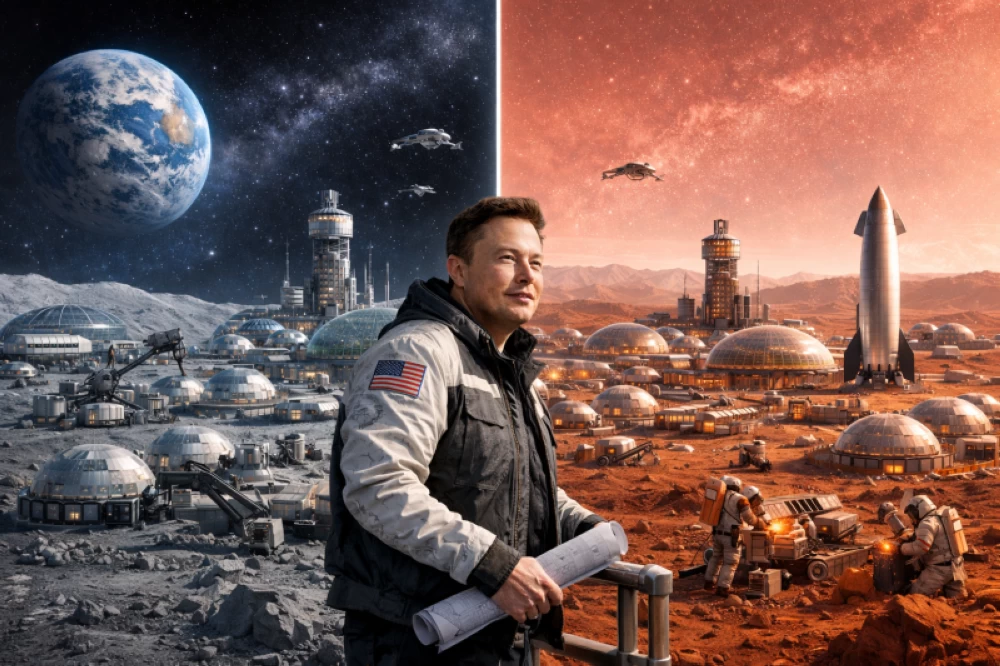
American billionaire Elon Musk has redirected the compass of his company SpaceX’s ambitions toward the moon, declaring building a self-sufficient human city on the moon within 10 years a top priority, as “the fastest way to secure the future of civilization,” and later making the Mars program a strategic goal.
moon before mars
Musk said that SpaceX will focus on the moon in its next steps, explaining that its proximity to Earth and ease of access means that building a lunar city can be accomplished in a shorter period of time compared to Mars. He emphasized that the company plans to begin work on the Mars City project in approximately five to seven years, but that the Moon remains the most urgent option for now.
Frequent business travel and rapid development
SpaceX’s plans indicate the possibility of launching flights to the moon every 10 days, with flight times not exceeding two days, which would allow for rapid technical modifications and development. In contrast, launch opportunities to Mars are only available every 26 months, and flight times can take up to six months, reducing development flexibility and slowing the pace of construction.
self-sufficient city
Musk explained that the lunar project is part of a long-term vision to establish a sustainable space habitat, relying on infrastructure that can withstand the harsh conditions of space, as well as advanced technologies for low-cost space transportation, life support systems that can provide oxygen, water, and energy.
serious environmental problems
He pointed out that the lunar environment is a real challenge, given its high radiation and extreme temperatures, which requires unprecedented engineering and technological solutions. However, Musk believes that overcoming these obstacles constitutes a qualitative leap in the history of human existence beyond Earth.
A step towards planetary colonization
Space experts believe that establishing cities on the moon could be an important precursor to settling other planets, especially Mars, given the growing international competition between government space agencies and private companies to establish permanent bases on the moon in the coming decades.
