

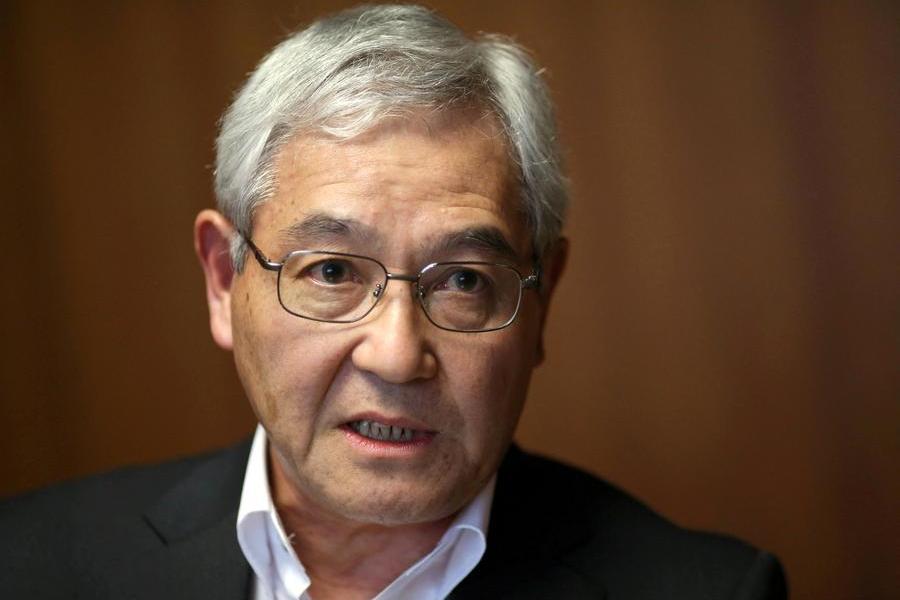
TOKYO – Former central bank board member Makoto Sakurai told Reuters the Bank of Japan could raise interest rates as early as March if the yen falls again ahead of the Japan-U.S. summit, scheduled to be held later that month.
Prime Minister Sanae Takaichi is expected to visit Washington to meet with US President Donald Trump around the time the Bank of Japan holds its next policy meeting on March 18-19.
The fact that the U.S. government implemented an interest rate check to support the yen last month indicates the government wants the currency to appreciate against the dollar, so Mr. Takaichi may seek support from the Bank of Japan to limit the yen’s weakness, Mr. Sakurai said in an interview Friday.
“Currency intervention has only a temporary effect in countering yen selling pressure. The best way to counter a weak yen is for the Bank of Japan to raise interest rates,” said Sakurai, who is in close contact with current policymakers.
A further weaker yen would push up inflation through higher import costs, offsetting some of the downward pressure from government fuel subsidies, Sakurai said.
He added that the Bank of Japan could justify raising interest rates as early as March by pointing to the outlook for strong wage growth in the annual spring wage negotiations between companies and labor unions if the need arises to counter a sharply weaker yen.
“It would be reasonable to wait until April, but depending on the movement of the yen, the Bank of Japan may raise interest rates in March,” Sakurai said.
Sakurai served on the Bank of Japan’s board from 2016 to 2021, when the central bank began shifting its policy focus from massive asset purchases to controlling long-term interest rates through the introduction of bond yield controls.
He said the Bank of Japan may need to raise interest rates twice in 2026 and 2027 to raise the current 0.75% to 1.75%, a level that would likely neither cool nor overheat the economy.
Raising interest rates at a faster pace could have a negative impact on Japan’s banking system, including increasing bankruptcies among small and medium-sized enterprises and damaging the balance sheets of regional financial institutions, Sakurai said.
The Bank of Japan will end its massive 10-year economic stimulus program in 2024, and has raised interest rates several times, including raising the short-term policy rate to 0.75% in December, the highest level in 30 years.
Inflation has been above the Bank of Japan’s 2% target for nearly four years, and Governor Kazuo Ueda has signaled the bank is prepared to continue raising interest rates if economic forecasts come true.
According to a Reuters poll, the majority of economists expect the Bank of Japan to raise interest rates to 1% by the end of June, while the market has priced in a roughly 70% chance of a rate hike by April.
The Bank of Japan will next hold its policy meeting on March 18-19. The board will then meet on April 27 and 28, where new quarterly growth and inflation forecasts will also be announced.
The weak yen has become a political headache for Japan’s policymakers as it pushes up the price of imported fuel and food, hurting households and retailers.
Since Mr. Takaichi, a fiscal and monetary advocate, took office as prime minister in October, the yen has depreciated by about 8% against the dollar, hitting an 18-month low of 159.45 yen in January.
Although some losses have been recovered, the yen is currently hovering around 155 yen to the dollar, well below the 147 yen level before Takaichi came to power.
(Reporting by Laika Kihara; Editing by Sam Holmes)
